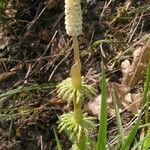
Equisetum sylvaticum
دم اسب · Wood horsetail · Woodland Horsetail · Sylvan horsetail · Waldschachtelhalm (DE)
Description
Source: leafsnapEquisetum sylvaticum, commonly known as woodland horsetail, is a perennial plant species in the Equisetaceae family. Native to Europe and Asia, it thrives in damp woodlands, marshes, and along riverbanks. This plant stands out due to its unique appearance, featuring hollow, jointed stems with whorls of small leaves. Woodland horsetail can grow up to 60 cm in height and spreads rapidly through its creeping rhizome system. The stems are greenish-brown, marked by black bands at the joints, and adorned with small, scale-like leaves. Unlike most plants that reproduce via seeds, Equisetum sylvaticum reproduces through spores. It produces cone-like structures called strobili, which contain the spores necessary for reproduction. For centuries, Equisetum sylvaticum has been valued for its medicinal properties, largely due to its high silica content. It has been used to treat wounds, skin conditions such as eczema or psoriasis, and urinary tract infections, among other ailments. Overall, Equisetum sylvaticum is an intriguing plant species with distinctive characteristics and medicinal properties, making it a significant component of many ecosystems around the world.
🎭 Charming snakes, fertility
Care Guide
💧 Water Every 7 days
Woodland horsetail thrives in moist environments and can tolerate moderate drought, but it prefers higher humidity. For optimal growth, it needs to be watered weekly, particularly during its active growing season. This watering schedule supports its lush development and mirrors its adaptations to native woodland habitats.
How should I water my Woodland horsetail plant?
To ensure the Woodland horsetail stays healthy, it's important to water it with filtered water at room temperature or slightly warmer. Tap water may contain harmful particles, so filtered water is preferred. The reason for using room temperature water is that the plant is from a warm environment, and cold water can be stressful for it. Avoid overhead watering, as it can cause leaf problems. Instead, thoroughly soak the soil with your filtered room temperature water. This helps the roots stay moist and spread through the soil to gather the necessary nutrients.
What should I do if I give my Woodland horsetail plant too much or too little water?
Overwatering can be harmful to your Woodland horsetail, causing wilting, yellowing of the stems and leaves, and potentially leading to diseases like root rot, mold, and mildew that can kill the plant. Underwatering is less common due to the plant's drought tolerance, but it can still occur, resulting in brittle and brown leaves. It is important to recognize the signs of overwatering early to prevent irreversible damage. Reduce watering immediately if you notice these signs and consider the soil's drainage; replace it with a well-draining mix if necessary. If the signs indicate underwatering, simply increase watering until the symptoms subside.
How frequently do I need to water my Woodland horsetail plant?
To determine if your potted Woodland horsetail plant needs water, check the soil by sticking your finger in it. If the top two to three inches are dry, it's time to water. For outdoor plants in the ground, use the same method - when the top few inches of soil are dry, it's time to water. In spring and early fall, watering once a week should be sufficient. However, during hot weather, you may need to increase watering to twice or more per week. Despite this, mature and well-established Woodland horsetail plants can withstand drought.
How much water does my Woodland horsetail plant need?
To properly water your Woodland horsetail, you need to be generous with the amount of water you provide. When the top two to three inches of soil are dry, it's time for a thorough watering. Make sure the water is enough to completely soak the soil. You'll know you've added enough water when you see excess water flowing out of the drainage holes at the bottom of the pot. If you don't see any excess water draining, it means you haven't watered enough. But be careful not to let water accumulate in the soil, as this can be harmful to the plant. On the other hand, if water doesn't drain properly, it could mean the soil doesn't drain well, which is bad for the plant. If the plant is outside, one inch of rain per week should be enough.
How do I water my Woodland horsetail at different stages of growth?
The water needs of the Woodland horsetail can vary based on its growth stages. In the first few years of its life or when recently transplanted, it needs more water to support root growth. As the plant matures, it requires less water. Additionally, during the bloom period, the flower development requires more moisture, so extra watering may be necessary.
☀️ Light Partial sun
Woodland horsetail prefers moderate sun and is well adapted to the variable light conditions of its natural woodland habitat. It does best beneath a diffused, sun-dappled canopy where it receives some light without being exposed to full-intensity sun. Too much or too little light can cause poor growth or reduced vigor.
What are the sunlight requirements for Woodland horsetail?
Woodland horsetail (Equisetum sylvaticum) thrives in areas that provide moderate sun exposure, characteristic of its natural woodland habitat. It prefers a diffused light, similar to a sun-dappled canopy, rather than full-intensity sunlight. The ideal is about 3-6 hours of sunlight per day. It is essential to observe the movement of sunlight through your garden to find spots with a balance of light and shade, which ensures the plant's wellbeing. Overexposure or underexposure to sunlight can negatively impact the plant's development and health.
How can I use artificial lighting for Woodland horsetail indoors?
For indoor Woodland horsetail plants, when natural sunlight is insufficient, especially during winter or in less sunny locations, artificial lighting can provide a crucial alternative. Choosing the right type of artificial light, such as LED lights, is important because they can be customized to offer specific wavelengths needed by your plants. Full sun plants require 30-50W/sq ft, partial sun plants 20-30W/sq ft, and full shade plants 10-20W/sq ft of artificial light. The light source should be placed 12-36 inches above the plant to mimic natural sunlight conditions, and most plants will need 8-12 hours of light per day. This setup promotes healthier, faster growth by providing the plants with essential light.
What symptoms indicate Woodland horsetail is getting insufficient light?
When Woodland horsetail receives insufficient light, particularly when grown indoors, it may show subtle symptoms indicating light deficiency. These symptoms include smaller new leaves, indicating a size reduction from previous ones; leggy or sparse growth, characterized by longer spaces between leaves or stems, leading to a weak appearance; faster leaf drop as a result of the plant conserving resources; slowed or halted growth, indicating the plant has entered a survival mode; lighter-colored new leaves, showing a lack of chlorophyll; and chlorosis, where leaves lose their green color and turn yellow.
How do I care for a Woodland horsetail plant that has symptoms of incorrect light exposure?
Caring for Woodland horsetail that shows symptoms of incorrect light exposure involves providing optimal light conditions. For indoor plants, it's beneficial to gradually increase sun exposure to 3-6 hours daily by shifting them to sunnier spots each week or using artificial lighting if the plant is large or not easily movable. A desk or ceiling lamp kept on for at least 8 hours daily, or professional plant grow lights, can significantly improve light availability. Outdoors, gradually moving plants to sunnier locations helps them adapt without the risk of sunburn. Reducing obstructions, such as pruning trees that block sunlight, or transplanting smaller plants during their dormant period to a location with ample sunlight, are effective solutions. Keep in mind that parts of the plant affected by insufficient sunlight may not recover, but new growth should be healthy with improved light exposure.
🌡️ Temperature 5–32.2°C
Woodland horsetail comes from temperate regions and grows best when temperatures are between 41 and 89.6 °F (5 to 32 ℃). It may be necessary to alter temperatures seasonally to imitate its natural habitat.
What is the optimal temperature range for growing Woodland horsetail?
Woodland horsetail, with its native roots in temperate climates, grows best within a temperature range of 41 to 89.6 °F (5 to 32 °C). To ensure the plant thrives, it may be necessary to adjust surrounding temperatures seasonally to closely mimic its natural habitat. Despite its strong resistance to cold, taking special measures for frost protection if temperatures are expected to fall below the plant's cold tolerance threshold is advised. This includes strategies such as covering the plant with soil or straw and watering abundantly before the first freeze of autumn to maintain soil moisture through winter.
How does Woodland horsetail react to low temperatures?
Woodland horsetail is remarkably cold-tolerant, ideally requiring temperatures to remain above a certain minimum threshold to ensure healthy growth. During winter, maintaining temperatures above this minimum threshold is crucial. If temperatures drop below the plant's growth limit, there might not be noticeable effects immediately; however, this can lead to reduced or even absent sprouting in spring. To mitigate any adverse effects, it's recommended to remove parts of the plant that fail to sprout as spring arrives.
How should you care for Woodland horsetail during high temperatures?
During the warmer months, it's important to ensure that Woodland horsetail's environment does not exceed a certain maximum temperature for optimal growth. Exceeding this maximum can result in the plant's leaves becoming lighter in color, curling, and being prone to sunburn, with severe cases leading to the wilting and drying of the plant. To care for Woodland horsetail in such conditions, remove sunburned or dried parts, relocate the plant to a shaded area during the harshest sun hours, or use a shade cloth. Additionally, watering the plant during the cooler parts of the day, such as morning and evening, will help keep the soil adequately moist.
💨 Humidity
🪴 Soil 5-7
🌱 Fertilizer
Usually one fertilizer application in spring is enough for Woodland horsetail, but repeated feedings can help maximize growth. Fertilize once every month to six weeks. Feeding improves the leaves' appearance and function, maintaining even color and a healthy texture. It also encourages root development and nutrient uptake for the plant's long-term health.
🪴 Pot & Repot
✂️ Pruning
Pruning woodland horsetail from early to late spring can significantly enhance its growth. This involves removing dead stems and cutting back mature stems to control its spread. These practices improve air circulation and reduce the risk of disease, promoting a healthy and attractive display of the plant during its vigorous growth phase in spring.
🌿 Propagating
🐛 Diseases & pets
☠️ Toxicity
Characteristics
- Plant Type
- Herb
- Life Cycle
- Perennial
- Genus
- Equisetum
- Family
- Equisetaceae
- Hardiness Zone
- 4-8
- Mature Height
- 30 cm to 61 cm
- Mature Spread
- 20 cm to 40 cm
- Leaf Color
- Dark Green, Forest Green
- Leaf Type
- Deciduous
- Flower Color
- White, Orange
- Bloom Time
- Spring
- Planting Time
- Spring, Autumn
- Harvest Time
- Mid spring, Late spring
- Native Area
- Sweden, Austria, Slovakia, Montenegro, Slovenia, Croatia, Belarus, Russia, Germany, Iceland, Estonia, Koppen, Romania, Latvia, Belgium, Netherlands, France, Czech Republic, Cyprus, Bulgaria, Poland, Ukraine, Serbia, China, Lithuania, Norway, Italy, Kazakhstan, Spain, Switzerland, Denmark, Japan, Mongolia, Finland, Ireland, United Kingdom, Hungary