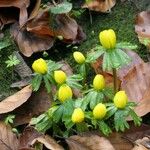
Eranthis hyemalis
Winter aconite · Winter Hellebore · Winterling (DE) · Eranthis
Description
Source: leafsnapEranthis hyemalis, commonly known as winter aconite, is a small perennial plant in the buttercup family. Native to Europe and Asia, it is widely cultivated as an ornamental garden plant. Growing up to 15 cm tall, it produces bright yellow, cup-shaped flowers that bloom in late winter or early spring, often before the snow has melted. The leaves of Eranthis hyemalis are deeply divided into lobes and are dark green in color. The flowers emerge from a rosette of leaves at ground level on short stems. Each flower has five petals that surround a central cluster of yellow stamens. Winter aconite thrives in moist, well-drained soil and can grow in partial shade or full sun. Once established, it can tolerate dry conditions. It can be propagated by division or by seeds sown in autumn. Eranthis hyemalis is an early bloomer that provides much-needed color during the bleak winter months when most other plants are dormant. Its bright yellow flowers attract bees and other pollinators, providing an important food source during this time of year. Overall, Eranthis hyemalis is an attractive addition to any garden. Its cheerful blooms and easy-to-grow nature make it popular among gardeners worldwide.
🌳 The bright yellow flowers of winter aconite are not only a sign that spring is coming but also act as ornamental plants that enhance a garden's appearance. Though the plant is not widely noted for practical uses, its early-season blooms can provide an important nectar source for pollinators such as bees, offering vital food when few other plants are flowering.
🎭 Hope, renewal and fresh starts
Care Guide
💧 Water Every 7 days
Winter aconite grows best in moist, well-drained soil beneath deciduous trees. It prefers consistent moisture and can tolerate short periods of dryness. To maintain the right conditions, water it weekly to keep the soil damp but not waterlogged. This plant thrives outdoors in cooler climates, where natural rainfall supports its active growth season.
How should I water my Winter aconite to keep it healthy?
To properly water the Winter aconite, it is recommended to use filtered water that is at room temperature. This is because tap water may contain harmful particles. Additionally, the water should be at or slightly warmer than room temperature to avoid shocking the plant. It is best to avoid overhead watering, as it can cause issues with the foliage. Instead, gently apply the filtered room temperature water directly to the soil until it is completely moist. This method is beneficial as it allows the roots to absorb moisture and nutrients while encouraging their spread through the soil.
What should I do if I give my Winter aconite too much water or too little water?
Overwatering is a common issue for Winter aconite and can lead to wilting, yellowing of stems and leaves, and diseases like root rot, mold, and mildew. Underwatering is less common but can cause brittle, brown leaves. It's important to recognize the signs of overwatering early to prevent irreversible damage. Reduce watering and replace poorly draining soil if necessary. If underwatering is suspected, simply water more regularly until signs improve.
How often should I give water to my Winter aconite?
If your Winter aconite is in a pot, the best way to determine if it needs water is to check the soil moisture. Stick your finger into the soil and if the top two to three inches are dry, it's time to water. If you're growing Winter aconite outdoors, you can use a similar method to test the soil. When the top few inches of soil have dried out, it's time to water. Typically, during the spring and early fall, watering once a week should be sufficient. However, during extremely hot weather, you may need to increase watering to twice a week or more. It's worth noting that mature, well-established Winter aconite plants have a strong ability to survive without much water.
How much water does my Winter aconite require?
To properly water your Winter aconite, don't hold back on the amount of water you provide. When the top two to three inches of soil are dry, give the plant a thorough watering that completely saturates the soil. The water you add should be enough to cause excess water to drain out of the pot through the holes at the bottom. If you don't see any excess water draining, it means you haven't watered enough. However, be careful not to let the water pool inside the soil, as this can harm the plant. On the other hand, if water doesn't drain well through the pot, it may indicate that the soil doesn't drain properly, which can be harmful to the plant. If the Winter aconite is outdoors, about 1 inch of rain per week will be sufficient.
How do I water my Winter aconite at different stages of growth?
The water needs of the Winter aconite can vary depending on its growth stages. When the Winter aconite is young or has been recently transplanted, it requires more water than usual. During these stages, the plant focuses on developing new roots that will support future growth. These roots thrive with a slightly higher level of moisture. As the Winter aconite matures over a few seasons, it will require less water. Additionally, during the bloom period, the plant may need increased water due to the energy required for flower development.
☀️ Light Partial sun
Winter aconite favors spots with moderate sunlight, though it can tolerate areas with stronger light. Its native habitat combines shade and sun, which is important for its growth. Excessive light can cause it to dry out, while too little light may reduce its flowering.
What are the sunlight requirements for Winter aconite?
Winter aconite thrives in conditions that offer a moderate amount of sunlight, but it can also prosper in areas with more intense light exposure. Specifically, the plant does well in partial sun, which constitutes about 3-6 hours of sunlight per day, and full sun, meaning the area receives more than 6 hours of sunlight daily. It's crucial to observe the movement of sunlight through your garden to find the ideal spots that offer a mix of light and shade, ensuring the plants remain happy and healthy.
How important is light for the growth of Winter aconite, and how can artificial lighting be used?
Light plays a pivotal role in the growth of Winter aconite, as it originated in environments that enjoy a balance of shadow and sun. This balance is essential for its growth, with overexposure potentially leading to desiccation and low light possibly hindering flower production. When natural sunlight is insufficient, especially in winter or less sunny spaces, artificial lighting becomes crucial. LED lights are recommended for indoor plant lighting due to their customization capabilities, providing specific wavelengths needed by the plants. Full sun plants require 30-50W/sq ft of artificial light, partial sun plants need 20-30W/sq ft, while full shade plants should have 10-20W/sq ft. The artificial light source should be placed 12-36 inches above the plant, mimicking natural sunlight as closely as possible, with most plants needing 8-12 hours of light per day.
What are the signs of insufficient or excessive sunlight in Winter aconite?
Insufficient sunlight in Winter aconite can lead to several symptoms, including smaller new leaves, leggy or sparse growth, faster leaf drop, and slower or halted new growth. Leaves may also appear lighter in color or develop chlorosis—a condition where leaves lose their green color and turn yellow—signifying a lack of essential nutrients and chlorophyll. Excessive sunlight exposure can cause sunscald, leaf curling, wilting, and leaf scorching, where leaves show brown, dry, and crispy edges. These symptoms indicate damage to the plant's tissues, affecting its overall health and ability to photosynthesize efficiently.
How can you enhance the growth of Winter aconite if it's not receiving adequate sunlight?
If Winter aconite isn't receiving adequate sunlight, you can take steps to improve its growth. For indoor plants, gradually shift them to sunnier spots each week until they receive the recommended 3-6 hours of direct sunlight daily. If the plant is large or not easily movable, supplement with artificial light, using a desk or ceiling lamp for at least 8 hours daily or invest in professional grow lights. For outdoor plants, gradually move them to sunnier locations each week to prevent sunburn from sudden changes in light intensity. If it's ground-planted and there are obstructions blocking sunlight, consider pruning if trees are involved or transplanting the plant during its dormant period to a site with ample sunlight and good drainage. It's essential to note that parts of the plant affected by insufficient sunlight may not recover, but new growth can be healthy with increased light exposure.
🌡️ Temperature 5–35°C
Winter aconite has the capacity to acclimate to a broad spectrum of temperature environments, though its spread can still be curtailed by various heat and moisture factors. It flourishes optimally in temperate climates during the summer months with sufficient amounts of rain or water supply. Extended spells of overcast and wet weather, along with extended periods of elevated temperatures, can elevate the risk of Winter aconite perishing. During the winter, sufficient safeguarding against the cold can enhance the plant's probability of survival.
💨 Humidity
🪴 Soil 6-7
🌱 Fertilizer
The primary period to fertilize Winter aconite is during early spring when the flowers begin to form. Proper fertilization promotes improved blossoms and assists Winter aconite in generating beautiful flowers. Applying fertilizer in the early spring ensures outstanding flowers throughout the season and supplies energy for periods of dormant growth.
Why should I put fertilizer on my Winter aconite?
Fertilization is important for the Winter aconite as it provides key nutrients for its growth. While the overall fertilization needs for this plant are relatively low, annual fertilization can greatly benefit it. By keeping up with fertilization, you can help your Winter aconite stay alive and encourage the production of better and longer-lasting flowers.
When should I put fertilizer on my Winter aconite?
The best time to fertilize a Winter aconite is in late winter to early spring, when it is transitioning from dormancy to active growth. Fertilizing at this time promotes healthy growth and sets the plant up for a successful season. While early spring is generally the ideal time, fall is also acceptable for fertilization. However, it is not recommended to fertilize a Winter aconite during summer or winter.
When is it a bad idea to put fertilizer on my Winter aconite?
To properly fertilize your Winter aconite, it is best to do so only in the late winter or early spring. This plant has low fertilization needs, so a single feeding per year should be sufficient. Fertilizing during the spring, summer, and fall can easily result in overfertilization and its associated complications. However, if you happened to skip fertilizing in the spring, it is acceptable to feed the plant in the fall. It is important to note that fertilizing during the winter is unnecessary since the Winter aconite is in a dormant growth phase and does not produce new growth. Consequently, it is not recommended to fertilize during most of the winter.
What kind of fertilizer does my Winter aconite require?
Winter aconite can thrive with any general-purpose fertilizer that contains a balanced amount of the three main plant nutrients. However, certain nutrient blends can be especially advantageous. Many gardeners believe that a higher phosphorus content promotes stronger roots and better flowers, making a phosphorus-rich fertilizer ideal for Winter aconite. Whether in granular or liquid form, it is essential for the fertilizer to be nutrient-rich. Apart from manufactured fertilizers, you can also enhance the soil for your Winter aconite using organic methods such as compost, manure, and similar materials. These natural additions can greatly contribute to creating a healthy growing medium for your Winter aconite.
How can I put fertilizer on my Winter aconite?
To fertilize a Winter aconite, the most common method is applying granular or pellet fertilizer to the soil surrounding the plant. It is important to note that fertilization should occur when the plant is transitioning from its winter dormant growth phase to an active growth phase. In early spring, wait for the plant to begin sending shoots through the soil before applying the fertilizer. Alternatively, some people may opt for using liquid fertilizer, which should be diluted with water before application. Regardless of the fertilizer type, it is recommended to moisten the soil before, during, and after fertilization.
🪴 Pot & Repot Every 12 months
✂️ Pruning
Winter aconite blooms with bright yellow flowers in late winter. To support its healthy growth, it's beneficial to perform light pruning after the blooming season, from early to late spring. This practice improves air circulation, removes damaged foliage, and prevents overcrowding. Additionally, be sure to clean your tools between uses to prevent the transmission of diseases.
🌿 Propagating
🐛 Diseases & pets
☠️ Toxicity
Characteristics
- Plant Type
- Herb
- Life Cycle
- Perennial
- Genus
- Eranthis
- Family
- Ranunculaceae
- Hardiness Zone
- 5
- Mature Height
- 8 cm to 13 cm
- Mature Spread
- 8 cm to 13 cm
- Leaf Color
- Green
- Leaf Type
- Deciduous
- Flower Color
- Yellow
- Flower Size
- 2.54 cm
- Bloom Time
- Mid fall, Late fall, Winter
- Planting Time
- Spring
- Harvest Time
- Early spring, Winter
- Native Area
- Italy, France, Bulgaria, Croatia, Slovenia, Serbia