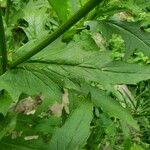
Erechtites hieraciifolius
American burnweed · Burnweed · American fireweed · Prickly Lettuce · Klein
Description
Source: leafsnapErechtites hieraciifolius, commonly known as American burnweed or pilewort, is a herbaceous plant in the Asteraceae family. Native to North America, it thrives in various habitats, including fields, meadows, and disturbed areas. Growing up to 1 meter tall, the plant features a slender stem with alternate, lance-shaped leaves that have toothed margins. Its small, greenish-yellow flowers are clustered at the top of the stem. Traditionally, Erechtites hieraciifolius has been used for medicinal purposes such as treating burns, wounds, and reducing fever due to its anti-inflammatory properties. However, it is important to note that the plant contains toxic compounds that may cause skin irritation or allergic reactions if handled improperly or ingested in large quantities by humans or animals.
🌳 American Burnweed, also known as fireweed, exhibits a notable trait: it thrives in disturbed soils and serves as an indicator of environmental change. It grows well where the soil has been harmed by erosion, pollution, or major weather events. The widespread presence of American Burnweed acts like an ecological distress signal, giving researchers important clues about Earth's wellbeing. Its capacity to exploit such disturbances highlights its remarkable resilience and adaptability — a clear testament to life's persistence in the face of hardship.
Care Guide
💧 Water Every 7 days
Water the plant when the top inch of soil feels dry. Keep the soil consistently moist but not soggy.
☀️ Light Partial sun
American Burnweed thrives in locations with moderate light exposure. Exposure to intense sunlight can impair its growth, resulting in stunting or wilting. Native to habitats with diffused light, it does not exhibit any special tolerance to other light conditions. Different stages of growth do not require different light intensities.
🌡️ Temperature 0–32.2°C
American Burnweed can tolerate a wide range of temperatures, but its distribution may still be constrained by different combinations of water and heat. It does best in warm summer climates with adequate rainfall or watering. Extended periods of cloudy, rainy weather, as well as prolonged high temperatures, can raise the likelihood of American Burnweed dying. In winter, proper protection from cold can improve the plant's survival rate.
💨 Humidity
🪴 Soil 6-7
🌱 Fertilizer
American Burnweed benefits from regular, weak fertilizer applications to encourage healthy leaf growth. You should fertilize American Burnweed about once a month during the summer months. Nitrogen is important for foliage, and providing nitrogen-rich sources helps American Burnweed thrive.
🪴 Pot & Repot
✂️ Pruning
🌿 Propagating
🐛 Diseases & pets
☠️ Toxicity
Characteristics
- Plant Type
- Herb
- Life Cycle
- Annual
- Genus
- Erechtites
- Family
- Asteraceae
- Hardiness Zone
- 6-11
- Mature Height
- 0.61 m to 3.05 m
- Mature Spread
- 30 cm to 91 cm
- Leaf Color
- Green
- Leaf Type
- Semi-evergreen
- Flower Color
- White
- Flower Size
- 2.54 cm
- Bloom Time
- Early summer, Mid summer
- Planting Time
- Spring, Summer, Autumn
- Harvest Time
- Mid summer, Late summer
- Native Area
- Belize, Mexico, Guatemala, Jamaica, Cuba, Canada, Venezuela, Honduras, United States, Peru, Panama, Colombia, Bahamas, Bolivia, Guyana, El Salvador, Nicaragua, Ecuador, Costa Rica