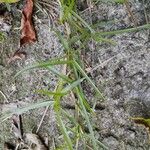
Eremochloa ophiuroides
Lazy-man's grass · Centipede grass
Description
Source: leafsnapEremochloa ophiuroides, or centipedegrass, is a species of grass in the family Poaceae. Used as a warm season lawn grass, it forms thick sods and spreads by stolons. It is medium to light green in color and has a coarse texture with short upright seedhead stems that grow to about 3-5 inches. Native to southern China, it was introduced to the United States in 1916 and has since become one of the common grasses in the southeastern states and Hawai'i. It can also be considered a weed.
Care Guide
💧 Water 1-2 times a week
Centipedegrass, native to Southeast Asia, thrives in moist environments but can also adapt to periods of dryness. For best growth, it should be watered once a week. Known for its resilience in different climates, centipedegrass efficiently uses water to maintain its lush appearance throughout the growing season.
☀️ Light Full sun
Centipedegrass does best with full sun exposure, which fosters healthy growth and vigor. Its native habitat has made it suited to those light conditions. Too little sunlight can impede its growth, and too much can lead to some minor problems, although the species is fairly resilient.
What are the sunlight requirements for Centipedegrass?
Centipedegrass requires above 6 hours of sunlight to thrive effectively. It's vital to observe how sunlight moves through your garden, selecting locations that ensure an optimal balance of light and shade for your plants. This balance promotes their health and happiness. Originating in environments with abundant sunshine, Centipedegrass' growth and vitality are significantly enhanced under full sun exposure, though it is resilient and can tolerate minor issues from excessive sun.
How can artificial lighting benefit indoor Centipedegrass plants?
For indoor Centipedegrass plants, when natural sunlight is insufficient, especially during winter or in less sunny spaces, artificial lighting becomes crucial for optimal growth. Artificial lights can be tailored to supply specific wavelengths needed by plants, promoting faster, healthier growth. LED lights are recommended for their ability to provide 30-50W/sq ft for full sun plants, 20-30W/sq ft for partial sun plants, and 10-20W/sq ft for full shade plants. The light source should be placed 12-36 inches above the plant, mimicking natural sunlight for 8-12 hours per day.
What are the signs of inadequate lighting for Centipedegrass?
Signs of inadequate lighting in Centipedegrass include smaller new leaves, leggy or sparse growth, faster leaf drop, slower or halted new growth, and lighter-colored or yellowing leaves, indicating chlorosis. Excessive sunlight exposure can lead to leaf scorching, sunscald, leaf curling to minimize water loss, and wilting due to increased transpiration and dehydration.
How can I manage Centipedegrass in low light conditions and prevent overexposure to sunlight?
For indoor Centipedegrass, gradually moving the plant to a sunnier spot each week until it gets at least 6 hours of direct sunlight is beneficial; a south-facing window is ideal. Utilize artificial light for large or immovable plants for at least 8 hours daily. For outdoor plants, it's crucial to avoid sudden changes in light intensity to prevent sunburn, moving them gradually to sunnier spots. Minimize obstructions to sunlight by pruning branches or leaves if necessary and consider transplanting smaller plants during their dormant period to a location with ample sunlight and good drainage. It's important to note that while parts of the plant affected by inadequate light may not recover, new growth will be healthy after adjusting the light exposure.
🌡️ Temperature 15–35°C
Centipedegrass comes from subtropical areas and prefers a moderate temperature span of 59 to 95 °F (15 to 35 ℃). It can endure different temperatures, but its growth may slow considerably when conditions are outside that span. Care routines may need to be adjusted seasonally.
What is the native environment of Centipedegrass?
Centipedegrass, botanically known as Eremochloa ophiuroides, is native to subtropical environments. It thrives in a moderate temperature range, preferring conditions between 59 to 95 °F (15 to 35 °C). Although it can tolerate various temperatures, its growth may slow significantly outside of this preferred range. Seasonal care adjustments might be necessary to accommodate for the changing temperatures.
Does Centipedegrass require frost protection measures during winter?
Centipedegrass exhibits strong cold resistance, implying that special frost protection measures are typically not required during winter. However, if winter temperatures are expected to plummet below -15°C, it's advisable to take steps to protect the grass. This can be done by covering the plant with soil or straw to insulate it against the cold. Additionally, it's recommended to water the plant abundantly before the first freeze in autumn, ensuring the soil remains moist and enters winter in a frozen state. This strategy helps prevent drought and water scarcity during the colder months and into early spring.
How does Centipedegrass respond to low temperatures?
Centipedegrass is notably cold-tolerant, preferring temperatures to remain above 15°C for optimal growth. During the winter season, it's crucial to maintain temperatures above -10°C to ensure the plant's health. If temperatures drop below -15°C, you may not observe immediate changes during the winter; however, there could be a noticeable decrease in sprouting or potentially no sprouting at all come springtime. To address this issue in spring, it's recommended to remove any parts of the plant that have failed to sprout, to promote new growth and rejuvenation.
How does Centipedegrass react to high temperatures, and what are the solutions?
In summer, Centipedegrass should ideally be kept below 35°C to prevent heat stress. Temperatures exceeding 38°C can cause the leaves to lighten in color, become prone to curling, and render the plant susceptible to sunburn. In severe cases, this heat stress may result in the entire plant wilting and drying out. To mitigate these effects, you can trim away sunburned and dried-up parts of the plant. Additionally, relocating the plant to a shaded area during the midday and afternoon sun or employing a shade cloth can be effective strategies. It's also beneficial to water the plant in the morning and evening to maintain soil moisture and support the plant during extreme heat.
💨 Humidity
🪴 Soil 6-7
🌱 Fertilizer
Centipedegrass is a warm-season grass that thrives in summer and goes dormant in winter. Fertilizing is essential for dense growth, a bright green color, and improved resilience to stressors such as heat, drought, and cold. Neglected lawns weaken and thin, and they invite unwanted grasses, weeds, insects, and diseases.
🪴 Pot & Repot
✂️ Pruning
Centipedegrass flourishes when pruned from early to late spring, which includes mowing and thinning to improve air circulation and overall health. By timing these practices with the grass's active growth phase, you can prevent thatch buildup and encourage vitality. This leads to a more attractive and robust lawn.
🌿 Propagating
🐛 Diseases & pets
☠️ Toxicity
Characteristics
- Plant Type
- Grass
- Life Cycle
- Perennial
- Genus
- Eremochloa
- Family
- Poaceae
- Hardiness Zone
- 7-9
- Mature Height
- 20 cm
- Mature Spread
- 30 cm to 61 cm
- Leaf Color
- Green, Blue
- Leaf Type
- Semi-evergreen
- Flower Color
- White
- Flower Size
- 4.06 cm to 6.35 cm
- Bloom Time
- Summer, Early fall
- Planting Time
- Spring, Summer, Autumn
- Harvest Time
- Late summer, Fall
- Native Area
- South Korea, Vietnam, China