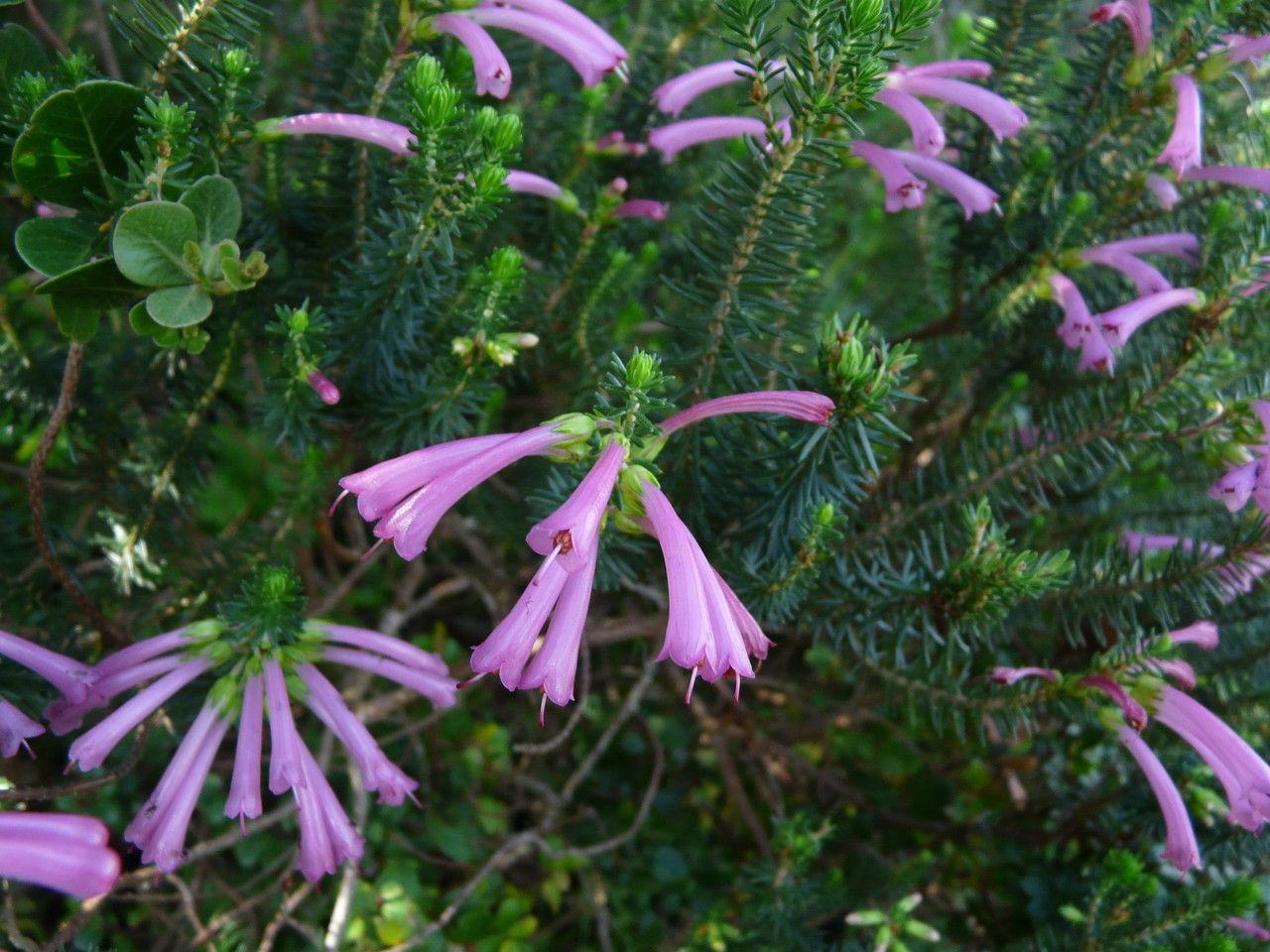
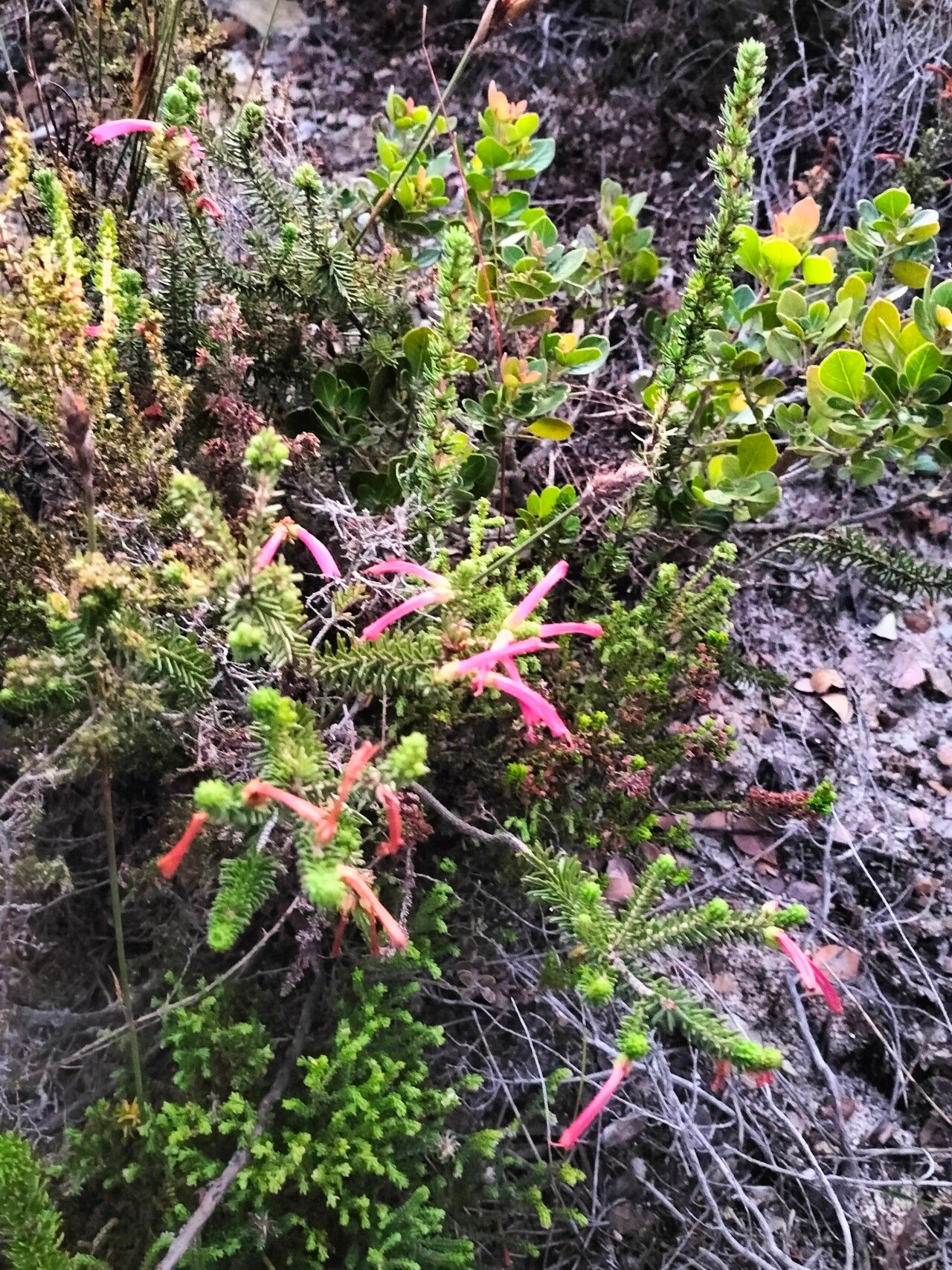
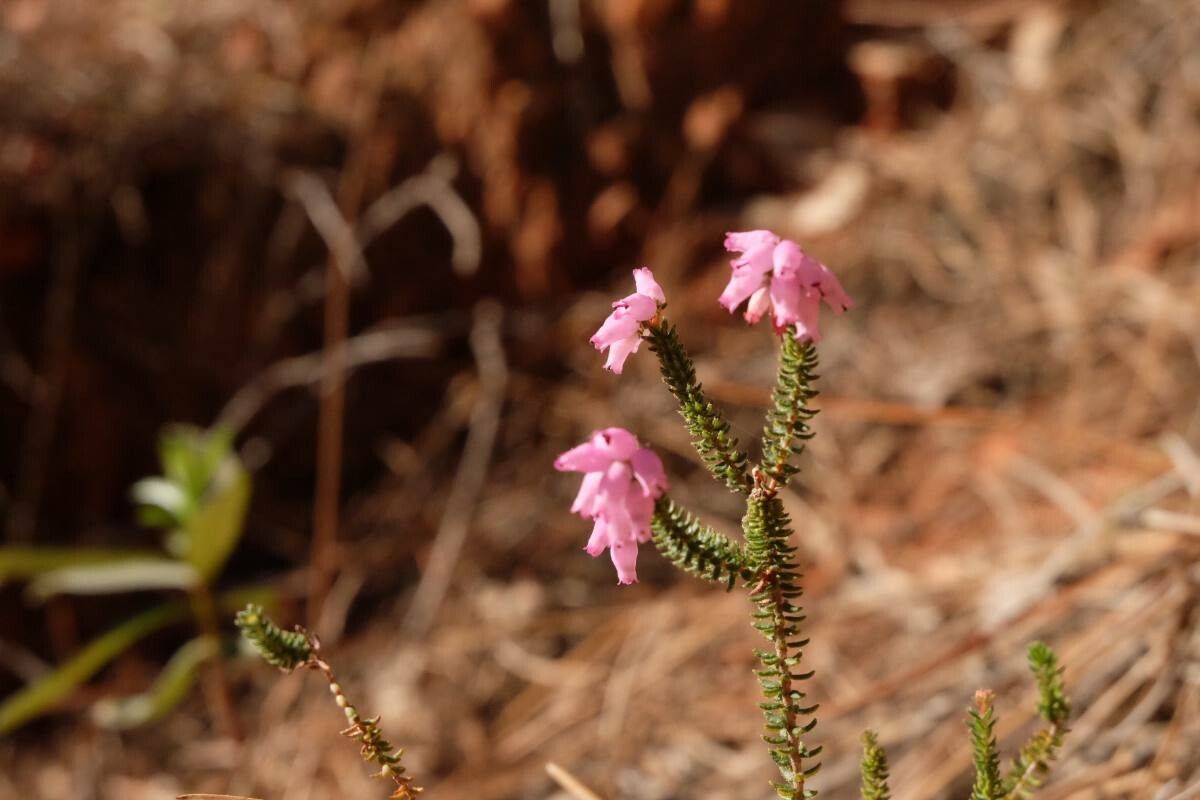
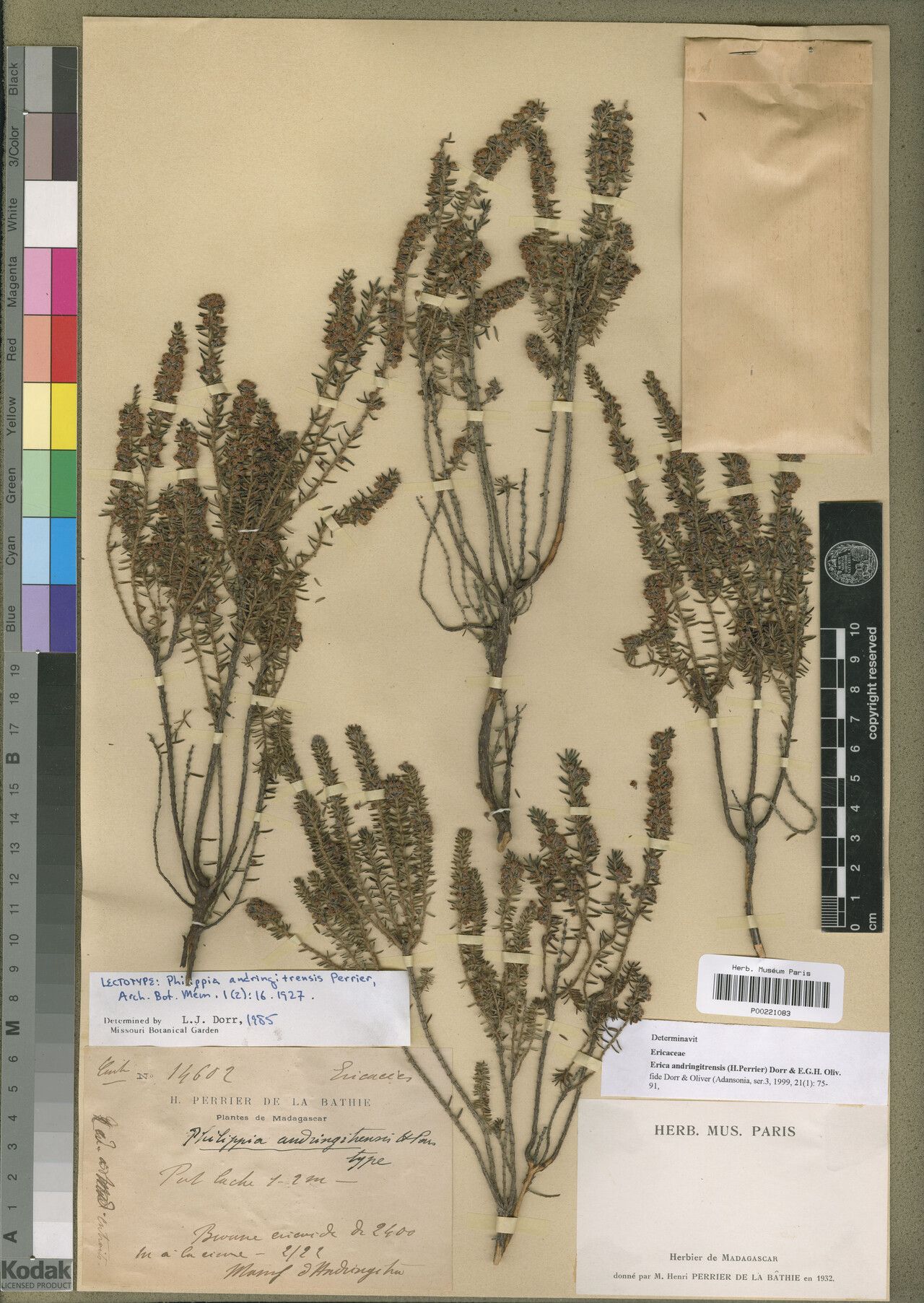
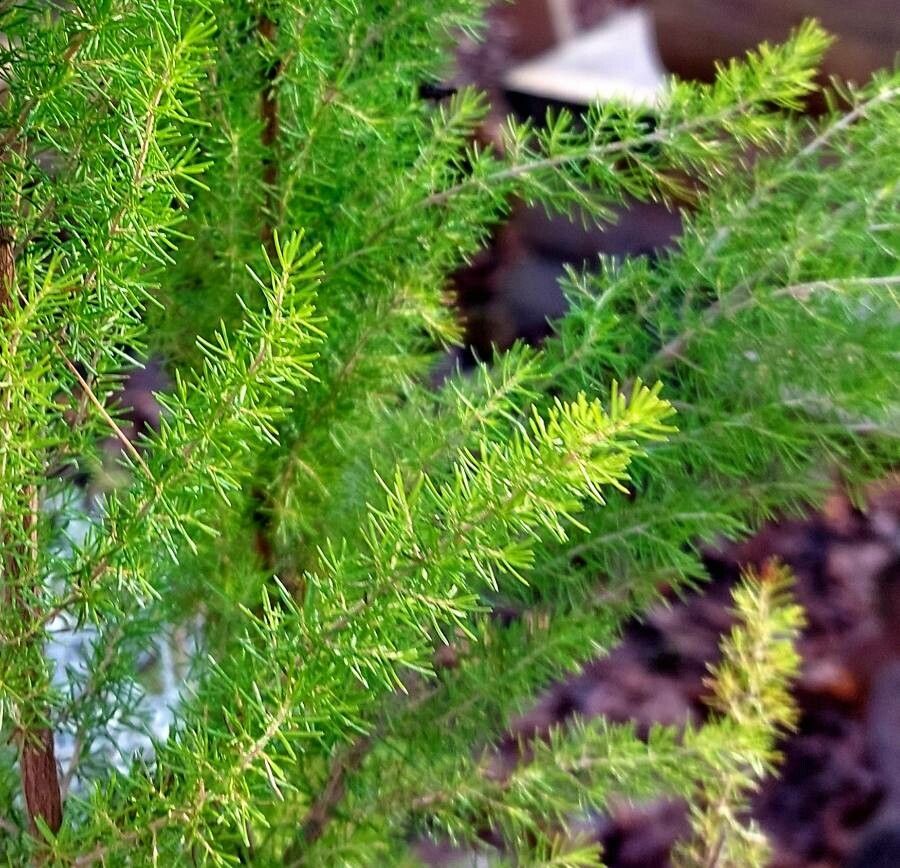
Erica abietina is a species of erica that is endemic to the Cape Peninsula of the Western Cape, South Africa.E. abietina includes four subspecies with often highly restricted distributions and distinctive flower colours. Previous delimitation of the species has included a further three subspecies which proved to be more distantly related to Cape Peninsula endemic E. abietina subspecies and are now classified under Erica grandiflora L.f. (Erica abietina subsp. aurantiaca E.G.H.Oliv. & I.M.Oliv.; Erica abietina subsp. perfoliosa E.G.H.Oliv. & I.M.Oliv.) and Erica situshiemalis E.G.H.Oliv. & Pirie.
Whorl heath has strong resistance to disease and is generally not susceptible to illnesses. Regarding care, this plant is fairly low-maintenance. When placed outdoors it needs minimal watering, and larger plants usually do not require pruning. Smaller plants, however, should be trimmed after they have finished blooming. Whorl heatht is appropriate for anyone with an outdoor space, such as a garden or a deck, and does not require extensive gardening experience.
How to keep Erica Abietina.
Light
The whorl heath does best with plenty of sunlight. This encourages healthy growth and development and the plant comes from naturally bright habitats. The light intensity it requires stays the same through all growth stages. Excessive shade limits its growth, while very strong light does not harm it.
Temperature
Whorl heath is adapted to temperatures of 68 to 95 °F (20 to 35 ℃), reflecting the conditions of its native climate. Temperatures outside this range, particularly below 68 °F (20 ℃), can restrict its growth and should be adjusted seasonally if necessary.
Fertilizer
The timing of fertilizing Whorl heath is important. Apply fertilizer in early spring and repeat monthly until early summer. Fertilizer encourages attractive blooms and supplies energy both during dormancy and active growth.
Botanical profile.
- Plant Type
- Shrub
- Life Cycle
- Perennial
- Genus
- Erica
- Family
- Ericaceae
- Hardiness Zone
- 9-10
- Mature Height
- 0.91 m to 1.52 m
- Mature Spread
- 49 cm to 91 cm
- Leaf Color
- Green
- Leaf Type
- Evergreen
- Flower Color
- Pink
- Flower Size
- 0.25 cm
- Bloom Time
- Mid summer, Late summer, Early fall, Mid fall
- Planting Time
- Summer, Autumn
- Harvest Time
- Late fall, Winter
- Native Area
- South Africa
Other names.
Reader questions.
What are the sun requirements for the Red heath (Erica abietina)?
The Red heath (Erica abietina) requires specific sunlight conditions to thrive. It needs 'Full sun,' which is characterized by receiving more than 6 hours of sunlight per day. Alternatively, it can grow in 'Partial sun,' which means the plant gets about 3-6 hours of sunlight each day. It's important to observe how sunlight moves through your garden throughout the day. Select locations that provide an optimal balance of light and shade to ensure the well-being of your plants.
What is Red heath?
Red heath, known botanically as Erica abietina, is a plant species whose detailed descriptions, including its essentials and symptoms, were not provided in the available information. Additional specifics about this plant, such as habitat, distribution, and care, are also not mentioned.