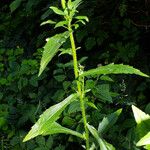
Erigeron annuus
Tall Fleabane · White-top · Daisy Fleabane · Sweet Scabious · Annual fleabane
Description
Source: leafsnapErigeron annuus, commonly known as the annual fleabane, is a flowering plant in the Asteraceae family. Native to North America, it thrives in diverse habitats such as meadows, fields, and roadsides. The plant can grow up to 60 cm tall, featuring a single stem with numerous branches that bear small white or pink flowers with yellow centers. Its narrow, toothed leaves have a hairy texture. Blooming from June to September, the annual fleabane attracts various pollinators, including bees, butterflies, and flies. Additionally, it is known for its use in traditional medicine to treat respiratory ailments like coughs. Erigeron annuus is easy to cultivate from seeds, preferring well-drained soil in full sun or partial shade. It requires moderate watering during its growing season but can tolerate drought conditions once established. Overall, Erigeron annuus is an attractive wildflower that enhances natural landscapes while providing ecological benefits by supporting pollinator populations.
🌳 Aside from its visual appeal, daisy fleabane functions as an ecological indicator of disturbed soils, helping in the biomonitoring of landscape changes. Its rapid appearance in disrupted areas enables scientists and conservationists to evaluate ecological impacts and monitor land-use changes over time.
🎭 Liveliness, guilelessness
Care Guide
💧 Water Every 3 days
Annual fleabane thrives in moist environments akin to temperate regions. While it can tolerate moderate drought, it requires weekly watering to stay hydrated. Generally cultivated outdoors, annual fleabane benefits from natural rainfall, which helps keep the soil evenly moist without becoming waterlogged during its active growing season.
When Should I Water My Annual Fleabane?
Watering annual fleabane is crucial for its growth, vibrant flower production, and disease resistance. The right time to water is when the top 1 to 2 inches of soil around the plant base feel dry. Leaf conditions can also indicate watering needs; if leaves look wilted or start losing their vibrant color, it's likely time for water. The pre-flowering stage is particularly important for hydration to prevent bud drop. Pay attention to water needs during warm temperatures and high sunlight exposure, and avoid watering too early or late to prevent root rot or dehydration, respectively.
How Should I Water My Annual Fleabane?
Water annual fleabane mildly using a watering can with a narrow spout to ensure even soil moisture without disturbance. Overwatering can lead to root rot, so it's best to wait until the soil is dry an inch below the surface. Alternatively, indoor plants can benefit from bottom-watering to reduce overwatering risks. Using a moisture meter can help achieve optimal hydration, focusing water at the plant's base while avoiding foliage to prevent disease.
How Much Water Does Annual Fleabane Really Need?
Annual fleabane requires frequent but light watering due to its shallow root system, aiming to keep the soil consistently moist without saturation. Typically, this means about 1 inch of water per week, though this can vary with climate and soil type. Signs of proper hydration include healthy, green foliage and upright stems. Overwatering or underwatering can lead to yellowing leaves, wilting, or even root rot. It's essential to ensure good drainage and check soil moisture regularly.
What Kind of Water is Best for Annual Fleabane?
For annual fleabane, distilled water is ideal due to its purity, with rainwater as a preferred natural option. Tap water is an acceptable alternative, though it may contain chemicals like chlorine that can harm the plant if untreated. Filtered water that removes these contaminants can be used as well. Annual fleabane is sensitive to chlorine and fluoride, so letting tap water sit to evaporate chlorine or using filtered water is recommended. Room temperature water is best to avoid shocking the plant.
How Do Annual Fleabane's Watering Needs Change with the Seasons?
Annual fleabane's watering needs vary with the seasons. Spring's warmer temperatures increase water needs; ensure consistent soil moisture. During the active summer growth phase, water more frequently to combat increased evaporation. In autumn, reduce watering as temperates drop and growth slows. Water minimally in winter, focusing on preventing soil from completely drying out. Seasonal adjustments are essential for healthy growth and avoiding water stress.
☀️ Light Full sun
Daisy fleabane does best with ample sunlight, which greatly promotes healthy growth. It can also do well in spots with lighter sun exposure. However, continual exposure to very low light can hinder its development and may lead to an unhealthy plant.
What are the sunlight requirements for Annual Fleabane?
Annual Fleabane thrives best in conditions with abundant daylight, crucial for its healthy growth. It requires full sun, which is above 6 hours of sunlight, for optimal growth but can also survive in partial sun, receiving about 3 to 6 hours of sunlight. However, consistent exposure to meager lighting may hinder plant development and lead to unhealthy conditions. It's important to monitor the sunlight throughout your garden, ensuring plants are placed in spots with the right balance of light and shade.
How does artificial lighting support plant growth indoors?
Indoor plants, including the Annual Fleabane, require sufficient lighting for optimal growth, especially when natural sunlight is limited. Artificial lights, such as LED lights that can be customized to provide specific wavelengths, offer a solution by promoting faster, healthier growth. Depending on the plant's sunlight needs, artificial lighting requirements vary: full sun plants need 30-50W/sq ft, partial sun plants 20-30W/sq ft, and full shade plants 10-20W/sq ft. The light source should be placed 12-36 inches above the plant for 8-12 hours per day to mimic natural daylight hours.
What are the symptoms of light deficiency in Annual Fleabane?
When grown indoors or under inadequate light, Annual Fleabane may exhibit several symptoms indicative of light deficiency. These include small and fewer leaves, leggy or sparse growth, faster leaf drop, slower or stunted growth, and paler or irregularly colored new leaves. Additionally, conditions like chlorosis or sunscald reflect excess sunlight exposure, which can harm the plant. Leaf curling, wilting, and leaf scorching are defense mechanisms or damage responses to inappropriate light levels.
How can you address insufficient sunlight for Annual Fleabane?
To counteract insufficient sunlight, gradually increase your plant’s exposure to sunlight by moving it to sunnier spots weekly until it gets at least 6 hours of direct sunlight daily. Use a south-facing window for indoor plants or consider artificial lighting for at least 8 hours a day. For outdoor plants, it's crucial to move them carefully to prevent sunburn. Reducing physical obstructions like trees or buildings can also enhance sunlight exposure. For smaller plants, transplantation during their dormant period to a location with better sunlight and drainage might be necessary. Note that parts of the plant damaged by insufficient sunlight may not recover, but new growth should be healthy with proper light adjustment.
🌡️ Temperature 0–35°C
Daisy fleabane is native to temperate regions with temperatures between 68 and 95 °F (20 and 35 ℃). It favors this warm but moderate climate, though with proper care it can tolerate somewhat cooler temperatures.
What is the native climate for Annual fleabane?
Annual fleabane, botanically known as Erigeron annuus, thrives in temperate regions with temperatures ranging from 68 to 95 °F (20 to 35 °C). It prefers a warm yet moderate climate but can also adjust to cooler temperatures with the right care. This plant is well-suited to environments that fit within these temperature ranges, showcasing its adaptability to a variety of temperate settings.
Does Annual fleabane require special frost protection measures?
Annual fleabane has a strong cold resistance, so it generally doesn't require special frost protection measures, even during winter. However, if temperatures are expected to fall below -35°C, providing cold protection becomes important. This can be achieved by covering the plant with protective materials such as soil or straw. Additionally, watering the plant abundantly before the first freeze of autumn is recommended to ensure the soil remains moist. This preparation helps the plant to withstand drought and water scarcity during the colder months.
What should be done if Annual fleabane is exposed to temperatures below -35°C?
If Annual fleabane is exposed to temperatures below -35°C, you might not observe any immediate changes during winter, but there could be a decrease in sprouting or even no sprouting at all during spring. To address this, remove any parts of the plant that have failed to sprout in spring. This action helps in the recovery and regrowth process of the plant following exposure to extreme cold.
How does high temperature affect Annual fleabane, and what are the solutions?
Annual fleabane should ideally be kept below 35°C during summer to avoid heat stress. If the temperature exceeds 38°C, the plant may show signs of stress such as leaves becoming lighter in color, curling, and being prone to sunburn. In severe cases, the entire plant may wilt and dry up. To mitigate these effects, trim away the sunburned and dried parts of the plant and move it to a location that provides shade, especially during the midday and afternoon sun. Using a shade cloth can also be effective. It's important to water the plant in the morning and evening to keep the soil moist and reduce heat stress.
💨 Humidity normal (40-60%)
This plant will thrive in moderate humidity, which is probably the level in your home. However, misting it a few times a week can be very beneficial. Make sure the room has good ventilation.
🪴 Soil 6-7
🌱 Fertilizer
Daisy fleabane benefits from regular, light applications of fertilizer to encourage healthy leaf development. You should fertilize Daisy fleabane about once a month during the summer. Nitrogen is vital for the foliage, and adding nitrogen-rich sources helps Daisy fleabane flourish.
🪴 Pot & Repot
✂️ Pruning
Deadheading spent flowers can promote a prolonged blooming period. By cutting it back heavily in the fall, this can help to keep the new growth compact and not overly leggy.
🌿 Propagating
🐛 Diseases & pets
☠️ Toxicity
Characteristics
- Plant Type
- Herb
- Life Cycle
- Annual, Biennial
- Genus
- Erigeron
- Family
- Asteraceae
- Hardiness Zone
- 3-9
- Mature Height
- 0 cm to 5 cm
- Mature Spread
- 49 cm
- Leaf Color
- Green
- Leaf Type
- Deciduous
- Flower Color
- White, Yellow
- Flower Size
- 1.02 cm to 1.52 cm
- Bloom Time
- Late spring, Early summer, Mid summer
- Planting Time
- Spring
- Harvest Time
- Early summer, Mid summer
- Native Area
- Nicaragua, Costa Rica, Panama