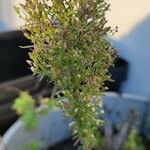
Erigeron canadensis
Horseweed · Butterweed · Canadian fleabane · Canadian horseweed · Hogweed
Description
Source: leafsnapErigeron canadensis (synonym Conyza canadensis) is an annual plant native throughout most of North America and Central America. It is also widely naturalized in Eurasia and Australia. Common names include horseweed, Canadian horseweed, Canadian fleabane, coltstail, marestail, and butterweed. It was the first weed to have developed glyphosate resistance, reported in 2001 from Delaware.
💡 In the autumn fields and tea orchards, clusters of small, unassuming wildflowers bloom among the horseweed.
🌳 Horseweed is more than just a weed; it is a source of natural dye valued for its strong color. The plant contains essential oils that are sought for use in aromatherapy. Notably, horseweed also acts as a bioindicator, revealing high metal concentrations in soil and thus playing an important role in evaluating soil health.
🎭 Holiness, cleansing, banishing the unwanted
Care Guide
💧 Water Twice per week
Horseweed flourishes in environments similar to its natural habitat, which feature periodic rainfall and well-draining soil. It thrives in drier conditions and benefits from moderate watering twice a week. Generally grown outdoors, horseweed adapts well to different levels of rainfall, contributing to the diversity of local ecosystems.
How frequently do I need to water my Horseweed?
To help your Horseweed thrive, it needs regular watering throughout the growing season. In the spring, aim to water it about once a week. As the weather gets warmer, you may need to increase watering to two to three times per week, but be careful not to exceed this rate, as it can harm the plant. No matter how often you water, make sure the soil remains moist but not overly wet. If your Horseweed is in a pot, you'll need to water it more frequently compared to one planted in the ground, as potting soil tends to dry out faster. In most cases, plan to water a potted Horseweed a few times per week instead of just once per week for an in-ground plant.
How much water does my Horseweed plant need?
To determine how much water to give your Horseweed, there are a few methods you can choose from. Some gardeners prefer to gauge the moisture in the soil by feeling it and water until the top six inches are moist. Another option is to use a specific measurement, like two gallons per week, considering factors like temperature and how quickly the soil dries out. However, following fixed guidelines may result in overwatering if your plant needs less water. When growing Horseweed in a container, a different approach is needed. You should water enough to moisten all the dry layers of soil, which can be tested by touching it with your finger or until you see some excess water draining from the pot.
How do I know if I'm giving my Horseweed enough water?
Avoiding overwatering your Horseweed can be somewhat challenging. While the plant's deep roots require regular soil moistening, Horseweed is highly vulnerable to root rot and browning when overwatered. Thankfully, underwatering is less of a concern as Horseweed can survive without extra watering for a while. However, if you neglect to water the plant for too long, it will likely wilt and develop dry leaves.
How should I give water to my Horseweed throughout the year?
As the seasons change, the water needs of your Horseweed will also change. In the spring, watering once a week should be sufficient. However, as the summer heat sets in, you may need to increase watering to about three times per week, especially if your Horseweed is in a container. Containers tend to dry out faster than ground soil during warm weather. In autumn, when the temperature cools and the sun is not as intense, your Horseweed may require less water, even though it is still blooming.
How do I give water to my Horseweed as it grows?
Throughout the year, Horseweed goes through various growth stages, each with different water needs. When you start with a Horseweed seed, it requires more water during the germination phase. You should water it frequently to keep the soil consistently moist. After a few weeks, when the Horseweed sprouts above the soil, it needs slightly less water compared to the seedling phase. Once the plant is fully mature, you can water it once a week. During flower development, you may need to increase the watering slightly to support the process.
☀️ Light Full sun
Horseweed strongly prefers abundant sunlight to grow well. Its development is greatly aided by the sun's radiant energy. Nevertheless, it is hardy enough to establish in places with moderately reduced light. In its natural range it is frequently found in spots receiving plenty of sun. Extremely low or excessively high light levels can impair its normal growth.
What are the sunlight requirements for Horseweed (Erigeron canadensis)?
Horseweed (Erigeron canadensis) flourishes in settings that provide it with plentiful sun exposure, ideally thriving in full sunlight conditions, which means it requires more than 6 hours of direct sunlight daily. It can also adapt to partial sun conditions, receiving about 3-6 hours of sunlight. However, to ensure the plant's well-being, it's crucial to observe the sunlight's movement throughout your garden to find the ideal balance of light and shade. This approach will help ensure your plants gain the benefits of sunlight while avoiding potential negative impacts due to improper light exposure.
How does artificial lighting support Horseweed growth indoors?
When natural sunlight is not adequate, especially during winter months or in less sunlit indoor spaces, artificial lights become an essential aid for the growth of indoor plants like Horseweed. The choice of light, such as LED lights, should be tailored to provide the specific wavelengths needed by the plants. Full sun plants might require 30-50W/sq ft, partial sun plants 20-30W/sq ft, and full shade plants 10-20W/sq ft of artificial light intensity. Positioning the artificial light source 12-36 inches above the plants and mimicking natural daylight duration, usually 8-12 hours, can promote healthier, faster growth.
What are the common symptoms of inadequate light in Horseweed?
Horseweed exhibits several signs when it is not receiving sufficient light, including smaller than usual new leaves, leggy or sparse growth, accelerated leaf drop, cessation of new growth, paler new leaves, and symptoms of excessive light exposure such as chlorosis, sunscald, leaf curling, wilting, and leaf scorching. These symptoms indicate a struggle with the light conditions, either due to insufficient or excessive exposure, impacting the plant's health and development.
What solutions can improve Horseweed's growth in terms of sunlight exposure?
To enhance Horseweed's growth with optimal sunlight exposure, consider gradually relocating plants to sunnier spots to ensure at least 6 hours of direct sunlight daily. For indoor plants, utilizing a south-facing window or artificial lighting can help. Adjusting the plant's location to minimize sudden changes in light exposure is crucial outdoors to prevent sunburn. Also, addressing obstructions by pruning or relocating plants can significantly improve light access. For those affected by low light, new growth will be healthy post-adjustment, although parts damaged by previous poor light conditions may not recover.
🌡️ Temperature 0–35°C
Horseweed is native to regions with mild climates and thrives best at temperatures between 68 and 95 °F (20 and 35 °C). Seasonal temperature adjustments may be required to reproduce these conditions.
What climates are ideal for growing Horseweed?
Horseweed, scientifically known as Erigeron canadensis, thrives best in moderate climates with ideal temperature ranges between 68 to 95 °F (20 to 35 °C). While it possesses strong cold resistance, making special frost protection measures unnecessary in winter under normal conditions, care should be taken when temperatures are expected to fall below -35°C. In such extreme cold scenarios, providing cold protection through covering the plant with soil or straw is recommended. Additionally, to further protect against drought and water scarcity during the cold seasons, it is advisable to water the plant abundantly before the first freeze in autumn, ensuring the soil is moist as it freezes.
How does Horseweed respond to low temperatures, and what should be done in spring following cold exposure?
Horseweed is notably tolerant to low temperatures and manages well during winters, provided temperatures stay above 0°C. However, when temperatures plummet below -35°C, the plant may not exhibit immediate distress during winter, but issues may arise with sprouting in spring. These issues could range from reduced sprouting to complete lack of sprouting. To mitigate this, it is essential to inspect the plant as winter concludes and systematically remove any parts that failed to sprout in spring, facilitating healthier growth for the remaining sections of the plant.
What actions should be taken if Horseweed experiences high temperatures?
During the summertime, Horseweed requires conditions below 35°C for optimal growth. Should temperatures exceed this, particularly going over 41°C, various stress symptoms may become apparent. These include a notable lightening of the leaves, pronounced curling, susceptibility to sunburn, and in severe cases, wilting and drying out of the entire plant. To counter these issues, affected areas should be pruned away to preserve the healthier portions of the plant. Additional steps include relocating the horseweed to a shadier spot to avoid the harsh midday and afternoon sun or employing a shade cloth for protection. Maintaining soil moisture through watering during the cooler morning and evening hours is also crucial in managing heat stress.
💨 Humidity normal (40-60%)
This plant will thrive in moderate humidity, which is probably the level in your home. However, misting it a few times a week can be very beneficial. Make sure the room has good ventilation.
🪴 Soil 6-7
🌱 Fertilizer
Horseweed responds well to regular, light fertilizer applications to encourage healthy leaf development. You should apply fertilizer roughly once a month during the summer. Nitrogen is vital for the foliage, and adding nitrogen-rich sources supports Horseweed's growth.
🪴 Pot & Repot
✂️ Pruning
Deadheading spent flowers can promote a prolonged blooming period. By cutting it back heavily in the fall, this can help to keep the new growth compact and not overly leggy.
🌿 Propagating
🐛 Diseases & pets
☠️ Toxicity
Characteristics
- Plant Type
- Herb
- Life Cycle
- Annual, Biennial
- Genus
- Erigeron
- Family
- Asteraceae
- Hardiness Zone
- 3-10
- Mature Height
- 0.49 m to 1.52 m
- Mature Spread
- 49 cm
- Leaf Color
- Green
- Leaf Type
- Deciduous
- Flower Color
- White
- Flower Size
- 1.02 cm
- Bloom Time
- Early summer, Mid summer
- Planting Time
- Spring, Summer, Autumn, Winter
- Harvest Time
- Mid summer
- Native Area
- Colombia, Bahamas, Belize, Honduras, Mexico, Guatemala, Bolivia, Venezuela, Peru, El Salvador, Nicaragua, Ecuador, Costa Rica, Panama, Jamaica, China