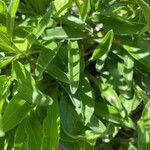
Erigeron coulteri
Coulter's fleabane · Large mountain fleabane · Whiteray daisy
Description
Source: leafsnapErigeron coulteri is a species of flowering plant in the family Asteraceae known by the common names large mountain fleabane, Coulter's fleabane, and Coulter's daisy.Erigeron coulteri is native to much of the western United States where it grows in moist forests and meadows. It has been found in California, Nevada, Colorado, New Mexico, Wyoming, Montana, Oregon, and Idaho, though there are large stretches of land in between known populations.Erigeron coulteri is a perennial herb reaching maximum heights of 20-70 centimeters (8-28 inches). It has an erect stem which may have a few branches or none. There are leaves on its stem as well as at its base. The long leaves are somewhat lance-shaped to more rounded, and sometimes have a few teeth along the edges. The inflorescence atop the stem has one to four flower heads, each between one and two centimeters (0.4-0.8 inches) wide. The center is packed with tiny golden yellow disc florets and the circumference is fringed with up to 140 white ray florets.
🎭 Spirit expulsion, Safeguarding, Celibacy
Care Guide
💧 Water
Large mountain fleabane flourishes in high-altitude environments with moderate moisture levels, benefiting from weekly watering to maintain optimal health. When grown indoors, it requires consistent humidity. During its dormancy period, the plant's watering needs decrease as its metabolic activity slows down.
How should I water my Big mountain fleabane plant?
To ensure proper care for the Large mountain fleabane, it is recommended to use filtered water at room temperature. Tap water may contain harmful particles for this plant. Moreover, the water should be warm or at least at room temperature to avoid shocking the plant, given its origin in warm environments. Additionally, overhead watering should be avoided as it can cause foliage issues. Instead, it is best to thoroughly water the soil with filtered room temperature water until it is completely soaked. This promotes beneficial conditions for the plant by keeping the roots moist and assisting in their nutrient absorption and growth.
What should I do if I give too much water or too little water to my Large mountain fleabane?
Overwatering is a more common issue for the health of your Large mountain fleabane. It can cause wilting and yellowing of the stems and leaves, as well as diseases like root rot, mold, and mildew that can be fatal to the plant. Underwatering is less common due to the plant's tolerance for drought, but it can still happen and result in brittle and brown leaves. It is important to recognize the signs of overwatering early on, as some diseases may not be fixable if left unchecked. Reduce watering immediately if you notice these signs and consider replacing poorly draining soil with a loose, well-draining potting mix. If you notice signs of underwatering, simply increase your watering frequency until the signs improve.
How much should I water my Large mountain fleabane?
If your Large mountain fleabane is in a pot, the best way to determine if it needs water is to stick your finger in the soil. If the top two to three inches of soil are dry, it's time to add water. If you're growing it outdoors in the ground, you can use the same method to test the soil. Once the top few inches of soil have dried out, add water. In the spring and early fall, you'll likely need to water about once a week. During extremely hot weather, you may need to water twice or more per week. However, mature, well-established Large mountain fleabane plants can handle drought well.
How much water does my Big Mountain Fleabane plant need?
When watering your Large mountain fleabane, don't hesitate to give it a generous amount of water. Make sure the top two to three inches of soil are dry before watering, and then thoroughly soak the soil. Add enough water so that it drains out of the pot's drainage holes. If you don't see any excess water draining, you may have not given enough water. However, be cautious not to let water collect inside the soil, as this can harm the plant. If there is no water draining through the pot, it could indicate that the soil doesn't drain well, which is not good for the plant's health. If the plant is outdoors, around 1 inch of rain per week should be enough.
How should I water my big mountain fleabane at different times when it is growing?
The water needs of the Large mountain fleabane change depending on its growth stages. When the plant is in its early years or has just been transplanted, it will require more water than usual. This is because during these stages, the plant focuses on sprouting new roots that will support future growth, and these roots need more moisture. As the plant matures, it will require less water. Additionally, during the blooming period, the plant may need more water as flower development requires a significant amount of moisture.
☀️ Light Full sun
Large mountain fleabane is a sun-loving, perennial herbaceous plant native to open habitats and often flourishing in meadows and grasslands. It prefers full sun but can tolerate partial sun.
🌡️ Temperature 0–32.2°C
Large mountain fleabane can tolerate a broad range of temperatures, but its distribution may still be restricted by different combinations of water and heat. It does best in warm summer climates with adequate rainfall or watering. Prolonged stretches of cloudy, rainy weather, as well as extended periods of high temperatures, can raise the likelihood of Large mountain fleabane dying. In winter, protecting it adequately from cold can improve its survival rate.
💨 Humidity
🪴 Soil 6-7
🌱 Fertilizer
The best time to fertilize a Large mountain fleabane is in early spring, as it comes out of dormancy and begins active growth. Fertilization supplies essential nutrients needed for healthy development. Although a Large mountain fleabane has relatively low fertilizer requirements, applying fertilizer once a year can improve its survival and encourage better, longer-lasting flowers.
🪴 Pot & Repot
✂️ Pruning
The large mountain fleabane is known for its attractive, daisy-like flowers and thrives in mountainous regions. To encourage growth and blooming, prune the plant from early to late spring. Regularly remove spent flowers to extend the blooming period, making sure to sterilize your tools to prevent disease. Consistent pruning also improves the plant's overall health and appearance.
🌿 Propagating
🐛 Diseases & pets
☠️ Toxicity
Characteristics
- Plant Type
- Herb
- Life Cycle
- Perennial
- Genus
- Erigeron
- Family
- Asteraceae
- Hardiness Zone
- 3-8
- Mature Height
- 20 cm to 76 cm
- Mature Spread
- 15 cm to 30 cm
- Leaf Color
- Green, Dark Green
- Leaf Type
- Evergreen
- Flower Color
- White, Yellow
- Flower Size
- 1.02 cm to 2.03 cm
- Bloom Time
- Early summer, Mid summer
- Planting Time
- Spring, Summer
- Harvest Time
- Mid summer, Late summer