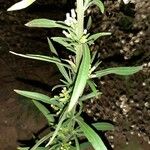
Erigeron sumatrensis
پیر بهارک بلند · Tall fleabane · Guernsey fleabane · Broadleaf fleabane · Yahu
Description
Source: leafsnapErigeron sumatrensis (syn. Conyza sumatrensis) is an annual herb probably native to South America, but widely naturalised in tropical and subtropical regions, and regarded as an invasive weed in many places. In the British Isles it is known as Guernsey fleabane. Other common names include fleabane, tall fleabane, broad-leaved fleabane, white horseweed, and Sumatran fleabane.
💡 Guernsey fleabane produces seed heads similar to those of dandelions. In certain regions, Erigeron sumatrensis has developed resistance to herbicides.
🌳 Although not commonly noted for any particular commercial application, guernsey fleabane has drawn scientific attention because it exhibits notable resistance to some herbicides. This resistance may have implications for agricultural weed-management practices, prompting researchers to study guernsey fleabane to understand the mechanisms behind herbicide resistance and to potentially develop new approaches for managing resistant weed species in crop production systems.
Care Guide
💧 Water
Guernsey fleabane is well-suited to its environment, preferring moderate hydration and having the ability to withstand drought conditions. For optimal health, it's best to water it weekly. This plant thrives in temperate regions and adapts its growth to seasonal rainfall, making it an excellent choice for gardens that have regular, but not excessive, moisture.
How should I water my Guernsey fleabane plant?
To water Guernsey fleabane, you have various options such as using a garden hose with a spray nozzle, a watering can, or any other common watering tool. Fortunately, Guernsey fleabane is not too particular about its water source and can thrive with rainwater, tap water, or filtered water. However, it's recommended to avoid watering this plant from overhead as it can harm the leaves and flowers and even lead to disease. Instead, a drip irrigation system is often the best choice, as it provides even and direct watering to the soil. If you have a container-grown Guernsey fleabane, you can use a cup, watering can, or tap water to directly water the soil.
What should I do if I give my Guernsey fleabane plant too much or too little water?
The remedy for underwatering Guernsey fleabane is simple: when you notice that your plant lacks moisture, just water it more regularly. However, overwatering can be a serious issue. If you don't catch it early, your Guernsey fleabane could develop diseases that lead to its decline and death. To prevent this, choose a location with good sunlight and drainage to allow excess water to drain properly. If you overwater your potted Guernsey fleabane, consider transferring it to a new pot with better drainage. When repotting, use loose soil and a pot that drains efficiently.
How often do I need to water my Guernsey fleabane?
Guernsey fleabane requires regular watering throughout the growing season. In the spring, aim to water it once a week. As the weather gets warmer, you may need to increase watering to two or three times a week. However, be careful not to exceed this rate as it can harm the plant. Regardless of watering frequency, make sure the soil remains moist but not wet. Watering Guernsey fleabane in a pot is slightly different. Potted plants tend to dry out faster than those in the ground, so you'll need to water them more frequently. Generally, plan to water a container-grown Guernsey fleabane a few times per week, compared to just once a week for one planted in the ground.
How much water does my Guernsey fleabane plant need?
Determining the appropriate amount of water for your Guernsey fleabane can be done in a few ways. One method is to feel the soil for moisture and water until the first six inches are moist. Another option is using a set measurement, such as giving the plant about two gallons of water per week, considering factors like temperature and soil dryness. However, strictly following these guidelines may result in overwatering if the plant needs less water. When growing Guernsey fleabane in a container, you can determine the water supply by moistening all the dry soil layers, checking for moisture with your finger, or noticing excess water draining from the pot's holes.
How can I know if I am giving enough water to my Guernsey fleabane plant?
Avoiding overwatering your Guernsey fleabane can be challenging. While these plants have deep roots that require weekly soil moistening, they are highly prone to root rot and browning if overwatered. Underwatering is less of a concern as Guernsey fleabane can survive without supplemental watering for some time. However, if water is withheld for too long, the plant will begin to wilt and exhibit dry leaves.
☀️ Light Full sun
Guernsey fleabane grows best in locations that get plenty of sun year-round. Because it comes from habitats with abundant sunlight, insufficient light can restrict its growth. Although it is generally tolerant of a lot of sun, too much exposure can still cause damage.
What are the sunlight requirements for Guernsey fleabane?
Guernsey fleabane requires more than 6 hours of sunlight daily, thriving exceptionally in full sun. It's essential to monitor your garden's sunlight, ensuring plants get a balance of light and shade for optimal growth. This species originates from environments with abundant sunlight, and thus, its growth might suffer if it doesn't receive sufficient sunlight. However, it's generally tolerant to a lot of sun, but overexposure could potentially harm it. If natural sunlight is inadequate, especially during winter or in less sunny spaces, artificial lights can be a significant aid, promoting healthier and faster growth.
What should I do if my Guernsey fleabane isn't getting enough light?
If your Guernsey fleabane shows signs of light deficiency, such as smaller leaves, leggy growth, early leaf drop, halted or delayed growth, chlorosis or irregular color patterns, and other symptoms associated with insufficient sunlight or overexposure, there are several solutions. Indoors, gradually move the plant to a sunnier spot, ensuring at least 6 hours of direct sunlight daily, or consider using artificial lighting if moving the plant isn't feasible. Outdoors, transition the plant to better-lit areas gradually to prevent sunburn. If the plant is in the ground and blocked by obstructions like trees, pruning or transplanting during the dormant period might be necessary to improve light access.
How can artificial lighting support Guernsey fleabane indoor growth?
When natural sunlight is lacking, artificial lighting can significantly support Guernsey fleabane's growth indoors. It's suggested to select the appropriate type of light; LED lights are recommended for their ability to provide specific light wavelengths needed by plants. Aim for 30-50W/sq ft for full sun plants, adjust the light source's distance to 12-36 inches above the plant, and ensure the lights are on for about 8-12 hours per day to mimic natural daylight hours. This approach can help supplement the plant's light needs, especially during less sunny seasons or in indoor environments with limited sunlight.
🌡️ Temperature 15–35°C
Guernsey fleabane originates from habitats characterized by mild to warm temperatures and prefers conditions between 68 and 95 °F (20 to 35 ℃). Keeping temperatures within this range year-round will preserve its vitality.
What is the ideal temperature range for Guernsey fleabane?
Guernsey fleabane thrives in mild to warm environments, preferring temperature settings within 68 to 95 °F (20 to 35 °C). Maintaining this temperature range throughout the year ensures the plant's vitality. Despite its strong cold resistance, if winter temperatures are expected to fall below -15°C, it is crucial to provide cold protection to the plant through covering materials such as soil or straw. Also, watering the plant abundantly before the first freeze in autumn helps the soil remain moist and prevents drought and water scarcity for the plant during winter and early spring.
How does Guernsey fleabane react to low temperatures?
Guernsey fleabane is known for its cold tolerance, performing best when temperatures remain above 20°C. During winter, it is essential to keep the plant above 0°C. If temperatures drop below -15°C, the plant may not show immediate signs of distress, but there can be a notable decrease in sprouting or even a lack of sprouting in spring. To counteract any damage from low temperatures, it is recommended to remove parts of the plant that have failed to sprout in spring.
What should be done if Guernsey fleabane is exposed to high temperatures?
In the summer, Guernsey fleabane should ideally be kept below 35°C to prevent stress from high temperatures. Exposure to temperatures above 38°C can cause the plant's leaves to become lighter, prone to curling, susceptible to sunburn, and, in severe cases, the plant may wilt and dry out. To remedy this, trim away sunburned and dried-up parts. Relocating the plant to a shaded location or using a shade cloth to protect it from midday and afternoon sun is advisable. Additionally, watering the plant in the morning and evening will help keep the soil moist and support the plant's health.
💨 Humidity
🪴 Soil 5-7
🌱 Fertilizer
Guernsey fleabane does well with frequent, light applications of fertilizer to encourage healthy leaf growth. You should feed Guernsey fleabane about once a month during the summer. Nitrogen is important for foliage, and adding nitrogen-rich fertilizer helps Guernsey fleabane prosper.
🪴 Pot & Repot
✂️ Pruning
🌿 Propagating
🐛 Diseases & pets
☠️ Toxicity
Erigeron sumatrensis is a slightly toxic plant that can cause vomiting and diarrhea if swallowed. In addition, it can cause contact dermatitis in some sensitive people. It often appears as a flower plant in gardens or parks, so people may come into contact with it and develop allergic symptoms.
Characteristics
- Plant Type
- Herb
- Life Cycle
- Annual
- Genus
- Erigeron
- Family
- Asteraceae
- Hardiness Zone
- 7-9
- Mature Height
- 0.91 m to 2.13 m
- Mature Spread
- 30 cm to 61 cm
- Leaf Color
- Green
- Leaf Type
- Semi-evergreen
- Flower Color
- White, Yellow
- Flower Size
- 0.51 cm to 0.76 cm
- Bloom Time
- Mid spring, Late spring, Summer, Early fall
- Planting Time
- Spring, Autumn
- Harvest Time
- Late spring, Summer, Fall
- Native Area
- Colombia, Belize, Honduras, Guatemala, Bolivia, Venezuela, El Salvador, Nicaragua, Costa Rica, Panama