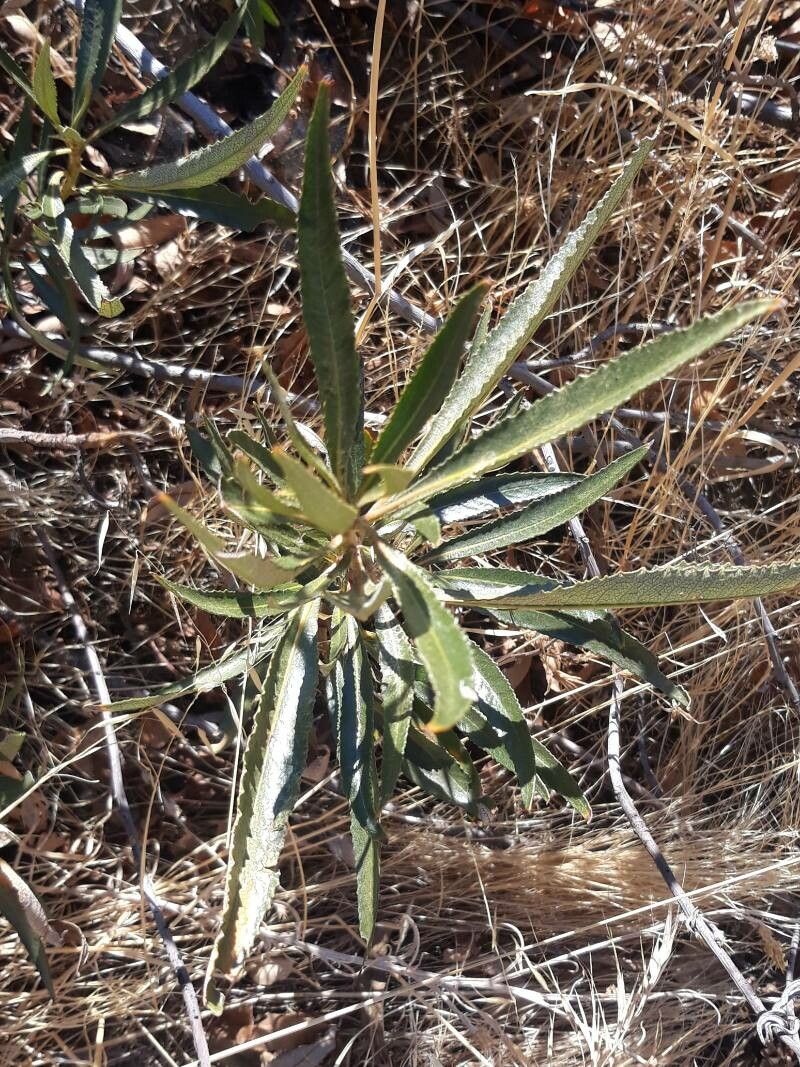
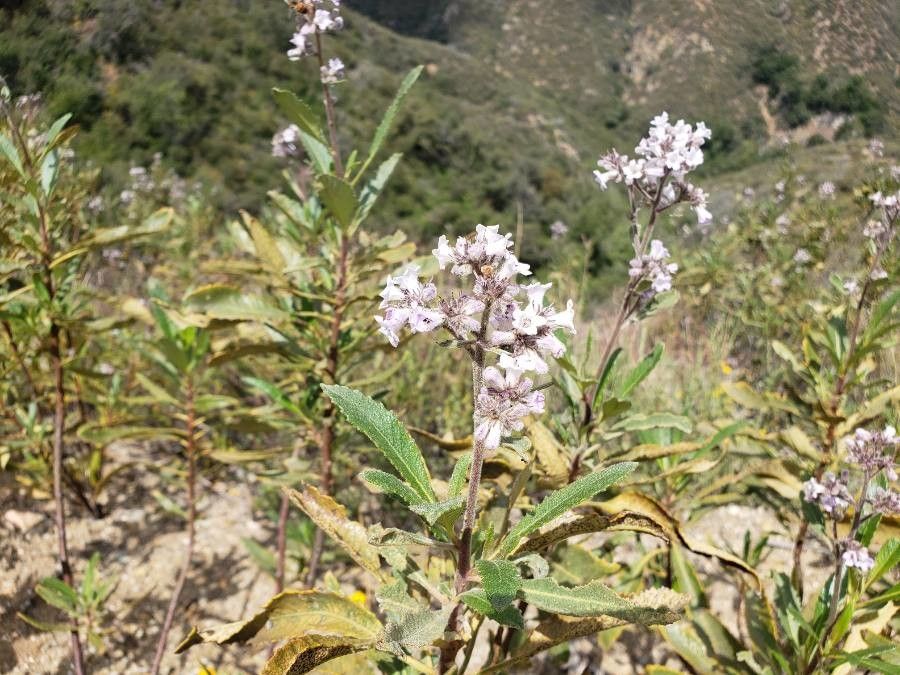
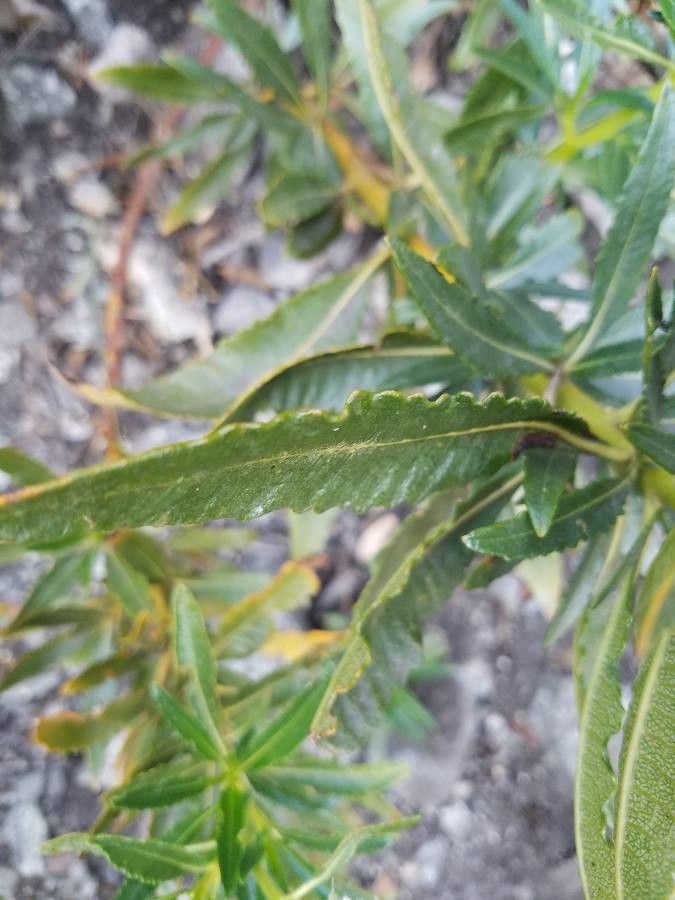
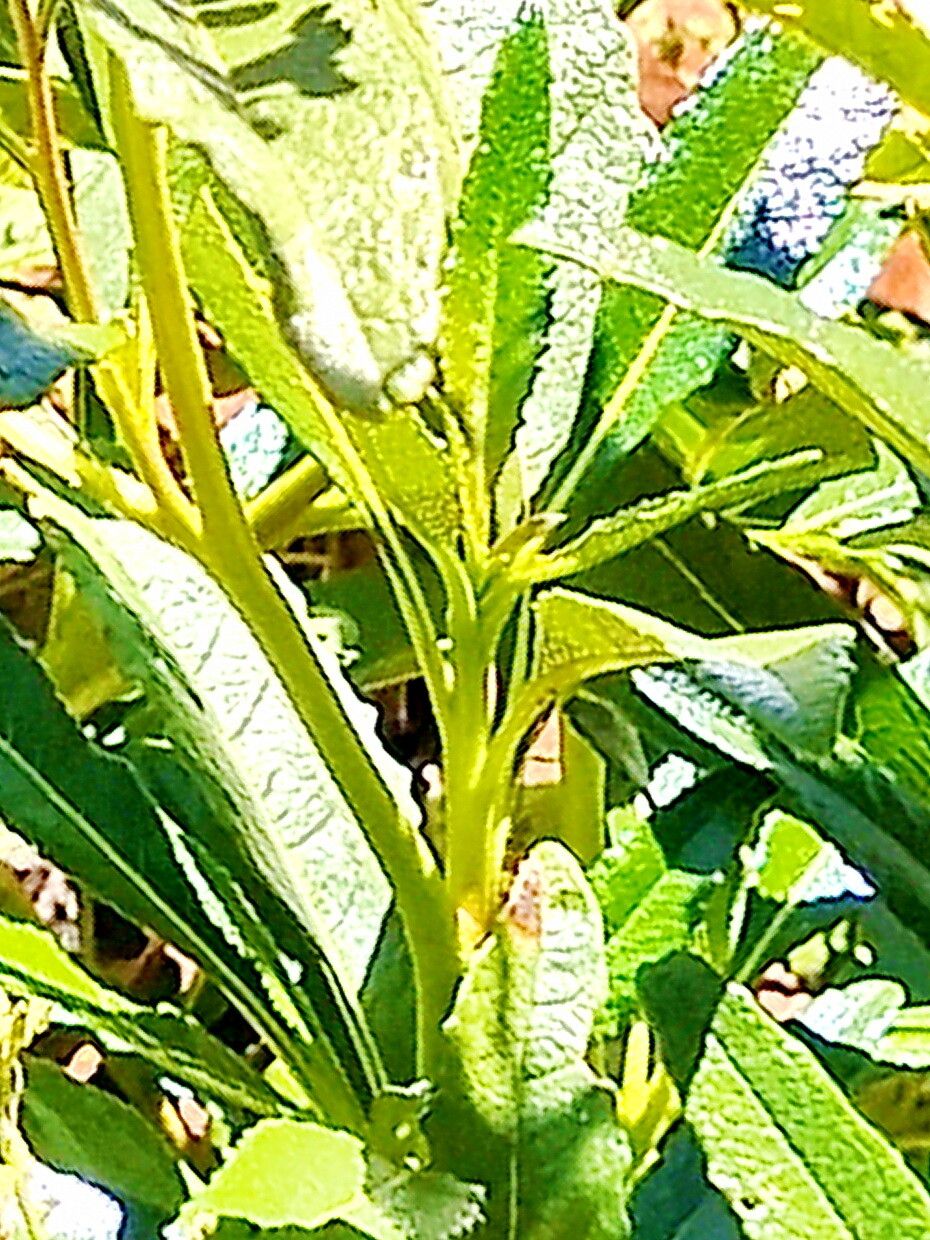
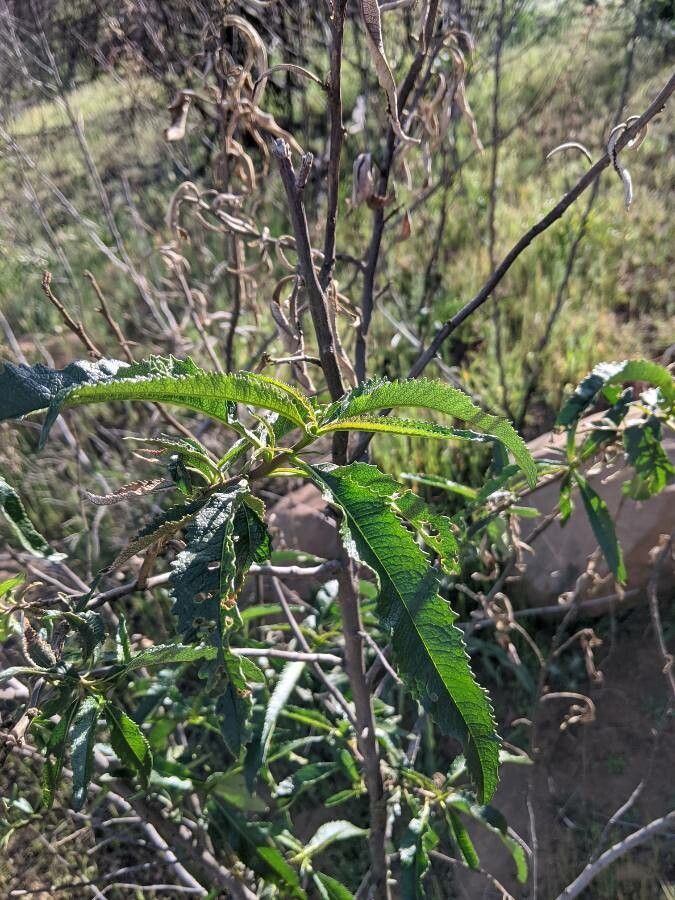
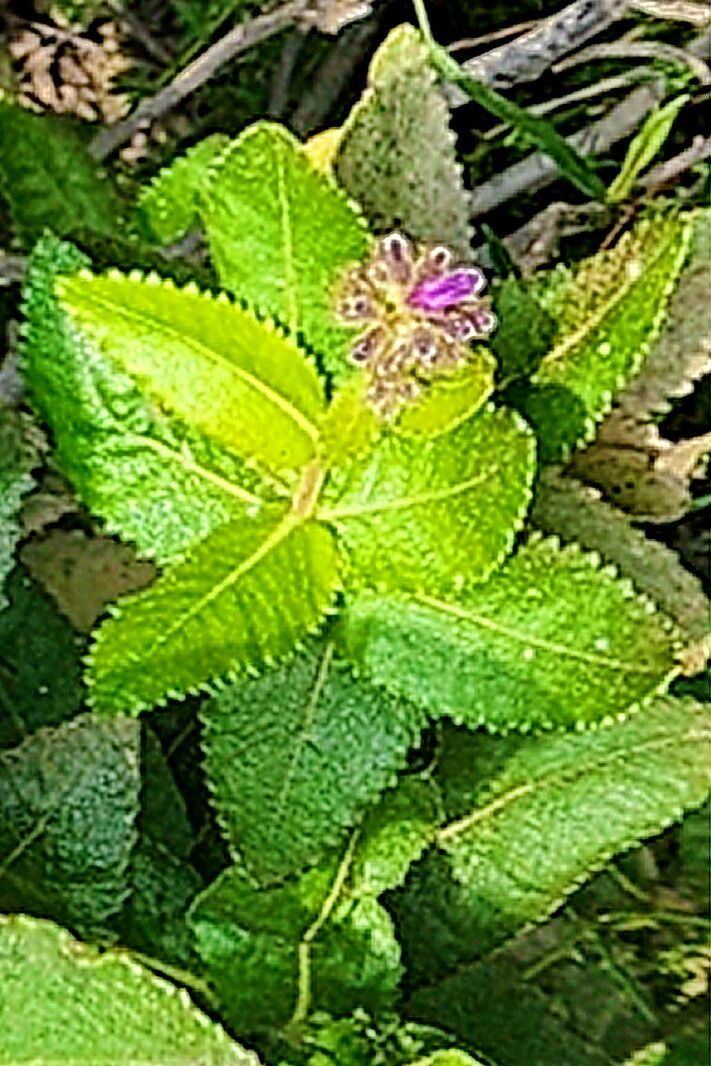
Eriodictyon trichocalyx, commonly known as hairy yerba santa, is a species of flowering plant in the borage family. Native to California, it thrives in various habitats such as chaparral, coastal sage scrub, and oak woodlands. The plant can grow up to 2 meters tall and features hairy leaves that are green on the top and white underneath. Its flowers, which bloom from May to July, are small, with five petals, and can be white or lavender in color.
For centuries, Native Americans have used hairy yerba santa for its medicinal properties. It was believed to aid in the treatment of respiratory ailments such as asthma, bronchitis, and coughs due to its expectorant qualities. Additionally, the leaves were applied topically to wounds and skin irritations for their anti-inflammatory properties.
Beyond its medicinal uses, Eriodictyon trichocalyx plays a significant role in wildlife habitat restoration projects. Its ability to fix nitrogen into the soil improves conditions for other plants to grow.
Overall, Eriodictyon trichocalyx is a valuable native California plant, offering both medicinal benefits and ecological advantages. Its presence is an important part of our natural environment.
Hairy yerba santa has strong resistance to disease and is generally not susceptible to illnesses. Regarding care, the plant is fairly low-maintenance. When grown outdoors it needs little watering, and larger plants usually do not require pruning. Smaller specimens, however, should be pruned after they finish blooming. Hairy yerba santat is suitable for anyone with outdoor space, such as a garden or deck, and does not require much prior care experience.
How to keep Eriodictyon Trichocalyx.
Light
Hairy yerba santa is native to open habitats, including sunlit meadows and forest margins that provide abundant light. It does best in full sun but can tolerate partial sun, adapting well to different light conditions.
Temperature
Hairy yerba santa shows strong adaptability to a range of climatic conditions, from very hot summers to cold winters. Still, it has a preferred temperature range for growth. If temperatures rise too high, the plant is susceptible to heat and humidity stress, which can kill it. In areas where temperatures approach the lower limit of its cold tolerance, it is important to provide insulation to protect the plant.
Fertilizer
Fertilize your Hairy yerba santa in early spring to encourage healthy growth. Consistent fertilization improves overall health, leading to vigorous growth, greater tolerance of harsh conditions, and enhanced resistance to pests and diseases. Keep a regular fertilizing schedule for your Hairy yerba santa to maintain lively foliage with deep color and a lush appearance.
Pruning
Pruning hairy yerba santa in early spring promotes growth and flowering. By trimming dead branches and woody stems just above a node, you encourage branching. This practice not only improves airflow and light penetration but also aids in the plant's recovery and prepares it for vibrant blooms.
Botanical profile.
- Plant Type
- Shrub
- Life Cycle
- Perennial
- Genus
- Eriodictyon
- Family
- Boraginaceae
- Hardiness Zone
- 8-10
- Mature Height
- 0.91 m to 2.13 m
- Mature Spread
- 49 cm to 91 cm
- Leaf Color
- Green, Dark Green
- Leaf Type
- Evergreen
- Flower Color
- White
- Flower Size
- 1.02 cm to 1.52 cm
- Bloom Time
- Mid spring, Late spring, Early summer
- Planting Time
- Spring, Summer
- Harvest Time
- Summer
- Native Area
- Mexico
Other names.