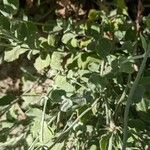
Eriogonum cinereum
Coastal buckwheat
Description
Source: leafsnapEriogonum cinereum is a species of wild buckwheat known by the common names coastal buckwheat and ashyleaf buckwheat.
🎭 Finances, Security
Care Guide
💧 Water
Coastal buckwheat is a drought-tolerant plant native to arid coastal regions, thriving in well-drained soils. To stay healthy, it requires deep but infrequent watering, roughly once a week. During its growing season, coastal buckwheat demonstrates remarkable resilience, adapting well to irregular rainfall and enduring dry conditions.
☀️ Light Full sun
Coastal buckwheat is a perennial herbaceous plant that prefers abundant sunlight and originates from open habitats, frequently growing in meadows and grasslands. It favors full sun but can also tolerate partial sun.
What are the sunlight requirements for Coastal buckwheat?
Coastal buckwheat, scientifically known as Eriogonum cinereum, is a sun-loving perennial herbaceous plant that thrives in full sun, requiring above 6 hours of sunlight daily. It can also tolerate partial sun conditions, which means about 3-6 hours of sunlight. It's essential to watch how sunlight moves through your garden, choosing spots that provide a perfect balance of light and shade for your plants, ensuring their happiness and health.
Can Coastal buckwheat be grown indoors, and how do I provide adequate light?
Yes, Coastal buckwheat can be grown indoors, especially during periods when natural sunlight is insufficient, such as in winter or in less sunny spaces. Artificial lighting serves as a vital solution for promoting faster, healthier growth. LED lights are recommended because they can be customized to provide specific wavelengths of light. Full sun plants need 30-50W/sq ft of artificial light, while partial sun plants require 20-30W/sq ft. The light source should be placed 12-36 inches above the plant to mimic natural sunlight, and most plants need 8-12 hours of light per day.
What are the symptoms of insufficient light in Coastal buckwheat?
When Coastal buckwheat is grown in rooms with inadequate lighting, several symptoms can manifest, such as smaller new leaves compared to mature ones, leggy or sparse growth, faster leaf drop, slower or no new growth, lighter-colored new leaves, and conditions like chlorosis, sunscald, leaf curling, wilting, and leaf scorching. These symptoms indicate a light deficiency, affecting the plant's ability to thrive.
What are solutions for Coastal buckwheat suffering from insufficient sunlight?
For Coastal buckwheat suffering from insufficient sunlight, moving the plants gradually to a sunnier location each week until they receive at least 6 hours of direct sunlight daily is advisable. If the plant is large or not easily movable, consider using artificial light like a desk or ceiling lamp for at least 8 hours daily, or invest in professional grow lights for ample light. Outdoors, it's crucial to avoid sudden changes in light intensity to prevent sunburn. Reducing obstructions by pruning trees or branches and transplanting smaller plants during their dormant period to locations with ample sunlight and good drainage can also help. It's important to note that parts of the plant affected by insufficient sunlight may not recover, but new growth after improving light exposure will be healthy.
🌡️ Temperature 15–35°C
Coastal buckwheat is native to temperate regions and performs best at temperatures of 59 to 95 °F (15 to 35 ℃). In cooler months, consider supplying extra warmth. Exercise extra caution during periods of extreme heat.
What is the ideal temperature range for Coastal buckwheat?
Coastal buckwheat, with its botanical name Eriogonum cinereum, flourishes in temperate climates, finding its ideal temperature range between 59 to 95 °F (15 to 35 °C). It has strong cold resistance but should be given extra warmth in cooler months. Despite its resilience, precautions are needed in extreme heat. In winter, although it generally does not require special frost protection, temperatures dropping below -15°C necessitate cold protection measures.
How should Coastal buckwheat be cared for in winter to prevent drought and water scarcity?
To prevent drought and water scarcity for Coastal buckwheat during the winter and early spring months, it is recommended to water the plant abundantly before the first freeze in autumn. Ensuring the soil remains moist and enters a frozen state is crucial. This preparation helps the plant sustain through the colder months without experiencing water scarcity.
What are the implications of low temperature on Coastal buckwheat and how can it be managed?
Coastal buckwheat withstands cold well, thriving best above 15°C and needing special care when temperatures fall below -10°C. If temperatures drop below -15°C, the plant might not show immediate damage but could exhibit decreased sprouting or fail to sprout in spring. To manage any cold damage, it is advised to remove parts of the plant that have failed to sprout come spring.
What effects does high temperature have on Coastal buckwheat and what are the solutions?
In high temperatures, specifically above 35°C, Coastal buckwheat's leaves may lighten in color, become prone to curling, and suffer from sunburn. In severe cases of heat exceeding 41°C, the entire plant might wilt and dry out. To protect and revive the plant under such conditions, trim away any sunburned or dried parts, move the plant to a shadier location, or use a shade cloth to protect it from midday and afternoon sun. Watering the plant in the morning and evening is also crucial to keep the soil moist.
💨 Humidity
🪴 Soil 6-8
🌱 Fertilizer
The best time to fertilize a Coastal buckwheat is in early spring, as it comes out of dormancy and starts active growth. Fertilization supplies essential nutrients for healthy development. Although Coastal buckwheat has relatively low fertilizer requirements, an annual application can improve its survival and encourage better, longer-lasting flowers.
🪴 Pot & Repot
✂️ Pruning
Coastal buckwheat is a low-growing shrub with gray, woolly leaves and delicate flowers that range from white to pink. For best results, prune it lightly from early to late spring, removing any dead stems to maintain its shape and improve air circulation. Be careful not to prune too heavily, as coastal buckwheat blooms on old wood. Light pruning promotes healthier growth and vitality.
🌿 Propagating
🐛 Diseases & pets
☠️ Toxicity
Characteristics
- Plant Type
- Herb
- Life Cycle
- Perennial
- Genus
- Eriogonum
- Family
- Polygonaceae
- Hardiness Zone
- 7-10
- Mature Height
- 0.61 m to 1.22 m
- Mature Spread
- 0.61 m to 1.22 m
- Leaf Color
- Gray, Light Gray
- Leaf Type
- Evergreen
- Flower Color
- White, Pink
- Flower Size
- 0.25 cm to 0.25 cm
- Bloom Time
- Late spring, Summer, Fall
- Planting Time
- Spring, Summer, Autumn
- Harvest Time
- Mid summer, Late summer, Fall, Early winter