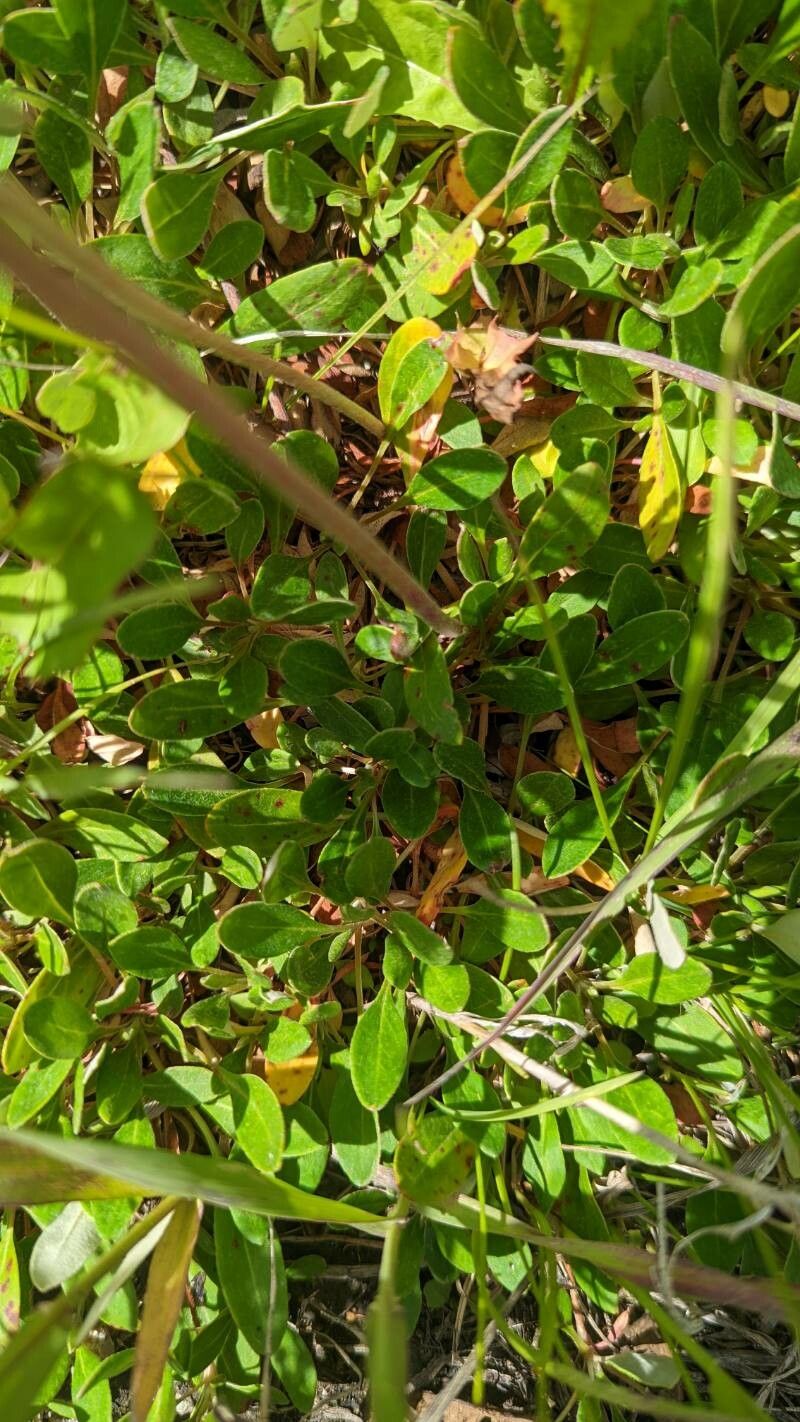
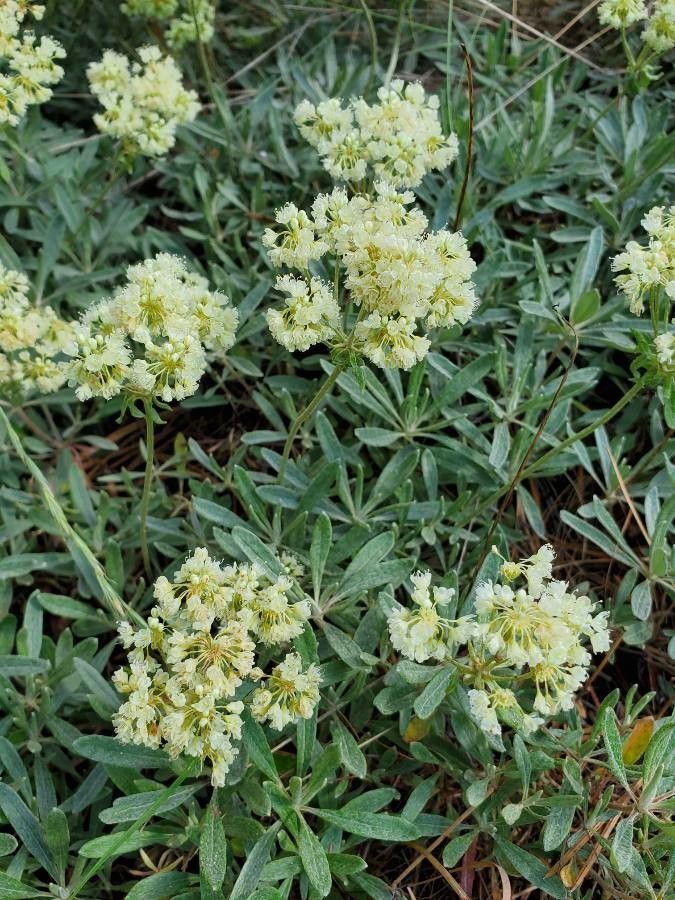
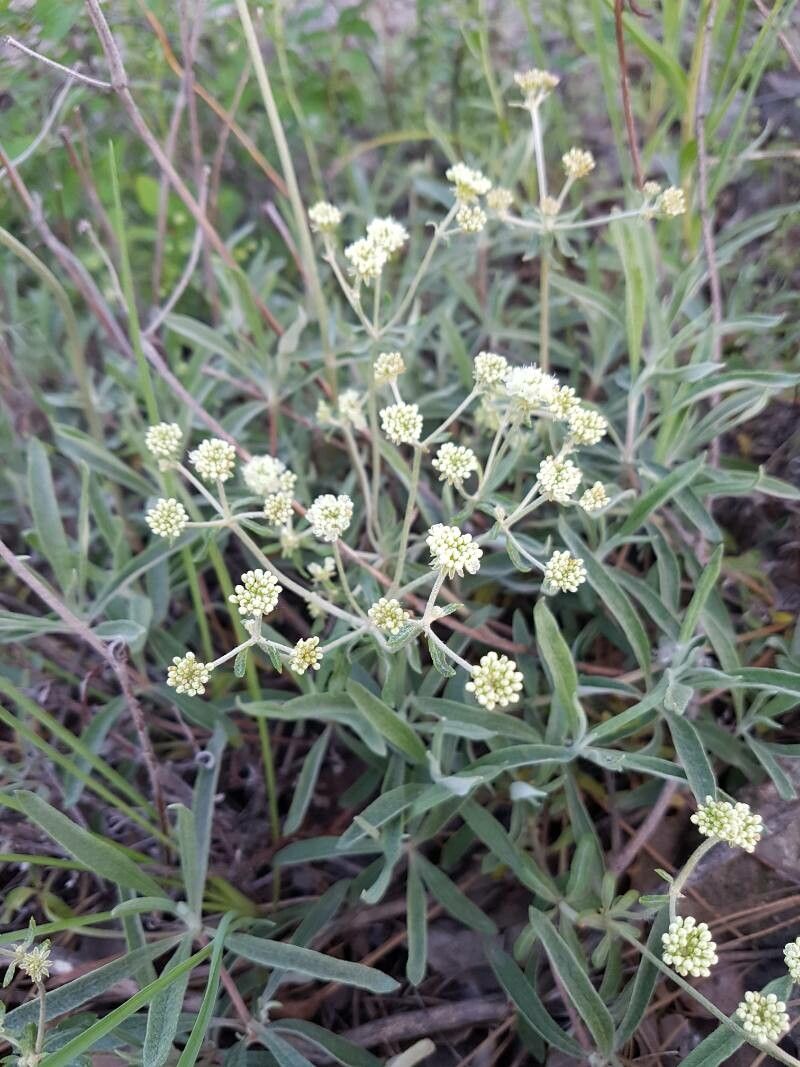
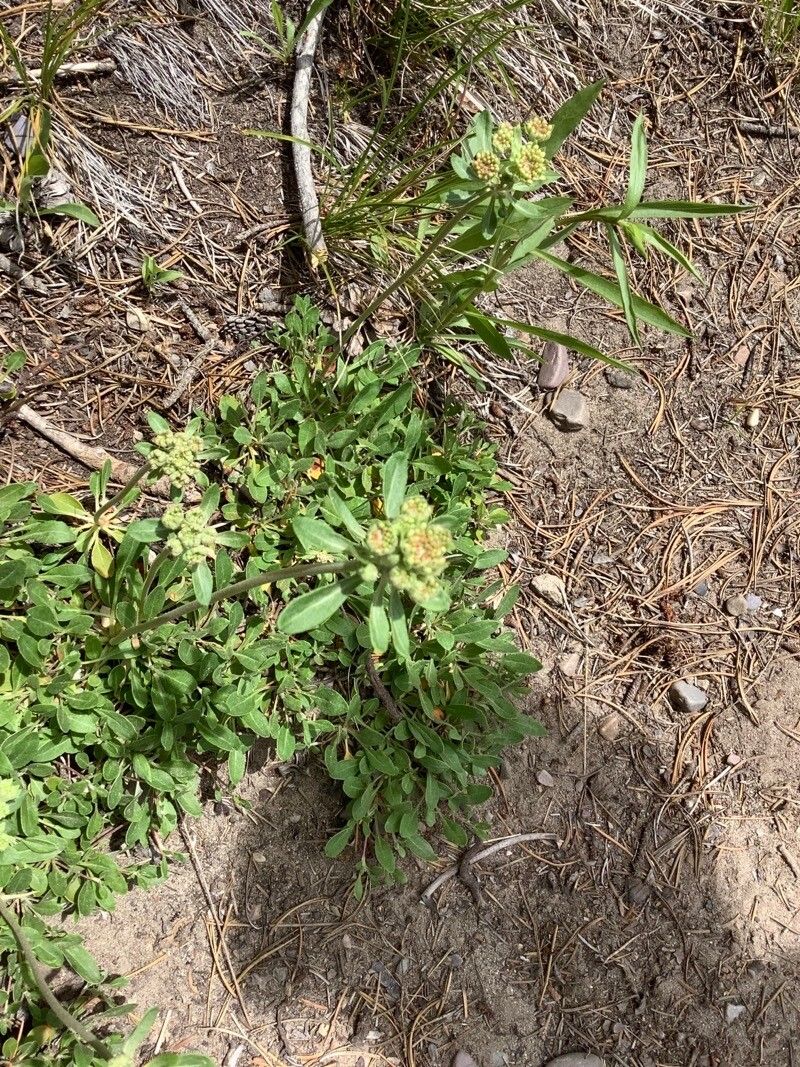
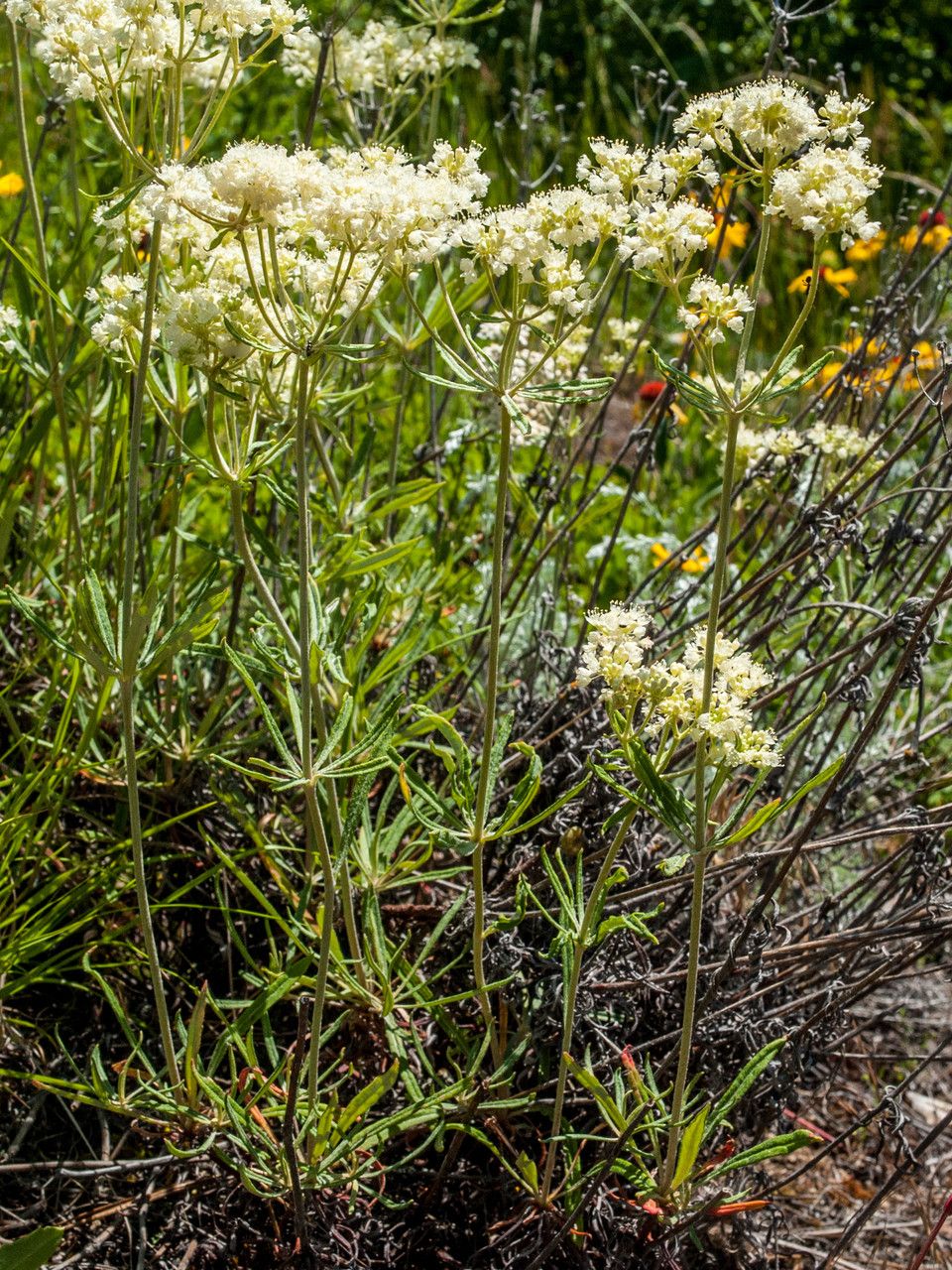
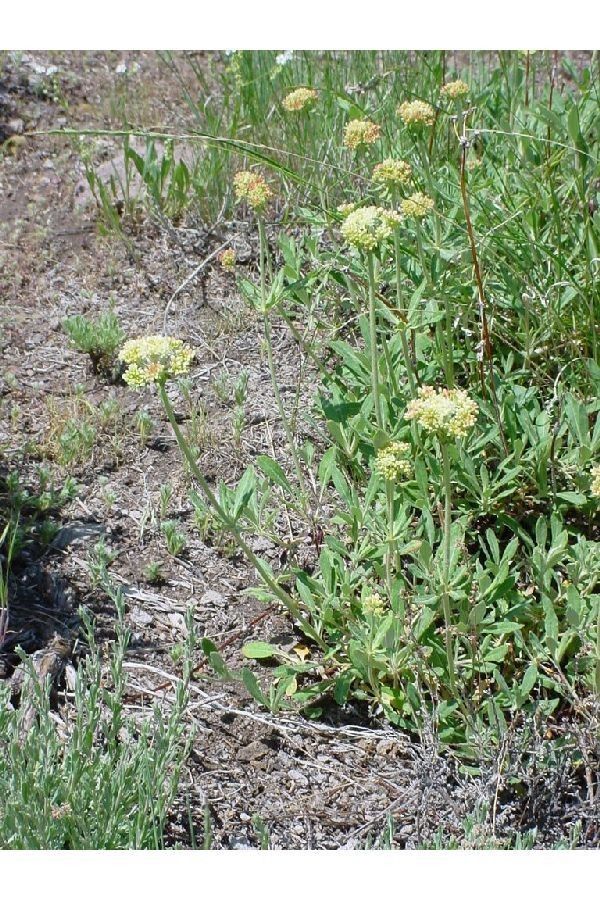
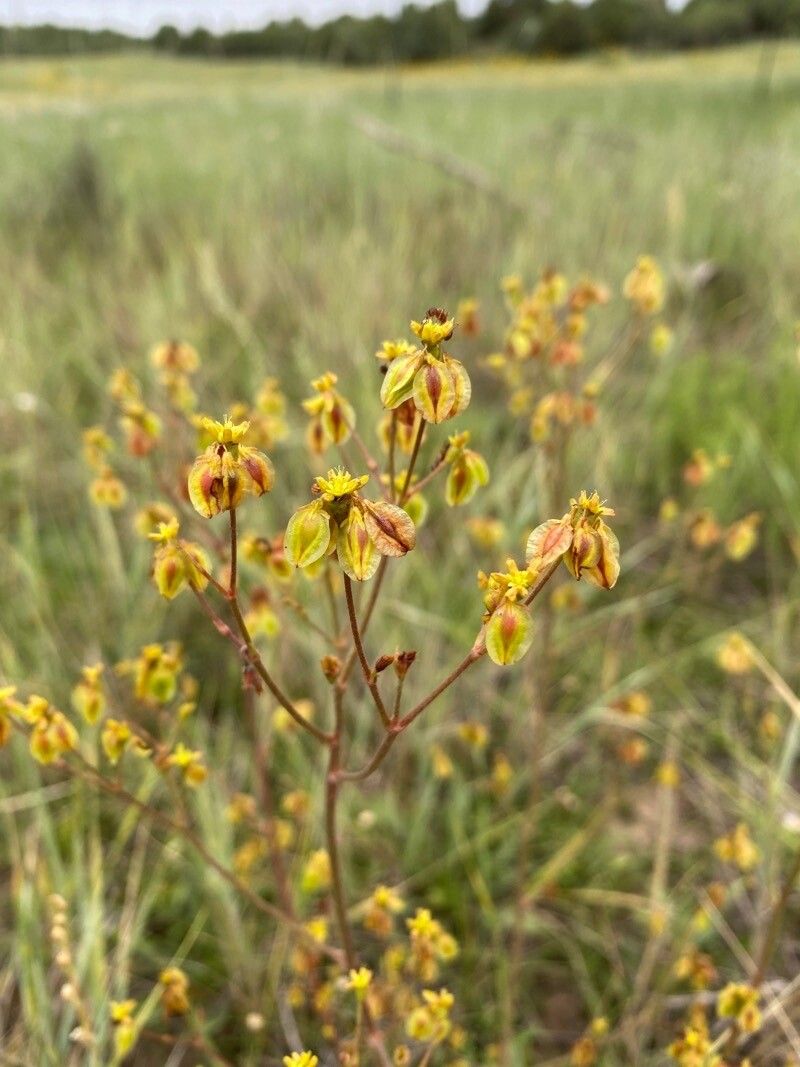
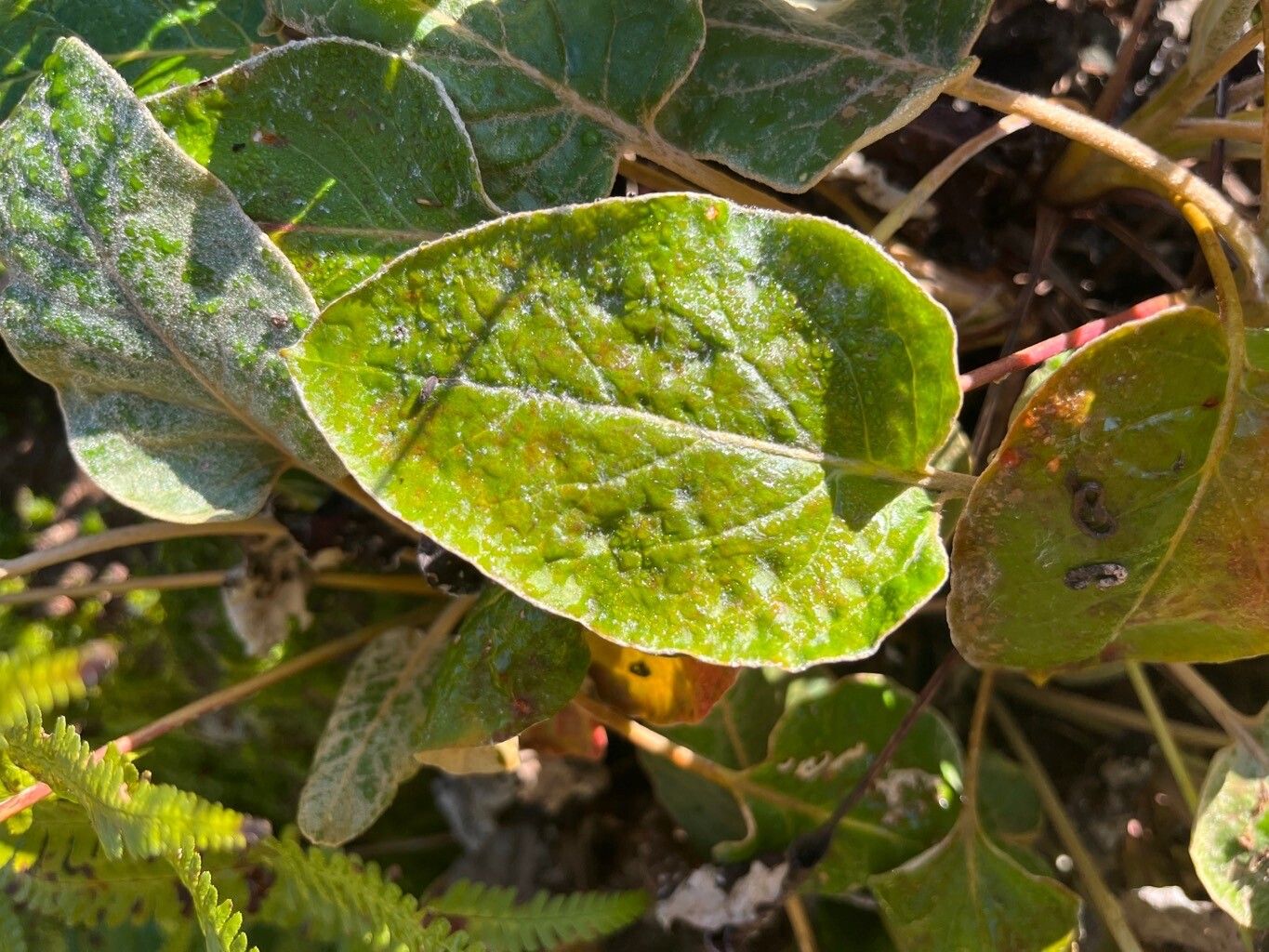
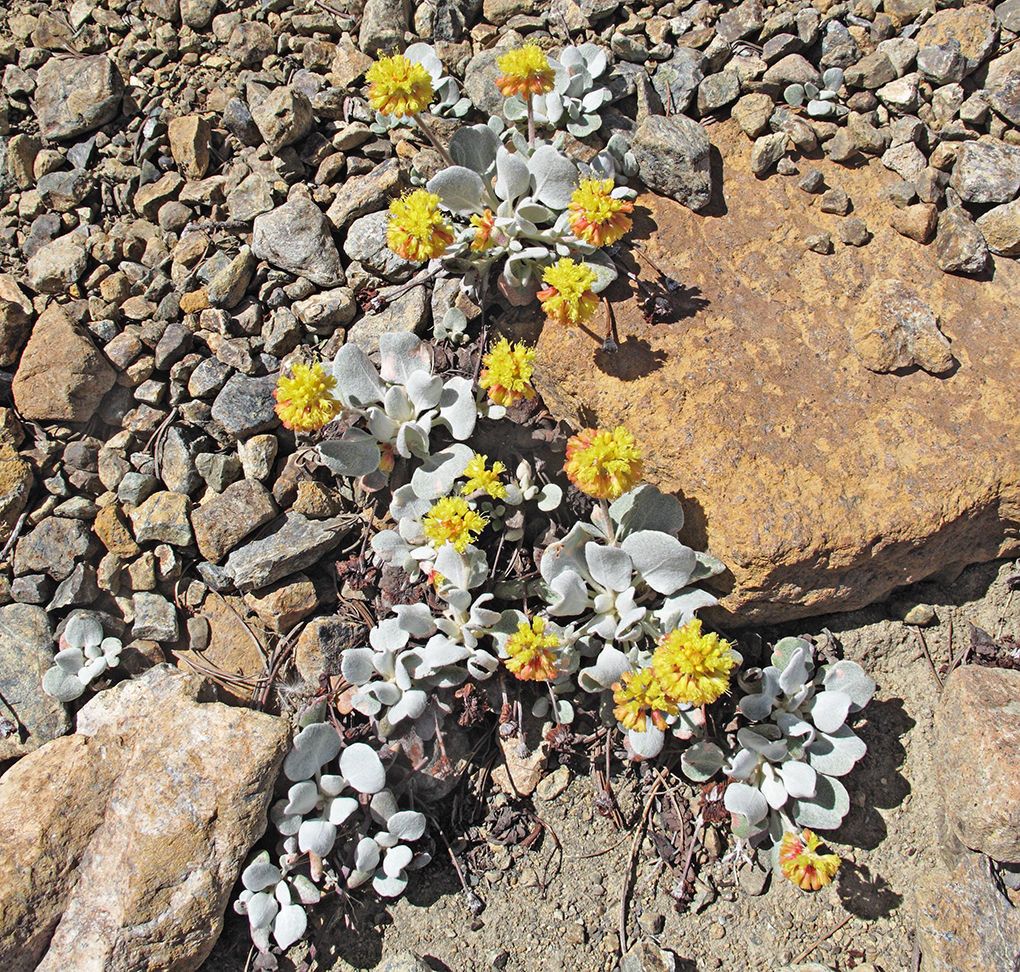
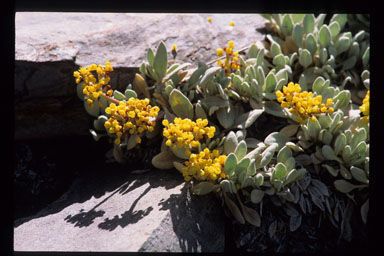
Eriogonum heracleoides (common names; parsnipflower buckwheat, whorled buckwheat, and Wyeth buckwheat) is a plant of western North America that has many flowering clusters which are usually cream colored, or off-white. It can usually be found in rocky areas, such as sagebrush deserts and Ponderosa pine forests. Parsnipflower buckwheat is in the genus Eriogonum and the family Polygonaceae, which is a family of plants known as the "knotweed family". It inhabits much of the western part of the United States and southern British Columbia.
Parsnipflower buckwheat is relatively disease-resistant and usually does not develop diseases. However, it can be affected by pests and diseases present in its surroundings. These problems are typically mild. In terms of care, the plant requires moderate maintenance. It should be pruned regularly to keep a tidy appearance and support healthy growth. Fertilizing can also encourage better flowering. Parsnipflower buckwheat is suitable for anyone with outdoor space, such as a garden or patio, and does not demand extensive experience in plant care. It may need more attention when kept indoors.
How to keep Eriogonum Heracleoides.
Light
In its native habitat, Parsnipflower buckwheat depends mainly on full sunlight for healthy growth and development. It does not really tolerate limited light. The ample light it gets during its different growth stages promotes strong development. Excessive exposure can stress the plant, while inadequate light can cause poor growth.
Water
Parsnipflower buckwheat, native to arid regions, is highly drought-tolerant. It requires only weekly watering to satisfy its minimal moisture needs. This plant thrives when grown outdoors in well-drained soil, which mimics the sporadic rainfall patterns of its natural habitat and supports healthy growth cycles.
Temperature
Parsnipflower buckwheat is native to areas where temperatures range from 68 to 100.4 °F (20 to 38 ℃). The plant does best in temperatures within that span. Seasonal adjustments to temperature may be needed to maintain optimal health.
Fertilizer
Proper fertilization is essential for Parsnipflower buckwheat's health and appearance. Fertilize Parsnipflower buckwheat during the summer, repeating the application monthly throughout the season. Nutrients fuel growth and support the plant's components. Feeding improves Parsnipflower buckwheat's flower display, ensuring the best blooms.
Pruning
Parsnipflower buckwheat is a perennial plant known for its umbrella-like clusters of flowers. To ensure healthy growth and prolonged blooming, it benefits from pruning in early to mid-spring. Start by removing any dead stems and spent flowers. This encourages new growth and helps the plant bloom for a longer period. It's also a good idea to trim any tall or straggly growth to improve the plant's shape and boost air circulation. Doing so enhances the plant's vigor and reduces the risk of disease.
Botanical profile.
- Plant Type
- Herb, Shrub
- Life Cycle
- Perennial
- Genus
- Eriogonum
- Family
- Polygonaceae
- Hardiness Zone
- 11
- Mature Height
- 15 cm to 52 cm
- Mature Spread
- 30 cm to 61 cm
- Leaf Color
- Green
- Leaf Type
- Evergreen
- Flower Color
- White, Pink
- Flower Size
- 0.51 cm to 0.76 cm
- Bloom Time
- Late spring, Early summer, Mid summer
- Planting Time
- Spring, Summer, Autumn
- Harvest Time
- Mid summer, Late summer, Early fall
Other names.
Reader questions.
How should I water my Parsnipflower buckwheat plant to make sure it gets enough water?
To properly water the Parsnipflower buckwheat, it is recommended to use filtered water at room temperature. Tap water may contain harmful particles, so it is best to avoid using it for this plant. Additionally, it is important to make sure the water is not too cold, as the plant is used to a warmer environment and cold water can be a shock to its system. Instead of watering from above, it is best to apply the filtered room temperature water directly to the soil until it is completely soaked. This helps to moisten the roots and support their growth and nutrient absorption.
What are the sunlight requirements for Parsnipflower buckwheat?
Parsnipflower buckwheat thrives best under full sun conditions, requiring above 6 hours of sunlight daily for healthy growth and development. Limited light conditions are generally not tolerated by this plant, as abundant sunlight during various growth stages ensures robust development. It's important to observe how sunlight moves through your garden to find spots that offer a perfect balance of light and shade for the plants, ensuring their happiness. Both too much and too little exposure can either stress the plant or lead to poor growth, respectively.
What is the ideal temperature range for growing Parsnipflower Buckwheat?
Parsnipflower buckwheat, botanically known as Eriogonum heracleoides, flourishes in environments where temperatures oscillate between 68 to 100.4°F (20 to 38°C). This heat-loving plant requires temperatures within this range for optimal health. Seasonal adjustments might be necessary to accommodate temperature changes, especially to protect the plant from cold. During autumn, it's advisable to move the plants grown outdoors indoors near a bright window while ensuring they're not too close to heaters. Keeping the temperature above 20°C during winter supports its growth, as temperatures nearing 10°C could be harmful.
What do I need to do if I give my Parsnipflower buckwheat too much or too little water?
Both overwatering and underwatering can harm your Parsnipflower buckwheat, but overwatering is more common. Excessive watering can cause wilting, yellowing of stems and leaves, and can lead to diseases like root rot, mold, and mildew that can be fatal. Underwatering is less likely, as this plant can tolerate drought, but it can result in brittle, brown leaves. It's crucial to recognize the signs of overwatering early to prevent irreparable damage. Reduce watering if you see signs of overwatering and replace poorly draining soil with a well-draining mix. If underwatering is an issue, simply water more frequently until the symptoms diminish.
How can artificial lighting be used for Parsnipflower buckwheat?
When natural sunlight is insufficient, especially during winter or in less sunny spaces, artificial lighting offers a solution for Parsnipflower buckwheat's growth. Indoor plants can benefit from adequate lighting promoting faster, healthier growth. LED lights are recommended due to their ability to provide specific wavelengths needed by the plants. Full sun plants require 30-50W/sq ft, partial sun plants need 20-30W/sq ft, and full shade plants demand 10-20W/sq ft of artificial light. The light source should be placed 12-36 inches above the plant, mimicking natural sunlight. Furthermore, most plants need 8-12 hours of light per day, depending on the species.
How should you care for Parsnipflower Buckwheat in low temperatures?
Parsnipflower buckwheat prefers warm conditions and does not tolerate low temperatures well. It thrives when temperatures remain above 20°C and should be kept above 10°C during winter. Exposure to temperatures below 5°C may cause the plant's leaves to lighten in color, with a further drop leading to browning or blackening and symptoms such as wilting and drooping, indicative of frost damage. To care for the plant in low temperatures, trim off frost-damaged parts and move it to a warm indoor space. Placing the plant near a south-facing window ensures it receives ample sunlight, but it should be kept away from heaters or air conditioning vents to avoid excessive dryness.
How frequently should I give water to my Parsnipflower buckwheat?
If your Parsnipflower buckwheat is in a pot, the most accurate way to determine if it needs water is by sticking your finger into the soil. If the top two to three inches of soil feel dry, it is time to water it. For those growing Parsnipflower buckwheat in outdoor soil, the same method can be used. Again, if the top few inches of soil are dry, it is time to water. Typically, during spring and early fall, watering once a week is sufficient. However, during extremely hot weather, increasing the watering frequency to twice or more per week may be necessary. It's worth noting that mature, well-established Parsnipflower buckwheat plants have a great ability to endure dry spells.
What are the symptoms of inadequate lighting for Parsnipflower buckwheat?
Symptoms of inadequate lighting in Parsnipflower buckwheat include smaller new leaves compared to mature ones, leggy or sparse growth due to longer spaces between leaves or stems, faster leaf drop as a conservation measure, slower or halted new growth indicating survival mode, lighter-colored new leaves due to insufficient chlorophyll, chlorosis where leaves turn yellow, sunscald leading to damaged plant tissues, leaf curling as a defense against intense sun, wilting from increased water loss, and leaf scorching characterized by brown, dry edges on leaves from excessive sunlight.
What are the recommended actions for managing high temperatures in Parsnipflower Buckwheat?
During the summer, keeping Parsnipflower buckwheat below 38°C is vital for its well-being. Should temperatures soar above 43°C, the leaves might lighten, and the plant becomes prone to sunburn. To mitigate damage from high temperatures, trim away the sunburned and dried parts of the plant. Relocate it to a spot where it's shielded from the harsh midday and afternoon sun. Adequate watering in the morning and evening is crucial to maintain soil moisture and help the plant cope with high temperatures.
How much water does my Parsnipflower buckwheat plant need?
When watering your Parsnipflower buckwheat, don't be afraid to give it plenty of water. Make sure the first two to three inches of soil are dry before watering, and then water thoroughly so that the soil is completely soaked. You should water enough so that excess water drains out of the pot's drainage holes. If you don't see excess water draining, you may not have watered enough. However, be careful not to let water sit in the soil as this can harm the plant. If water isn't draining properly, it could be due to poorly draining soil, which is not good for the plant's health. If the plant is outside, about 1 inch of rain per week should be sufficient.
What are the solutions for Parsnipflower buckwheat experiencing inadequate lighting?
To address inadequate lighting for Parsnipflower buckwheat, gradually move plants to a sunnier location ensuring at least 6 hours of direct sunlight daily. This can be achieved by using a south-facing window and keeping curtains open. For large or immovable plants, consider artificial lighting, keeping a lamp on for at least 8 hours daily or investing in professional grow lights. When dealing with outdoor plants, avoid sudden changes in light to prevent sunburn, and if necessary, prune obstructions or transplant smaller plants to brighter locations with good drainage. Note that parts of the plant affected by low light may not recover, but new growth will be healthy with increased light exposure.
How do I water my Parsnipflower buckwheat at different times as it grows?
The water needs of the Parsnipflower buckwheat vary depending on its growth stages. In the early years or after being transplanted, it requires more water to support root development. As the plant matures, less water is needed. Additionally, during the blooming period, extra water may be necessary for proper flower development.