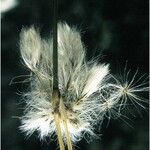
Eriophorum viridicarinatum
Green-keeled cottongrass · Tassel Cotton-Grass · Thinleaf cottonsedge · Tassel cottongrass · Thinleaf cottongrass
Description
Source: leafsnapEriophorum viridicarinatum is a species of sedge known by the common names thinleaf cottonsedge, green-keeled cottongrass, and bog cottongrass. It is native to northern North America, where it occurs in Alaska and throughout much of Canada, its range extending into the northern contiguous United States. Its distribution is more patchy in the west but it is widespread in eastern Canada.This perennial sedge forms tufts of stiff, erect stems, sometimes just a single stem, and basal leaves up to 30 centimeters long. It grows from a rhizome. The inflorescence is accompanied by two to four leaflike bracts each a few centimeters long. There are up to 30 spikelets, increasing in size as the fruit develops, reaching 3 centimeters in length. Each flower has a tuft of white or brown bristles that are long and cottony, measuring up to 2.5 centimeters long.This plant grows at high latitudes and high elevations, in cold, wet habitat types such as sphagnum bogs and tundra overlying permafrost. It is stimulated to grow in the spring when the thaw begins to increase moisture in the environment.
Care Guide
💧 Water
☀️ Light Full sun
Thinleaf cottonsedge is a perennial herbaceous plant that favors sunny conditions and originates from open habitats, commonly occurring in meadows and grasslands. It prefers full sun but can also tolerate partial sun.
🌡️ Temperature 0–32.2°C
Thinleaf cottonsedge can tolerate a wide range of temperatures, but its range may still be constrained by various combinations of moisture and heat. It performs best in warm summer climates with sufficient rainfall or watering. Extended periods of cloudy, rainy weather, as well as prolonged high temperatures, can increase the likelihood of Thinleaf cottonsedge dying. In winter, appropriate protection from cold can improve the plant's survival.
💨 Humidity
🪴 Soil 6-7
🌱 Fertilizer
Thinleaf cottonsedge needs extra nutrients to encourage healthy new growth. In spring, applying some compost around the base of the plant will effectively supply the nutrition it requires. Fertilizing supports vigorous growth and helps the plant resist diseases and pests.
🪴 Pot & Repot
✂️ Pruning
Thinleaf cottonsedge has slender, grass-like leaves and requires minimal pruning. Perform pruning in early spring to remove dead stems, which encourages growth and helps prevent disease. Regular trimming helps control the plant's size and shape, enhances air circulation and sunlight exposure, and promotes vigorous growth, keeping your thinleaf cottonsedge healthy.
🌿 Propagating
🐛 Diseases & pets
☠️ Toxicity
Characteristics
- Plant Type
- Grass
- Life Cycle
- Perennial
- Genus
- Eriophorum
- Family
- Cyperaceae
- Hardiness Zone
- 3-7
- Mature Height
- 20 cm to 91 cm
- Mature Spread
- 20 cm to 40 cm
- Leaf Color
- Green
- Leaf Type
- Evergreen
- Flower Color
- White
- Flower Size
- 2.03 cm to 3.05 cm
- Bloom Time
- Late spring, Early summer
- Planting Time
- Spring, Autumn
- Harvest Time
- Mid summer, Late summer