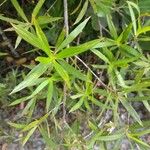
Ernodea littoralis
Beach Creeper · Coughbush
Description
Source: leafsnapErnodea littoralis, commonly known as beach creeper or golden creeper, is a species of flowering plant in the Rubiaceae family. This low-growing shrub can reach up to 1 meter in height and features small, oval-shaped, glossy dark green leaves. It produces small yellow flowers that bloom from spring to fall, followed by tiny fruits. Native to coastal areas of the southeastern United States, Mexico, Central America, and the Caribbean, beach creeper thrives in sandy soils near beaches or other coastal regions where it can tolerate salt spray. The plant is highly valued for several reasons. It is used for erosion control on sandy beaches and serves ornamental purposes due to its attractive foliage and flowers. Additionally, it has medicinal properties; its leaves have traditionally been used to treat various ailments such as fever, coughs, and colds. Overall, Ernodea littoralis plays a vital role in coastal ecosystems. It helps stabilize sand dunes and provides habitat for various wildlife species, including birds and insects.
Care Guide
💧 Water Every 7 days
Coughbush thrives in coastal areas with sandy soils and some salt exposure. Once established, it only needs to be watered every two weeks and shows impressive drought tolerance. As an evergreen plant, coughbush keeps its foliage throughout the year, adding greenery to the landscape while efficiently managing its internal water reserves.
☀️ Light Full sun
Coughbush thrives in places that receive steady, unshaded sunlight for most of the day. It can also tolerate sites with some shade. Both too much and too little sun can harm its health and growth, since it comes from a habitat with clear sun exposure. Adequate sunlight is important throughout its growth stages.
What are the sunlight requirements for Coughbush (Ernodea littoralis)?
Coughbush requires a significant amount of sunlight to thrive, with optimal growth occurring in areas that receive full sun, defined as above 6 hours of sunlight a day. It can also tolerate partial sun, which means about 3-6 hours of sunlight per day. It is crucial to watch how sunlight moves through your garden to choose spots that offer the right balance of light and shade, ensuring the plants' happiness.
What essentials should I consider for growing Coughbush?
Coughbush flourishes best in continuous, unobstructed sunlight for most of the day but can survive in areas with some shade. The plant's health and growth can suffer from overexposure or underexposure to sunlight, given its native habitat's clear sun exposure conditions. Artificial lighting can be a vital solution for indoor plants lacking in natural sunlight, especially in winter or less sunny spaces. LED lights, known for their customizable wavelengths, are recommended for indoor lighting, with varying wattages based on the plant's sun exposure needs.
What are the signs of insufficient light in Coughbush?
Symptoms of light deficiency in Coughbush include smaller new leaves, leggy or sparse growth, faster leaf drop, slower or no new growth, lighter-colored new leaves, chlorosis (leaves turning yellow), sunscald on leaves or stems, leaf curling, wilting, and leaf scorching. These indicate challenges in maintaining adequate photosynthesis and overall plant vitality due to poor light conditions.
How can I address light deficiency problems in Coughbush?
Addressing light deficiency in Coughbush involves a combination of strategies depending on the plant's location. For indoor plants, gradually increase sunlight exposure to at least 6 hours daily using south-facing windows or artificial light sources for plants that are large or hard to move. Outdoors, move plants to sunnier spots gradually to prevent sunburn. Observing the environment for obstructions, like overhanging branches, and possibly transplanting to sunnier locations can help. While damaged parts may not recover, new growth following increased light exposure should return to healthy conditions.
🌡️ Temperature 20–37.8°C
Coughbush naturally occurs in habitats with temperatures between 68 and 100 °F (20 and 38 ℃). It strongly prefers these warm conditions. Seasonal temperature adjustments may be needed to provide these conditions, particularly in colder climates.
What is the ideal temperature range for Coughbush to thrive?
Coughbush naturally flourishes in environments where temperatures range between 68 to 100 °F (20 to 38 °C). These warm conditions are greatly preferred by the plant, indicating that it is extremely heat-loving. In colder climates, seasonal temperature adjustments might be necessary to create an optimal growing environment for Coughbush. During winter, it's beneficial to maintain temperatures above 20°C to support the plant's growth, and it's recommended to avoid exposing the plant to temperatures approaching 0°C, as this can be detrimental.
What should I do with my outdoor-grown Coughbush in autumn and winter?
In the autumn, to protect Coughbush from the cold, it is advisable to bring it indoors. Once indoors, the plant should be placed near a bright window to ensure it receives enough natural light, though it should not be placed too close to heaters to avoid damage from the heat. This helps in maintaining an ideal warm temperature for the plant, especially during winter months when the temperature is naturally lower. Keeping the plant in a warm environment helps prevent the cold from harming its growth.
How does low temperature affect Coughbush, and what are the solutions?
Coughbush is not tolerant of low temperatures and thrives best when the temperature remains above 20°C. Exposure to temperatures below 0°C can be harmful, and when the temperature falls below -5°C, the plant's leaves may lighten in color. Frost damage can further cause the leaves to turn brown or black, alongside symptoms like wilting and drooping. In such instances, you should trim off the frost-damaged parts of the plant and immediately move it to a warm environment indoors for protection. Placing the plant near a south-facing window ensures it gets enough sunlight while it's also important to keep it away from heaters or air conditioning vents to avoid air dryness.
How should I care for Coughbush during high temperatures?
During the summer, it's crucial to ensure that the temperature around Coughbush does not exceed 38°C. High temperatures above 43°C can cause the leaves to lighten in color and make the plant more prone to sunburn. To address this, it's advisable to trim away the sunburned and dry parts of the plant, and relocate it to a spot where it can get partial shade, especially from the midday and afternoon sun. Watering the plant in the morning and evening can help keep the soil moist, which is vital for its growth under high temperature conditions.
💨 Humidity
🪴 Soil 6-7
🌱 Fertilizer
The best time to fertilize a Coughbush is in early spring, as it breaks dormancy. This encourages overall growth and the development of flowers. Fertilizing improves the foliage, stems, and branches, and encourages flowers that are larger, more colorful, and longer lasting. It helps transfer nutrients from the roots to the blooms and enhances the plant's health and resistance to disease.
🪴 Pot & Repot
✂️ Pruning
To promote healthy growth and maintain its shape, prune the coughbush in early spring. Start by removing any dead branches, and then lightly shape the plant, being careful to avoid heavy pruning between late spring and summer when it is flowering. Regular pruning improves air circulation, reduces the risk of disease, and helps the plant grow stronger.
🌿 Propagating
🐛 Diseases & pets
☠️ Toxicity
Characteristics
- Plant Type
- Shrub
- Life Cycle
- Perennial
- Genus
- Ernodea
- Family
- Rubiaceae
- Hardiness Zone
- 9-11
- Mature Height
- 30 cm to 91 cm
- Mature Spread
- 0.61 m to 1.22 m
- Leaf Color
- Dark Green
- Leaf Type
- Evergreen
- Flower Color
- White
- Flower Size
- 1.02 cm to 1.52 cm
- Bloom Time
- Late spring, Summer, Fall
- Planting Time
- Spring, Summer, Autumn
- Harvest Time
- Mid summer, Late summer, Fall, Early winter
- Native Area
- Bahamas, Belize, Cuba, Honduras, Mexico, Jamaica