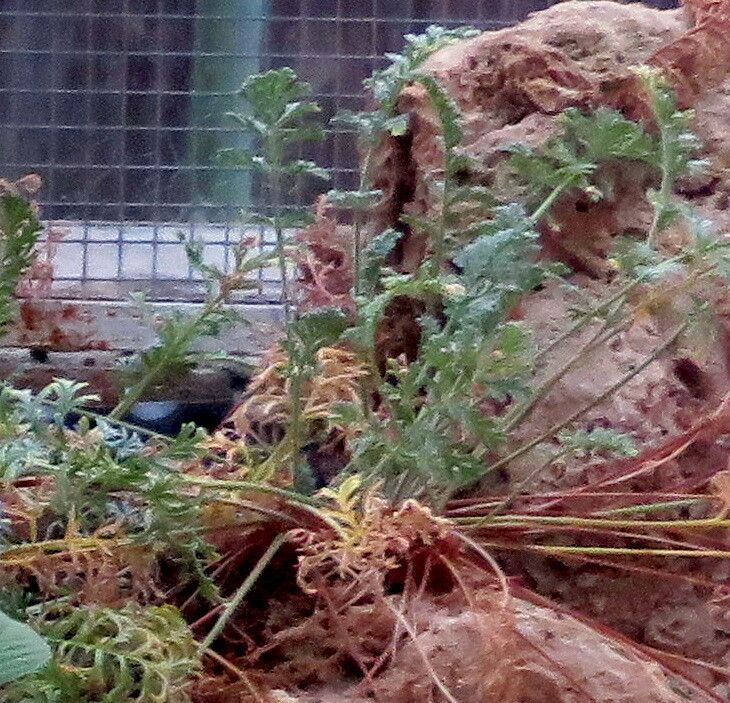
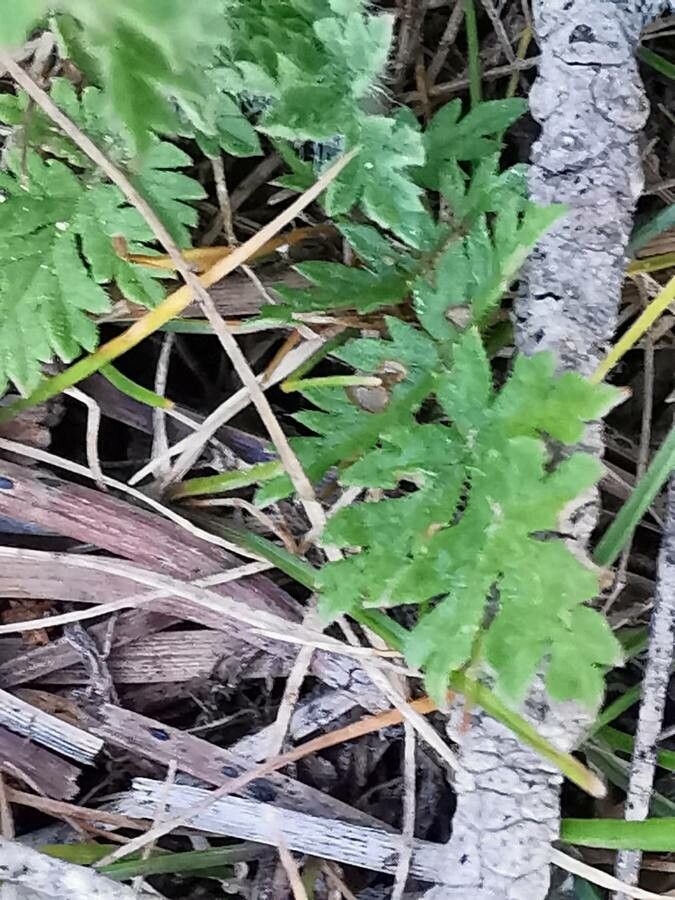
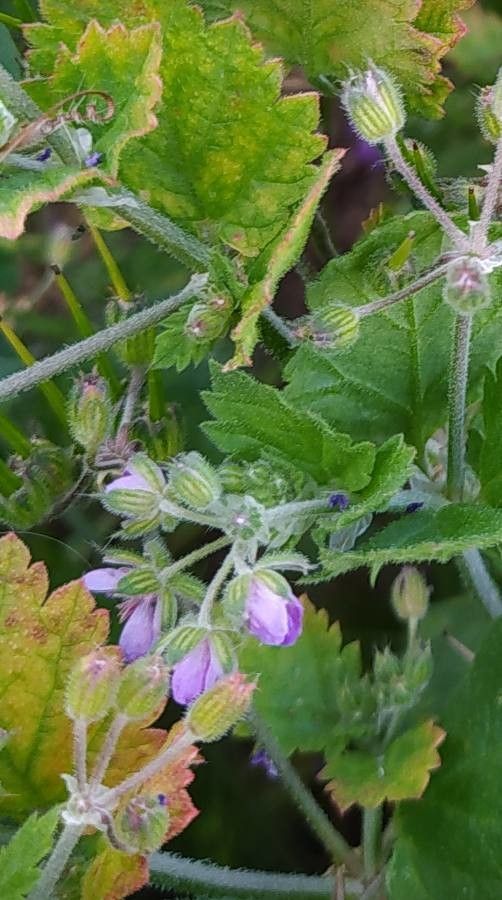
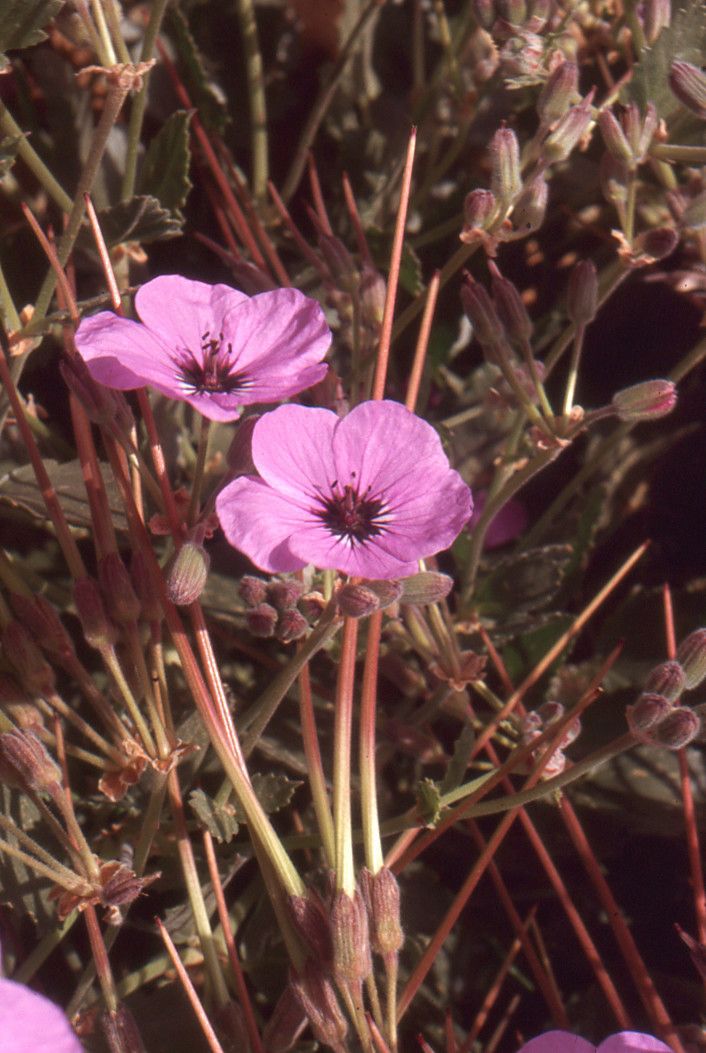
Erodium ciconium, commonly known as stork's bill or long-stalked cranesbill, is a perennial herbaceous plant belonging to the Geraniaceae family. Native to Europe and western Asia, it has been introduced to other parts of the world as an ornamental plant.
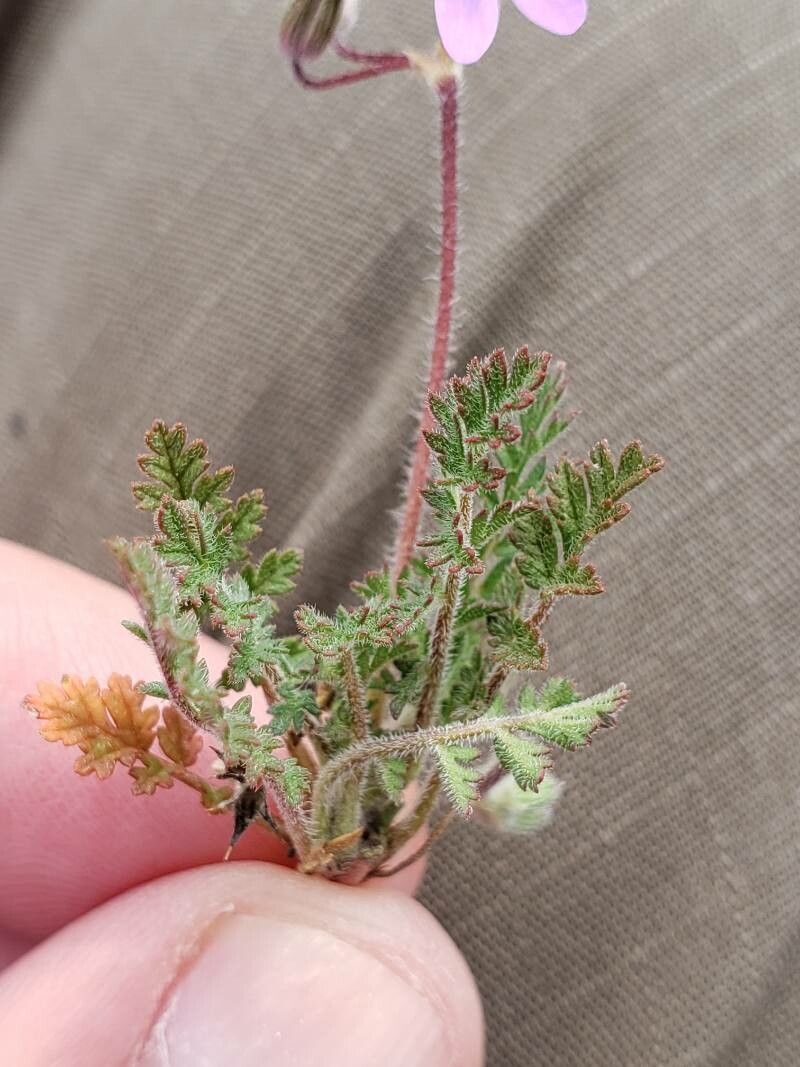
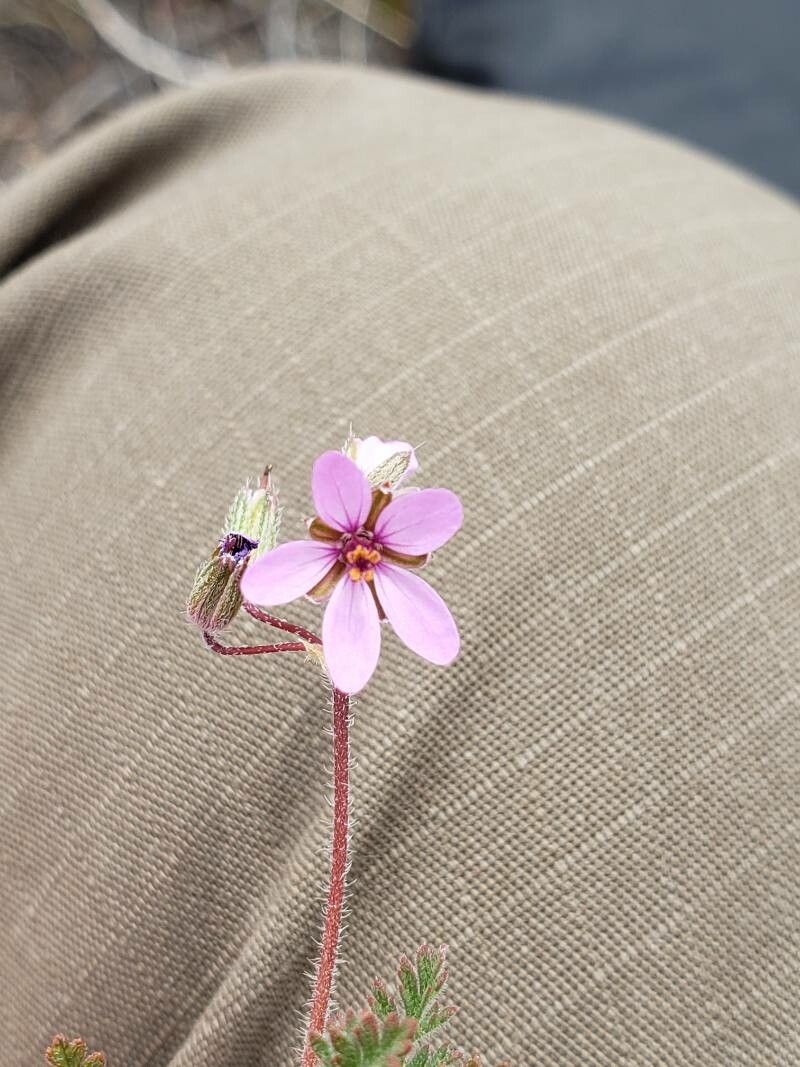
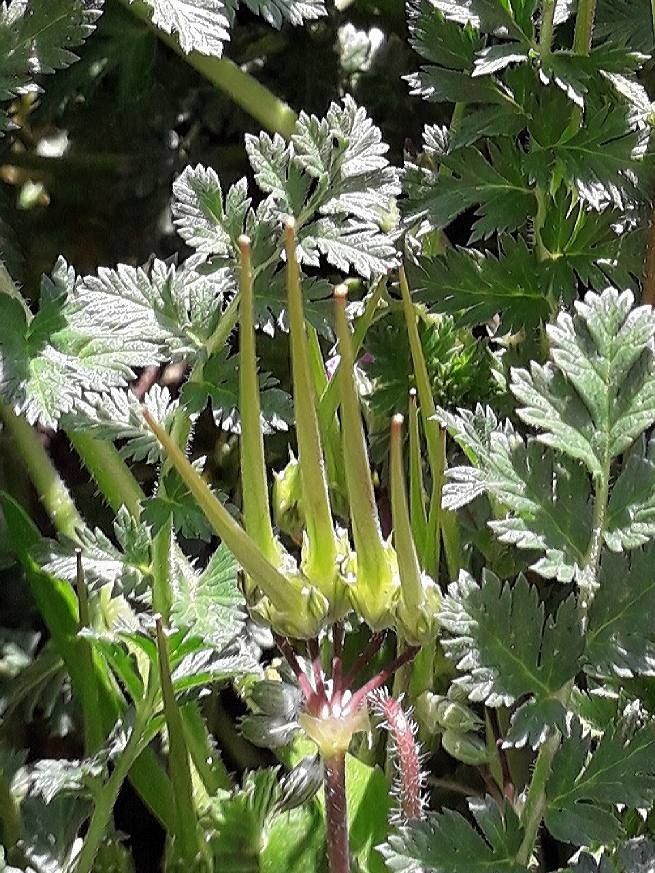
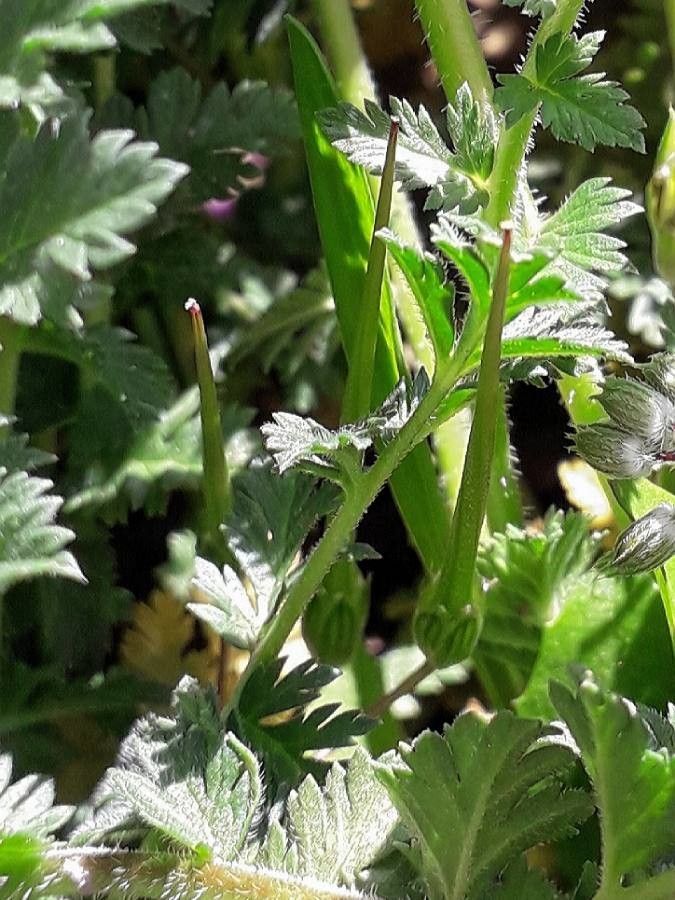
This plant features a basal rosette of deeply lobed and hairy leaves. Its stem can grow up to 60 cm tall, bearing small pink or purple flowers that bloom from May through August. The fruit is a long, beak-like capsule divided into five segments, each containing seeds.
Erodium ciconium thrives in well-drained soils under full sun or partial shade and can tolerate drought conditions once established. It can be propagated by seed or division in the spring.
Historically, Erodium ciconium has been used medicinally, especially for its anti-inflammatory properties, to treat skin conditions such as eczema and psoriasis.
Overall, Erodium ciconium is an attractive ornamental plant with medicinal benefits, making it a valuable addition to any garden or landscape design project.
Broadleaf filaree is fairly disease-resistant and generally not prone to illnesses. However, it can be vulnerable to pests and diseases present in its surroundings. These infections are usually mild. In terms of care, this plant requires moderate maintenance. It should be pruned regularly to maintain a neat appearance and healthy growth. Fertilizing can also help encourage flowering. Broadleaf filaree is suitable for anyone with outdoor space, such as a garden or patio, and does not require much care experience. It may need more attention when grown indoors.
How to keep Erodium Ciconium.
Light
Broadleaf filaree does best in full sun and has a strong tolerance for conditions without shade. It comes from habitats with abundant sunlight, which is necessary for the plant’s healthy development and survival. Both too much and too little sunlight can adversely affect its vigorous growth.
Water
The common stork's bill thrives in Mediterranean climates and prefers dry conditions, tolerating occasional droughts. To maintain its health, it should be watered weekly, especially during peak growth periods, to support lush foliage and flowering.
Temperature
Broadleaf filaree originates from regions with a temperate climate and prefers temperatures of 68 to 95°F (20 to 35℃). Ideally, in summer aim toward the higher end of this range, while winter conditions should be slightly cooler.
Fertilizer
Broadleaf filaree does well with regular, low-strength fertilizer applications to encourage healthy leaf development. You should apply fertilizer about once a month during the summer. Nitrogen is important for foliage, and providing nitrogen-rich sources helps Broadleaf filaree flourish.
Pruning
The common stork's bill features delicate, feathery leaves and small pink flowers. Light pruning from early to late spring is beneficial. By removing dead stems, you promote growth and improve air circulation, enhancing the plant’s appearance and vitality. Regular maintenance will ensure a robust plant throughout the growing season.
Botanical profile.
- Plant Type
- Herb
- Life Cycle
- Annual, Biennial
- Genus
- Erodium
- Family
- Geraniaceae
- Hardiness Zone
- 8
- Mature Height
- 15 cm to 91 cm
- Mature Spread
- 15 cm to 30 cm
- Leaf Color
- Green, Red
- Leaf Type
- Deciduous
- Flower Color
- Pink
- Flower Size
- 1.02 cm
- Bloom Time
- Spring
- Planting Time
- Autumn
- Harvest Time
- Late spring, Early summer, Mid summer
- Native Area
- Turkey, Sweden, Tunisia, Cyprus, Bulgaria, Greece, Morocco, Belarus, Lebanon, Russia, Norway, Iraq, Portugal, Syria, Jordan, Italy, Spain, Switzerland, Israel, France, Algeria, Netherlands
Other names.
Reader questions.
How should I water my Common stork's bill plant?
Common stork's bill can be watered in multiple ways, such as using a garden hose, watering can, or any common watering tool. It is not too particular about the type of water it receives, whether it's rainwater, tap water, or filtered water. However, it is generally advised to avoid overhead watering as it can harm the leaves and flowers and potentially cause disease. Instead, a drip irrigation system is recommended as it ensures even and direct watering to the soil. When watering a container-grown Common stork's bill, you can use a cup, watering can, or tap water to directly water the soil.
What are the sunlight requirements for Common Stork's Bill?
Common Stork's Bill requires full sun, defined as above 6 hours of sunlight daily, to thrive optimally. It's crucial to observe the movement of sunlight in your garden and select areas that offer a good balance of light and shade. This ensures the plants receive enough light without the adverse effects of too much direct exposure.
What is the native environment of common stork's bill?
Common stork's bill, botanically known as Erodium ciconium, thrives in environments that maintain steady warmth, ideally between 68 to 95 °F (20 to 35 °C). These temperatures are optimal for its growth, and adjustments should be made during seasonal changes to ensure these conditions are met.
What should I do if I give my Common stork's bill plant too much or too little water?
One way to address underwatering in Common stork's bill is to water it more frequently when you notice it lacks moisture. On the other hand, overwatering can have more severe consequences if not noticed early. Overwatered plants can suffer from diseases that lead to decline and death. To prevent this, it is important to choose a suitable location for your plant, preferably one with ample sunlight to dry the soil and good drainage to prevent waterlogging. If you have overwatered your potted Common stork's bill, you may need to consider changing to a pot with better soil drainage or more drainage holes. When repotting, use loose soil and an efficient-draining pot.
How does light affect the growth of Common Stork's Bill?
Light plays a significant role in the growth and health of Common Stork's Bill. In its natural habitat, the plant flourishes under abundant light, which enhances its growth. While it shows resilience and can survive varying light conditions, both excessive and insufficient light don't have extreme effects on the plant. For indoor plants, where natural sunlight might be limited, artificial lighting serves as an important alternative, promoting healthier and faster growth.
How does common stork's bill respond to cold and how should it be cared for in winter?
Common stork's bill is highly cold-tolerant and does not require additional measures for frost protection during winter. Nevertheless, it is beneficial to water the plant generously before the first freeze of autumn. This action ensures that the soil remains moist when it enters a frozen state, helping to prevent drought and water scarcity for the plant during the colder months and early spring.
How often do I need to water my Common stork's bill?
Common stork's bill requires regular watering throughout the growing season. In the spring, you should water the plant once a week. As the season progresses and it gets warmer, you may need to increase watering to two or three times a week. However, it is important not to exceed this rate as it can harm the plant. Regardless of watering frequency, the soil should be kept moist but not wet. Watering a potted common stork's bill is slightly different. Potted soil tends to heat up and dry out faster, so you should water those plants a few times per week, as opposed to just once a week for plants in the ground.
How should artificial lighting be used for indoor plants?
When natural sunlight is insufficient, especially during winter or in spaces with less exposure to sun, artificial lighting can be crucial for plant growth. LED lights are recommended since they can be customized to provide specific light wavelengths needed by plants. The intensity needed varies: full sun plants require 30-50W/sq ft, partial sun plants need 20-30W/sq ft, and full shade plants need 10-20W/sq ft. The light source should be placed 12-36 inches above the plant, simulating natural sunlight, and most plants benefit from 8-12 hours of light per day.
What should be done if the temperature falls below -40°C?
Should the temperature drop below -40°C, common stork's bill, despite its extreme cold tolerance, may face challenges in sprouting during spring. There might not be noticeable changes during winter, but a decrease in sprouting or even no sprouting at all may occur by springtime. In such cases, it is advisable to remove any parts of the plant that have failed to sprout come spring.
How much water does my Common stork's bill plant need?
Determining the amount of water to give your Common stork's bill can be approached in a few ways. Some gardeners prefer to gauge the moisture level of the soil to decide when to water. This method involves watering until the top six inches of soil feel moist. Another approach is to use a specific measurement. Typically, a Common stork's bill needs around two gallons of water per week, depending on the temperature and how quickly the soil dries out. However, following strict guidelines may result in overwatering if your plant requires less water. When growing Common stork's bill in a container, a different method should be used. It is best to water until all layers of dry soil are moistened. To check this, you can simply insert your finger in the soil and feel for moisture. Alternatively, you can water until you notice a slight trickle of excess water coming out of the pot's drainage holes.
What symptoms indicate light deficiency in Common Stork's Bill when grown indoors?
Symptoms of light deficiency in Common Stork's Bill include small leaves, leggy or sparse growth, faster leaf drop, slower or no new growth, lighter-colored new leaves, and several conditions caused by excessive sunlight such as chlorosis, sunscald, leaf curling, wilting, and leaf scorching. These symptoms suggest the plant is not receiving adequate light, impacting its growth and health.
How does high temperature affect common stork's bill and what measures should be taken?
Common stork's bill does not tolerate high temperatures well; growth halts, and the risk of rot increases once temperatures exceed 35°C. To mitigate this, sunburned and dried-up parts of the plant should be trimmed away. Moving the plant to a cooler location or using a shade cloth to protect it from direct midday and afternoon sun can help. Additionally, watering the plant in the morning and evening helps to keep the soil moist and supports the plant in coping with the heat.