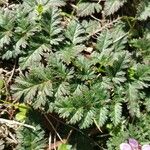
Erodium cicutarium
نوکلکلکی هرز، · دەرزیلوکە · رقمة شوكرانية · حاج لوکە · نیکڵ
Description
Source: leafsnapErodium cicutarium, also known as common stork's-bill, redstem filaree, redstem stork's bill or pinweed, is a herbaceous annual – or in warm climates, biennial – member of the family Geraniaceae of flowering plants. It is native to Macaronesia, temperate Eurasia and north and northeast Africa, and was introduced to North America in the eighteenth century, where it has since become naturalized, particularly of the deserts and arid grasslands of the southwestern United States.
🌳 Redstem stork's bill flourishes in disturbed soils, and practitioners of ecological restoration use it as an indicator of soil health and fertility. Its presence informs land managers of ecological changes or degradation and can help guide rehabilitation efforts.
Care Guide
💧 Water Every 7 days
The common stork's-bill thrives in dry conditions, demonstrating a high tolerance for drought and needing very little moisture. Watering it once a week is sufficient, as it prefers drier soil. During its active growing season, this herbaceous plant benefits from natural rainfall.
What should I do if I give my Common stork's-bill plant too much or too little water?
To address underwatering for Common stork's-bill, simply start watering the plant more regularly when you notice it lacks moisture. On the other hand, overwatering can be a more serious issue if not caught early. Overwatered plants can develop diseases that may cause them to decline and die. To prevent this outcome, choose a suitable growing location with ample sunlight to dry the soil and good drainage to avoid waterlogging. If you overwater a potted Common stork's-bill, consider repotting it. The previous container may have had poor soil drainage or inadequate drainage holes. When repotting, ensure you use loose soil and a pot that drains efficiently.
How often do I need to water my Common stork's-bill plant?
Common stork's-bill requires regular watering throughout the growing season. In spring, water the plant once a week. As the season progresses and gets warmer, increase watering to two to three times a week. However, be careful not to overwater, as this can harm the plant. Keep the soil moist, but not wet, regardless of how often you need to water. For potted Common stork's-bill, water more frequently compared to plants in the ground. In most cases, water container-grown plants a few times per week, instead of just once a week for plants in the ground.
How much water does my Common stork's-bill plant require?
Determining the right amount of water for your Common stork's-bill can be done in different ways. Some gardeners prefer to gauge the soil moisture by feeling it, suggesting that you water until the top six inches are moist. Another option is to use a specific measurement, which usually means giving your plant about two gallons of water per week. However, be careful not to overwater if your plant requires less. For container-grown Common stork's-bill, the method is different. You should water enough to moisten all the dry soil layers, which can be tested by sticking your finger in the soil or looking for water trickling out of the drainage holes.
How can I know if I'm giving enough water to my Common stork's-bill plant?
It can be a bit challenging to find the right balance of watering for your Common stork's-bill. On one hand, these plants have deep roots that need to be moistened weekly. However, they are highly susceptible to root rot and can show signs of browning if overwatered. Underwatering is less of a concern as these plants can survive for a while without extra water. However, if you go too long without watering, the plant may start to wilt and exhibit dry leaves.
How do I water my Common stork's-bill at different times of the year?
As the season progresses, the water requirements for your Common stork's-bill will increase. In the spring, watering once per week should be sufficient. However, as the summer heat intensifies, you may need to water your Common stork's-bill more frequently, potentially up to three times per week. This is especially important if your Common stork's-bill is in a container, as the soil in containers tends to dry out faster in warm weather. In the autumn, when your Common stork's-bill is still flowering, it will likely need less water due to the cooler temperatures and reduced intensity of the sun compared to summer.
☀️ Light Full sun
Redstem stork's bill prefers plentiful sunlight for most of the day. It can tolerate stretches with less light, though its vigor may decline. Its native habitat supports this pattern of light use. Both inadequate and excessive light can disrupt its health and growth.
What are the sunlight requirements for Common Stork's-bill?
Common Stork's-bill thrives best with ample exposure to the sun, preferring locations that offer full sun, which is above 6 hours of sunlight per day. It can also manage in partial sun, about 3-6 hours of sunlight. The plant’s origin habitat supports this need for significant light exposure. However, gardeners should observe how sunlight moves through their gardens, choosing locations that ensure a balanced environment of light and shade, critical for the plant's well-being.
How does artificial lighting benefit indoor plants, and what are practical tips for its use?
Indoor plants, including Common Stork's-bill, require sufficient lighting for optimal growth, particularly when natural sunlight is scarce, such as during winter or in less sunny indoor locations. Artificial lights serve as an essential substitute, promoting healthier, more robust growth. Key tips for using artificial lights include choosing the right type, such as LED lights, which can be tailored to the specific light wavelengths needed by plants. Full sun plants need 30-50W/sq ft, partial sun plants require 20-30W/sq ft, and full shade plants benefit from 10-20W/sq ft of artificial light. The light source should be placed 12-36 inches above the plant to mimic natural sunlight, and the duration of exposure should simulate the natural daylight hours, typically 8-12 hours per day.
What are the symptoms of inadequate light in Common Stork's-bill when grown indoors?
Common Stork's-bill exhibits several symptoms when subjected to inadequate light conditions indoors. These include the development of smaller new leaves compared to older ones, leggy or sparse growth due to increased spacing between leaves or stems, early leaf drop as a conservation measure, delayed or halted growth signaling a survival strategy under poor lighting, and lighter-colored or yellow leaves indicating possible chlorosis. Exposure to excessive sunlight can result in sunscald, leaf curling as a protective measure against excessive light, wilting from increased water loss, and leaf scorching characterized by brown, dry, crispy leaf edges.
What are the solutions for Common Stork's-bill struggling with light conditions?
To address light conditions for Common Stork's-bill, gradually acclimate the plant to receive at least 6 hours of direct sunlight daily, ideally through a south-facing window for indoor plants, or by moving outdoor plants to a sunnier spot weekly to avoid shock. If natural light is insufficient, especially for large or immobile indoor plants, supplement with artificial lighting, keeping a lamp on for a minimum of 8 hours daily or using professional grow lights. Prune tree branches that block sunlight outdoors, and consider transplanting smaller plants during their dormant period to locations with better sun exposure and drainage. It is crucial to understand that while parts of the plant affected by inadequate light may not recover, new growth should be healthy following these adjustments.
🌡️ Temperature 0–35°C
Redstem stork's bill is native to temperate regions and favors steady, mild warmth. It grows best at temperatures of 68 to 95 °F (20 to 35 ℃). Seasonal adjustments to temperature may be necessary to maintain optimal growth conditions.
What is the native climate for Common stork's-bill?
Common stork's-bill is native to temperate climates, where it enjoys consistently moderate heat. It thrives in temperatures ranging from 68 to 95 °F (20 to 35 °C). To maintain optimal growth conditions, seasonal temperature adjustments may be necessary.
Does Common stork's-bill require frost protection during winter?
Common stork's-bill has strong cold resistance, so special frost protection measures are usually not necessary during winter. However, if temperatures are expected to drop below -35°C, it's important to provide cold protection by covering the plant with soil or straw. Abundantly watering the plant before the first freeze in autumn helps keep the soil moist and prevents drought and water scarcity during winter and early spring.
How does Common stork's-bill react to low temperatures?
Common stork's-bill is cold-tolerant and performs best when temperatures stay above 20°C. While it should be kept above 0°C during winter, temperatures below -35°C may not show immediate changes but can lead to decreased sprouting or no sprouting come springtime. To mitigate this, remove any parts that failed to sprout in spring.
What should be done if Common stork's-bill experiences high temperatures?
During summer, it's important to keep Common stork's-bill below 35°C. Temperatures above 41°C can cause the leaves to lighten in color, curl, become sunburned, and in severe cases, the entire plant may wilt and dry out. Sunburned and dried-up parts should be trimmed away, the plant should be moved to a shady location or shaded with a cloth during the midday and afternoon sun, and the soil should be watered in the morning and evening to maintain moisture.
What is the botanical name of Common stork's-bill?
The botanical name of Common stork's-bill is Erodium cicutarium.
💨 Humidity
🪴 Soil 6-7
🌱 Fertilizer
Redstem stork's bill benefits from frequent, light applications of fertilizer to promote healthy leaf growth. You should feed Redstem stork's bill about once a month during the summer. Nitrogen is vital for foliage, and providing nitrogen-rich sources helps Redstem stork's bill thrive.
🪴 Pot & Repot
✂️ Pruning
🌿 Propagating
🐛 Diseases & pets
☠️ Toxicity
If Erodium cicutarium ingested in sheep in large amounts, they may be the cause of light sensitivity in sheep.
Characteristics
- Plant Type
- Herb
- Life Cycle
- Annual, Biennial
- Genus
- Erodium
- Family
- Geraniaceae
- Hardiness Zone
- 3-10
- Mature Height
- 10 cm to 20 cm
- Mature Spread
- 61 cm
- Leaf Color
- Green, Brown, Red
- Leaf Type
- Deciduous
- Flower Color
- Pink
- Flower Size
- 2.54 cm
- Bloom Time
- Spring, Summer, Fall
- Planting Time
- Spring
- Harvest Time
- Late spring, Summer, Fall
- Native Area
- Libya, Turkey, Sweden, India, Slovakia, Montenegro, Pakistan, Slovenia, Morocco, Croatia, Belarus, Germany, Jordan, Romania, Latvia, Belgium, Moldova, Portugal, Netherlands, Saudi Arabia, Tunisia, Cyprus, Bulgaria, Ukraine, Lebanon, China, Afghanistan, Syria, Kyrgyzstan, Kazakhstan, Italy, Finland, Iran, Azerbaijan, Kuwait, Lesotho, Egypt, Austria, Yemen, Uzbekistan, Iraq, Iceland, Estonia, Oman, France, Nepal, Tajikistan, Czech Republic, Mauritania, Armenia, Poland, Greece, Serbia, Lithuania, Norway, Spain, Switzerland, Denmark, Israel, Albania, Ireland, United Kingdom, Hungary, Algeria, Turkmenistan