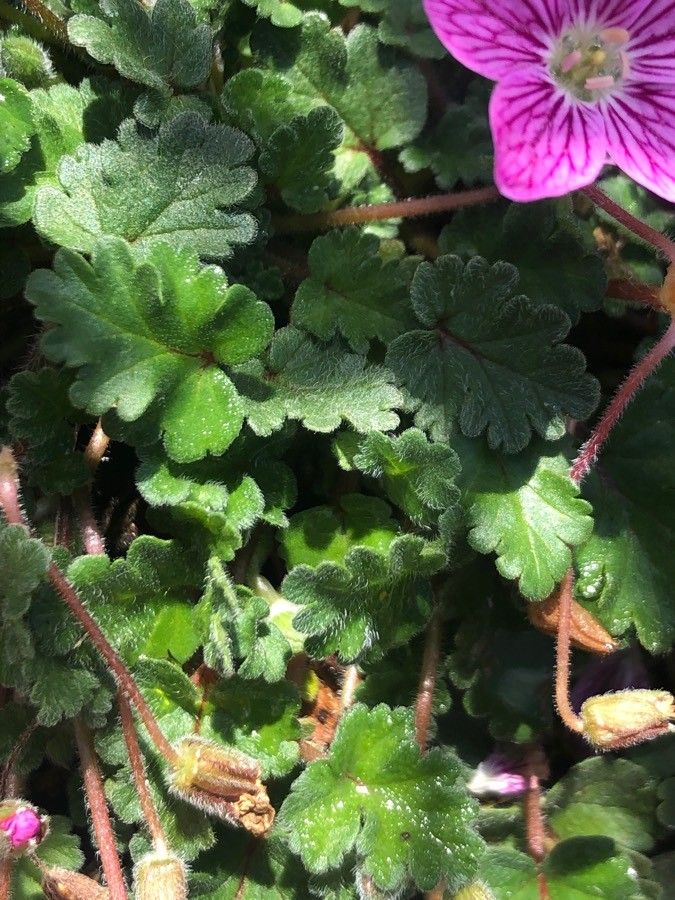
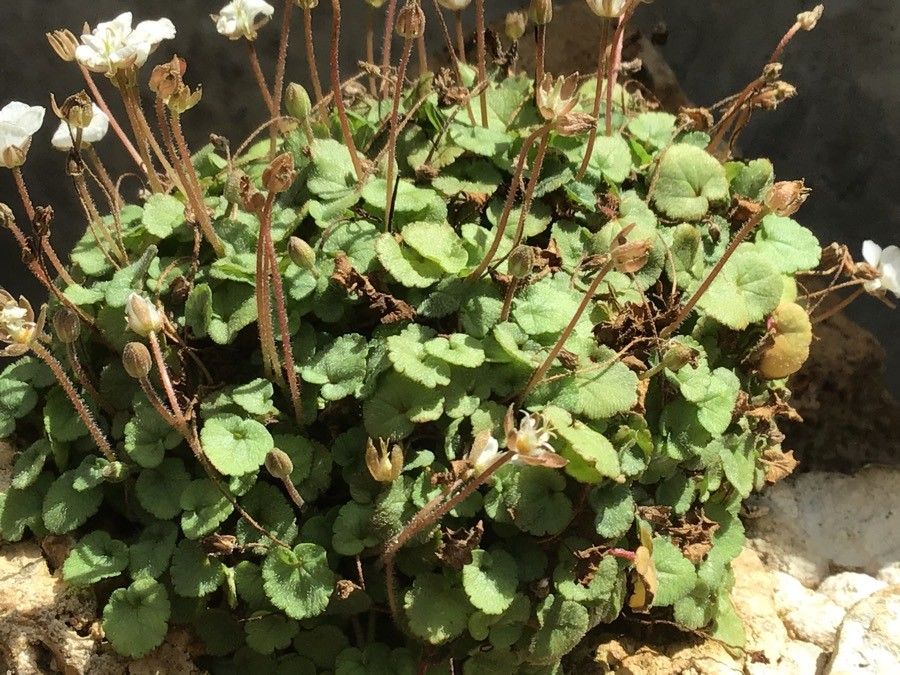
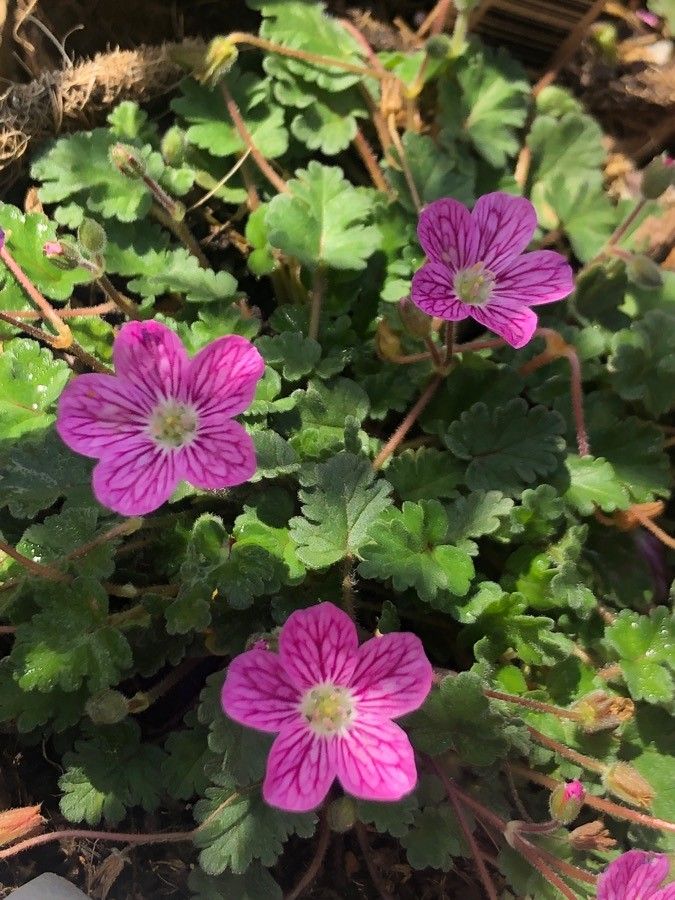
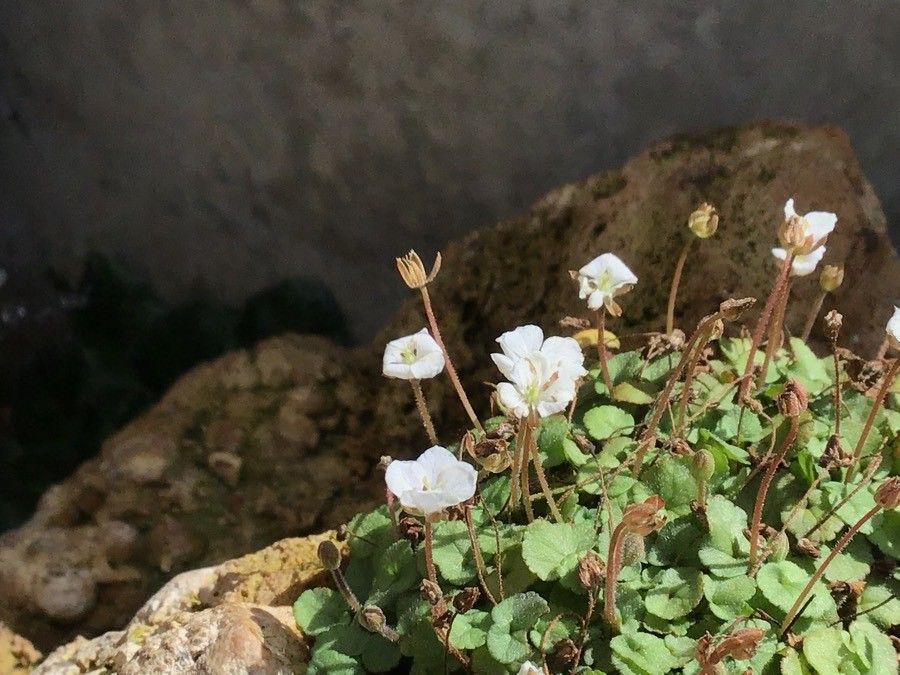
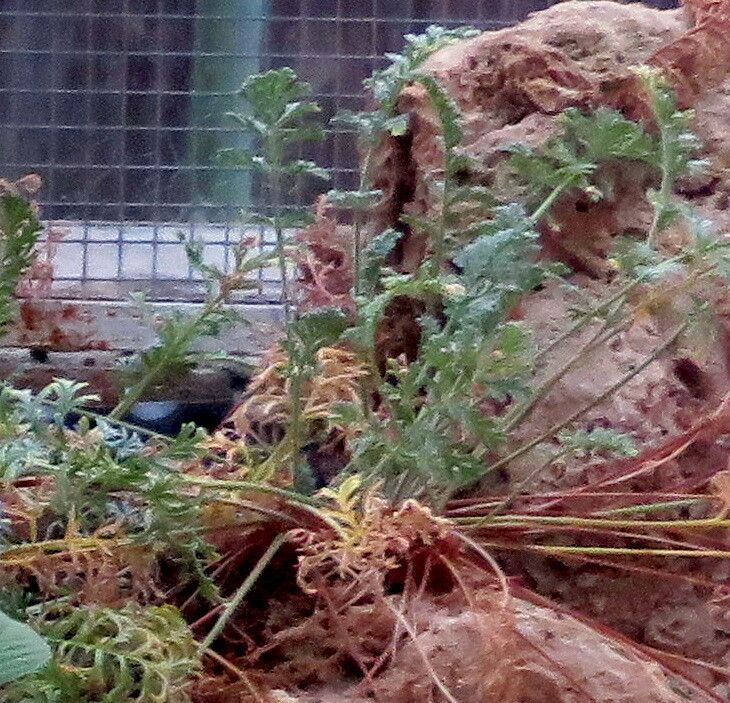
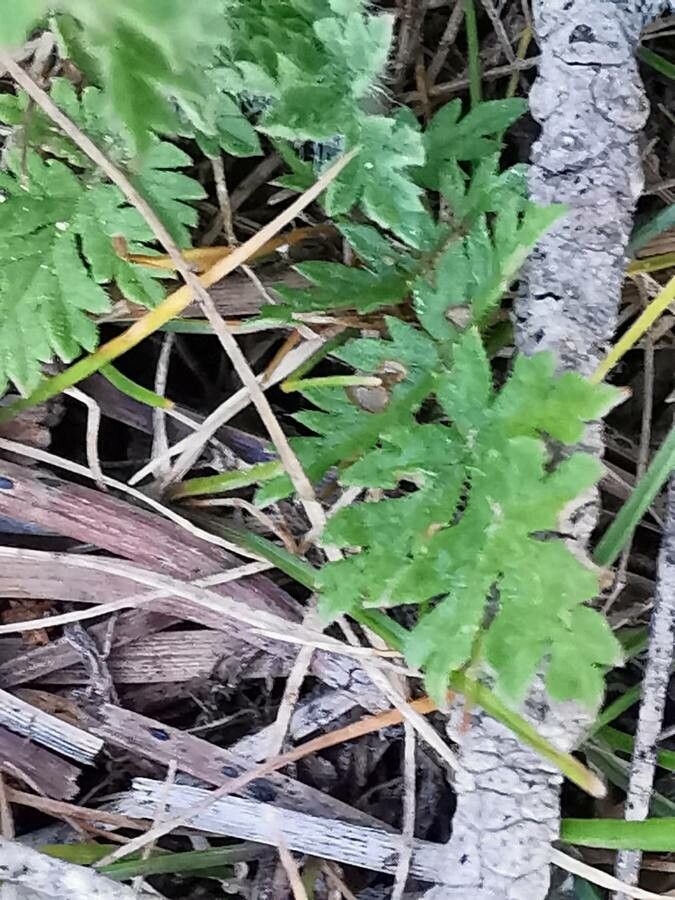
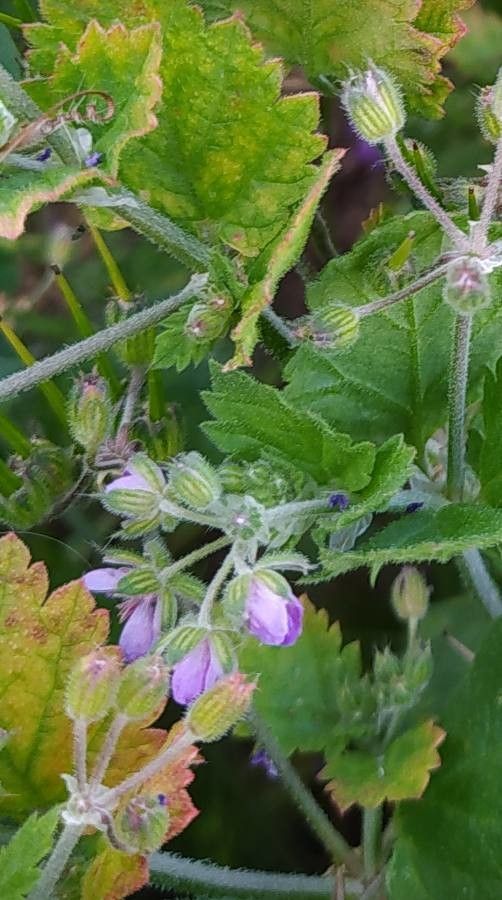
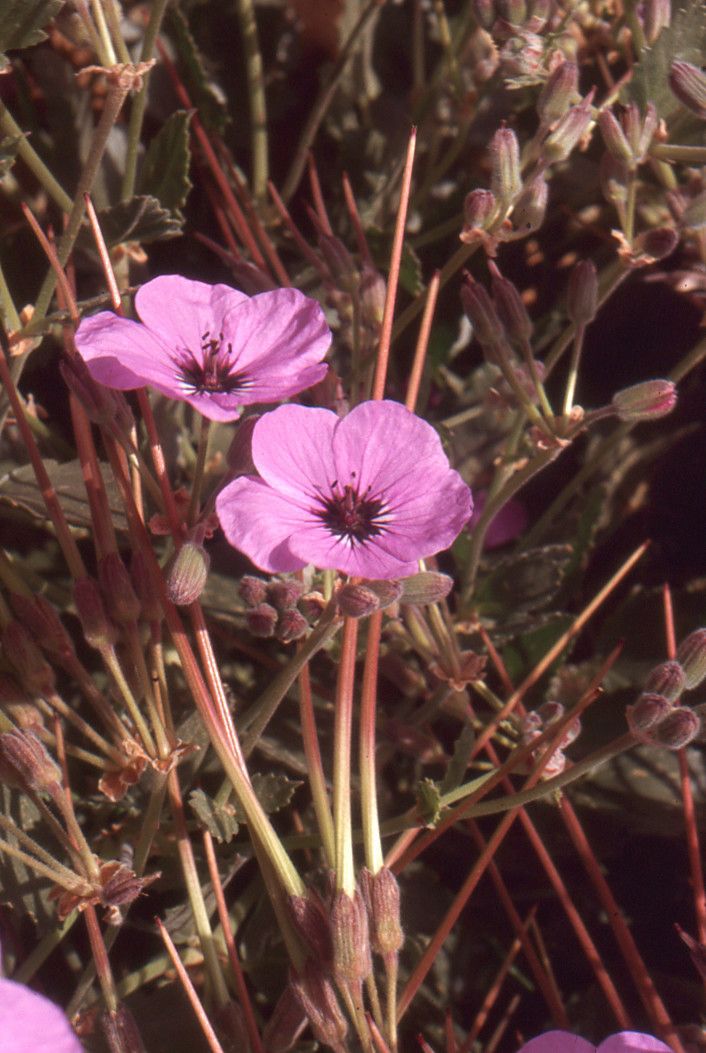
Erodium reichardii, commonly known as Reichard's cranesbill, is a perennial herbaceous plant belonging to the Geraniaceae family. Native to the Mediterranean region, it thrives in rocky areas, meadows, and open woodlands. The plant, which can grow up to 30 cm in height, exhibits a spreading habit and features deeply lobed, green-grey leaves. Its pink or purple flowers, each with five petals, bloom from spring through summer.
Erodium reichardii is drought-tolerant and prefers well-drained soil in full sun or partial shade. It can be easily propagated by seeds or by dividing the root ball, making it a low-maintenance addition to any garden. Its nectar-rich flowers attract bees and butterflies.
Additionally, Erodium reichardii has been traditionally used for medicinal purposes. It contains compounds such as tannins, which possess anti-inflammatory properties useful for treating wounds or skin irritations caused by insect bites or stings.
Alpine geranium has strong disease resistance and is usually not vulnerable to illnesses. Still, it can be affected by pests and diseases present in its environment. These problems are typically mild. For care, this plant needs a moderate level of attention. It should be pruned regularly to keep a tidy appearance and support healthy growth. Fertilizing can also help encourage flowering. Alpine geranium is appropriate for anyone who has outdoor space, such as a garden or patio, and does not demand extensive care experience. It may require more attention when cultivated indoors.
How to keep Erodium Reichardii.
Light
Alpine geranium is a sun-loving perennial herbaceous plant native to open habitats, commonly thriving in meadows and grasslands. It prefers full sun but can also tolerate partial sun.
Water
The Alpine geranium is native to mountainous regions and thrives with weekly watering, balancing its needs between moisture and drought conditions. This evergreen herb has adapted to its environment by storing water in its leaves, which helps it endure dry winters.
Temperature
The Alpine geranium can tolerate a wide range of temperatures, but its distribution may still be limited by various combinations of moisture and heat. It does best in warm summer climates with adequate rainfall or watering. Prolonged stretches of cloudy, rainy weather or extended high temperatures can increase the likelihood of the Alpine geranium dying. In winter, proper protection from cold can improve the plant’s survival rate.
Fertilizer
The best time to fertilize an Alpine geranium is in early spring, when it is coming out of dormancy and starting active growth. Fertilizing supplies essential nutrients for healthy growth. Although the Alpine geranium has fairly low fertilizer needs, applying fertilizer once a year can improve its survival and encourage better, longer-lasting flowers.
Pruning
To promote growth and maintain the shape of Alpine geraniums, it is beneficial to carefully prune them after they have finished flowering, typically between early and late spring. Be sure to remove any dead or diseased stems to enhance air circulation. It's important to use clean, sharp tools to avoid causing damage and spreading diseases, which will encourage healthier and denser growth.
Botanical profile.
- Plant Type
- Herb
- Life Cycle
- Perennial
- Genus
- Erodium
- Family
- Geraniaceae
- Hardiness Zone
- 5-9
- Mature Height
- 5 cm
- Mature Spread
- 15 cm
- Leaf Color
- Dark Green, Green
- Leaf Type
- Evergreen
- Flower Size
- 1.02 cm to 1.52 cm
- Bloom Time
- All year round
- Planting Time
- Spring, Summer, Autumn
- Harvest Time
- All year round
Other names.
Reader questions.
What are the sunlight requirements for Alpine geranium?
Alpine geranium, botanically known as Erodium reichardii, thrives in locations that receive full sun, which means above 6 hours of direct sunlight daily. However, it can also tolerate conditions of partial sun, receiving about 3-6 hours of sunlight. It's important to observe the movement of sunlight through your garden to select spots that offer the ideal balance of light and shade, ensuring the plants' health and happiness.
How essential is sunlight for growing Alpine geraniums?
Sunlight is crucial for the growth of Alpine geraniums, a sun-loving perennial herbaceous plant often found in open habitats such as meadows and grasslands. These plants prefer full sun but can manage in partial sun conditions as well. When natural sunlight is not sufficient, especially during winter or in less sunny spaces, artificial lighting can be a viable substitute to promote healthy growth. For optimal growth under artificial lights, full sun plants need 30-50W/sq ft, partial sun plants need 20-30W/sq ft, and full shade plants need 10-20W/sq ft of light.
What are common symptoms of inadequate lighting for Alpine geraniums?
When Alpine geraniums do not receive enough light, several symptoms can manifest, including smaller new leaves, leggy or sparse growth, accelerated leaf drop, halted growth, paler new leaves, chlorosis (yellowing leaves), sunscald, leaf curling, wilting, and leaf scorching. These signs indicate that the plant is struggling with the light conditions and may require adjustments to their environment.
What solutions can help Alpine geraniums receiving inadequate light?
To address light deficiency in Alpine geraniums, consider gradually moving indoor plants to sunnier spots to achieve at least 6 hours of sunlight daily, using a south-facing window for natural light, or utilizing artificial light sources for at least 8 hours daily. For outdoor plants, slowly transitioning them to brighter areas can help them adapt without getting sunburned. Removing obstacles that block sunlight or transplanting smaller plants during their dormant period to sunnier locations with good drainage can also be effective strategies. It's essential to note that parts of the plant already affected by inadequate light might not recover, but new growth should be healthy following these adjustments.