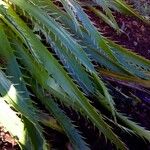
Eryngium agavifolium
Agave-leaved sea holly · Blade-leaved Eryngo · Teething Cactus · Sea holly
Care Guide
💧 Water
Sea holly is well-suited for arid regions, thanks to its high drought tolerance and preference for well-drained soil. To keep it healthy, water the plant once a week. It thrives in full sunlight and can endure dry conditions, making it an excellent choice for xeriscaping. Its efficient water storage capabilities further enhance its suitability for such environments.
☀️ Light Full sun
Native to arid regions, Sea holly does best in full sun, as its native habitat features strong sunlight and little shade. It will also tolerate partial sun, allowing some adaptability in its growth.
What are the sunlight requirements for Sea Holly (Eryngium agavifolium)?
Sea Holly (Eryngium agavifolium) thrives in locations that receive above 6 hours of sunlight daily. When choosing a spot for your Sea Holly, it's crucial to observe how sunlight moves through your garden throughout the day. Ensure you select a location that offers a harmonious balance of light and shade to encourage the plant's health and happiness.
🌡️ Temperature 5–35°C
Sea holly grows best in warm conditions and needs relatively high temperatures during the growing season to encourage growth and metabolism. It prefers plenty of sunlight, suitable moisture levels, and good air circulation. However, it can be damaged by very low temperatures and by overwatering. It's therefore important to maintain balance and avoid both excessively high temperatures and overly dry conditions.
💨 Humidity
🪴 Soil 0-0
🌱 Fertilizer
Sea holly requires only light fertilizer applications once or twice a year during the growing season. Avoid fertilizing in winter and in summer when it is dormant. Cut back on fertilizer for repotted plants and wait a couple of months after repotting before applying any. Fertilizing helps maintain healthy growth and encourages blooms.
🪴 Pot & Repot
✂️ Pruning
Sea holly is known for its spiky leaves and thistle-like flowers. To keep it healthy and looking its best, prune any damaged leaves and spent stems in early spring, after it has bloomed. Regular pruning helps maintain the plant's shape, prevent disease, and promote stronger growth. Always use sterilized tools to ensure the plant remains healthy and visually appealing throughout the growing season.
🌿 Propagating
🐛 Diseases & pets
☠️ Toxicity
Characteristics
- Plant Type
- Herb, Succulent
- Life Cycle
- Perennial
- Genus
- Eryngium
- Family
- Apiaceae
- Hardiness Zone
- 5-9
- Mature Height
- 1.22 m
- Mature Spread
- 49 cm
- Leaf Color
- Green
- Leaf Type
- Semi-evergreen
- Flower Color
- Green
- Flower Size
- 1.02 cm to 2.03 cm
- Bloom Time
- Early summer, Mid summer
- Planting Time
- Spring, Summer, Autumn
- Harvest Time
- Late summer, Early fall