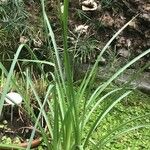
Eryngium pandanifolium
Description
Source: leafsnapEryngium pandanifolium, called the pandan-like-leaved eryngo, is a species of flowering plant in the genus Eryngium, native to Brazil, Paraguay, Uruguay, and Argentina, and introduced in Australia and New Zealand. It has gained the Royal Horticultural Society's Award of Garden Merit.
Care Guide
💧 Water
☀️ Light Full sun
Giant sea holly is a perennial herbaceous plant that loves sun and is native to open habitats, commonly growing in meadows and grasslands. It prefers full sun but can also tolerate partial sun.
What are the sunlight requirements for Giant Sea Holly (Eryngium pandanifolium)?
Giant Sea Holly (Eryngium pandanifolium) requires full sun, meaning it needs above 6 hours of sunlight daily. It's important to observe the movement of sunlight through your garden to find spots that provide the perfect balance of light and shade. This ensures the plant's happiness by accommodating its need for ample sunlight while also protecting it from potential overexposure.
🌡️ Temperature 15–37.8°C
Giant sea holly shows good temperature adaptability, tolerating high heat and considerable temperature fluctuations. In hot conditions, care should be taken with watering and providing adequate shade to avoid sunburn. Conversely, Giant sea holly is relatively sensitive to low temperatures. While it can endure some cold, excessively low temperatures may cause frost damage.
💨 Humidity
🪴 Soil 6-8
🌱 Fertilizer
Usually a single fertilizer application in spring is enough for Giant sea holly, though repeated feedings can help achieve maximum growth. Feed it about once a month to once every month and a half. Fertilizing improves the leaves’ appearance and function, maintaining even color and a healthy texture. It also encourages root development and nutrient uptake, supporting long-term plant health.
🪴 Pot & Repot
✂️ Pruning
To ensure the Giant Sea Holly thrives, perform pruning in early spring. This helps manage its size and boosts flowering. Removing dead stems improves air circulation and overall plant health. Additionally, hard pruning can rejuvenate overgrown plants, promoting a neat appearance and vigorous growth.
🌿 Propagating
🐛 Diseases & pets
☠️ Toxicity
Characteristics
- Plant Type
- Herb
- Life Cycle
- Perennial
- Genus
- Eryngium
- Family
- Apiaceae
- Hardiness Zone
- 8-11
- Mature Height
- 1.52 m to 2.44 m
- Mature Spread
- 0.91 m to 1.52 m
- Leaf Color
- Dark Green
- Leaf Type
- Evergreen
- Flower Color
- Purple, Brown, Silver
- Flower Size
- 0.51 cm to 0.76 cm
- Bloom Time
- Summer
- Planting Time
- Summer, Autumn
- Harvest Time
- Fall