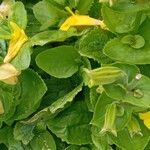
Erythranthe guttata
Common Monkey-flower · Monkey-flower · Seep Monkeyflower · Large Yellow Monkeyflower · Spotted Monkeyflower
Description
Source: leafsnapErythranthe guttata, with the common names seep monkeyflower and common yellow monkeyflower, is a yellow bee-pollinated annual or perennial plant. It was formerly known as Mimulus guttatus.Erythranthe guttata is a model organism for biological studies, and in that context is still referred to as Mimulus guttatus. There may be as many as 1000 scientific papers focused on this species. The genome is (as of 2012) being studied in depth.
🌳 The attractive yellow blooms of seep monkeyflower exert a distinct ecological effect by changing pollinator behavior. Its nectar contains a blend of chemicals that alters pollinator visitation patterns and thus can shape plant community structure by affecting the pollination success of neighboring plants. Scientists examine how seep monkeyflower nectar composition influences the foraging habits of pollinators like bees, which can yield insights into plant–pollinator interactions and their wider impacts on ecological networks.
Care Guide
💧 Water
The seep monkeyflower thrives in moist environments and needs consistent weekly watering. Although it has moderate drought tolerance, it is best suited for areas with plenty of flowing water. Therefore, effective rainwater management is crucial for its successful growth.
What is the most effective way to water my Seep monkeyflower?
To ensure the health of the Seep monkeyflower, it is recommended to use filtered water at room temperature for watering. Tap water may contain harmful particles, so filtering it is preferable. The plant is accustomed to warm environments, so using cold water could be a shock to its system. Additionally, overhead watering should be avoided as it can cause issues with the foliage. Instead, slowly pour filtered room temperature water onto the soil until it is completely soaked. This helps moisten the roots and supports their spread throughout the soil for nutrient collection.
What should I do if I give my Seep monkeyflower too much water or too little water?
Both overwatering and underwatering can harm the health of your Seep monkeyflower, but overwatering is more common. Excess water can cause wilting and yellowing of the stems and leaves, as well as diseases like root rot, mold, and mildew which can be fatal to the plant. Underwatering is less likely due to the Seep monkeyflower's drought tolerance, but it is still possible. Underwatering will cause the leaves to become brittle and brown. It's important to recognize signs of overwatering early, as some diseases may be irreversible if not addressed promptly. If you notice overwatering signs, reduce watering and check the soil's drainage. Replace poorly draining soil with a loose, well-draining potting mix. If you see signs of underwatering, simply increase the frequency of watering until the signs improve.
How often do I need to water my Seep monkeyflower?
If your Seep monkeyflower is in a pot, you can determine if it needs water by checking the soil. Simply stick your finger into the soil and if the top two to three inches are dry, then it's time to water. If your Seep monkeyflower is planted outdoors in the ground, you can use the same method to test the soil. When the top few inches of soil have dried out, it's time to water. Typically, during the spring and early fall, you will need to water this plant about once a week. However, in extremely hot weather, you may need to water it twice a week or even more. Keep in mind that mature and well-established Seep monkeyflowers have a remarkable ability to withstand drought.
How much water does my Seep monkeyflower require?
When watering your Seep monkeyflower, be generous with the amount of water you provide. Make sure the top few inches of soil are dry before watering, and then give the plant a good, thorough soaking. Add enough water to saturate the soil completely, and allow excess water to drain out from the bottom of the pot. If you don't see any excess water draining, you may not have given enough water. On the other hand, be careful not to let water accumulate inside the soil, as this can harm the plant. Additionally, if water is not draining properly from the pot, it could be a sign of poorly draining soil, which is not good for the health of the plant. If the plant is outdoors, receiving about 1 inch of rain per week should be sufficient.
How should I water my Seep monkeyflower at different stages of growth?
The water requirements of the Seep monkeyflower can vary depending on its growth stages. In the early stages, such as the first few years of its life or after transplanting, it needs more water than usual. During this time, the plant focuses on developing new roots that will support future growth, and these roots require additional moisture. As the plant matures, it requires less water. Another stage when increased watering may be necessary is during the bloom period. Flower development utilizes a significant amount of moisture, so extra watering might be needed at this time for optimal growth.
☀️ Light Full sun
For optimum health, seep monkeyflower needs abundant sunlight, though it can adapt to moderately sunny conditions. Native to sun-drenched habitats, its growth and flowering can be negatively affected by limited light. Excessive sunlight, however, can be harmful, causing stunted growth and possible sunburn.
What are the sunlight requirements for Seep monkeyflower?
Seep monkeyflower thrives in conditions that offer comprehensive sun exposure but can adapt to moderately sunny conditions, requiring more than 6 hours of sunlight for full sun and about 3-6 hours for partial sun. Originating from sun-drenched habitats, its growth and flowering can suffer under limited light conditions. However, extreme sunlight can also be detrimental, potentially leading to stunted growth or sunburn. Observing the movement of sunlight through your garden to find the perfect balance of light and shade is crucial for ensuring the happiness of your plants.
How can artificial lighting benefit indoor Seep monkeyflowers?
Indoor Seep monkeyflowers require adequate lighting for optimal growth, especially when natural sunlight is insufficient, such as in winter or less sunny spaces. Artificial lights, like LED lights customized to provide specific wavelengths of light, are vital for promoting faster, healthier plant growth. For full sun plants, 30-50W/sq ft of artificial light is recommended, partial sun plants need 20-30W/sq ft, and full shade plants require 10-20W/sq ft. Positioning the light source 12-36 inches above the plant and ensuring it receives 8-12 hours of light per day mimics natural sunlight conditions effectively.
What are the symptoms of inadequate sunlight for Seep monkeyflowers?
Symptoms of inadequate sunlight in Seep monkeyflowers include smaller new leaves, leggy or sparse growth, faster leaf drop, and slower or halted new growth. Additionally, lighter-colored new leaves or irregular color patterns may indicate a lack of chlorophyll and essential nutrients. Overexposure to sunlight, on the other hand, can lead to chlorosis, sunscald, leaf curling, wilting, and leaf scorching. These symptoms highlight the importance of providing the right amount of sunlight for the health and well-being of the plant.
How can you improve the sunlight conditions for both indoor and outdoor Seep monkeyflowers?
To improve sunlight conditions for Seep monkeyflowers, gradually move indoor plants to sunnier locations each week until they receive at least 6 hours of direct sunlight daily, using a south-facing window and keeping curtains open during the day. Consider using artificial light for added illumination. For outdoor plants, gradually move them to sunnier spots weekly to avoid sunburn, ensuring the best sunlight conditions. If sunlight obstructions occur, such as from trees, pruning branches and leaves can help sunlight filter through. For smaller plants, transplanting during the dormant period to a location with ample sunlight and good drainage is beneficial. Note that parts of the plant affected by insufficient sunlight may not recover, but new growth will be healthy with increased light exposure.
🌡️ Temperature 10–35°C
Seep monkeyflower comes from environments with temperatures ranging from 68 to 95 °F (20 to 35 ℃). It thrives in temperate conditions and may need seasonal adjustments in extreme climates to ensure proper growth.
What temperature conditions are ideal for the Seep monkeyflower?
Seep monkeyflower, also known by its botanical name Erythranthe guttata, originates from environments with temperatures ranging between 68 to 95 °F (20 to 35 °C). It thrives best in temperate weather conditions. In regions experiencing extreme climates, seasonal adjustments may be necessary to ensure its proper growth. The plant exhibits strong cold resistance, meaning special frost protection measures are usually not essential during winter. However, if winter temperatures are expected to fall below -25°C, it is crucial to provide cold protection by covering the plant with materials such as soil or straw and ensuring the soil is moist before the first freeze in autumn.
How does Seep monkeyflower react to low temperatures?
Seep monkeyflower is notably cold-tolerant, performing optimally when the temperature remains above 20°C. During the winter months, it is important to ensure the temperature does not fall below 0°C to maintain the plant's health. In conditions where temperatures drop below -25°C, the plant may not exhibit noticeable changes during winter, but there could be a decrease in spring sprouting or no sprouting at all. To mitigate this, in spring, any parts of the plant that have failed to sprout should be removed to encourage new growth.
How does Seep monkeyflower react to high temperatures?
During the summer, it's important to keep Seep monkeyflower below 35°C. Temperatures exceeding 38°C can lead to the plant's leaves becoming lighter in color, prone to curling, and susceptible to sunburn. In severe cases, the plant may wilt and become dry. To address this issue, trim away sunburned and dried-up parts of the plant. Relocate the plant to a shaded area, especially away from the midday and afternoon sun, or use a shade cloth. Ensuring the soil remains moist by watering the plant in the morning and evening can also help mitigate the effects of high temperatures.
💨 Humidity
🪴 Soil 6-7
🌱 Fertilizer
The best time to fertilize a Seep monkeyflower is in early spring, when it is coming out of dormancy and starting active growth. Fertilizing supplies essential nutrients needed for healthy development. Although Seep monkeyflower has fairly low fertilizer requirements, applying fertilizer once a year can improve its chances of survival and encourage better, longer-lasting blooms.
Why do I have to put plant food on my Seep monkeyflower?
Fertilization plays a vital role in the growth of Seep monkeyflower and other plants. It provides essential nutrients that promote both above-ground and below-ground development. Although Seep monkeyflowers have relatively low fertilization requirements, annual fertilization can greatly benefit them, ensuring their survival and encouraging healthier and longer-lasting flowers. Therefore, those aiming to enhance the appearance of their Seep monkeyflower should prioritize regular fertilization.
When should I fertilize my Seep monkeyflower?
The best time to fertilize a Seep monkeyflower is in late winter to early spring. During this time, the plant is transitioning from its dormant phase to active growth. Fertilizing at this time promotes healthy growth and sets the plant up for a great season. Although early spring is the most beneficial, fertilizing in the fall is also acceptable. However, it is not recommended to fertilize in the summer or winter.
When is the best time to not fertilize my Seep monkeyflower?
To properly care for your Seep monkeyflower, it's best to only fertilize it during late winter and early spring. This plant has low fertilization needs, so one feeding per year is enough. Fertilizing during spring, summer, and fall can lead to overfertilization and its associated problems, except if you skipped fertilization in spring, in which case it's acceptable to fertilize in fall. Additionally, there's no need to fertilize this plant during winter because it goes into a dormant growth phase, meaning no new growth occurs. As a result, it's not recommended to fertilize during most of the winter.
What kind of fertilizer should I give my Seep monkeyflower?
A general-purpose fertilizer with a balanced amount of plant nutrients will work well for a Seep monkeyflower. However, there are specific nutrient blends that can be even more beneficial. Many gardeners believe that higher volumes of phosphorus will result in stronger roots and better flowers for flowering plants like the Seep monkeyflower. So, applying a phosphorus-rich fertilizer may be the best approach. The form of the fertilizer (granular or liquid) doesn't matter as long as there are plenty of nutrients present. Apart from manufactured fertilizers, you can also use organic methods to improve the soil for your Seep monkeyflower. Compost, manure, and similar materials can greatly enhance the growing medium for your Seep monkeyflower.
How can I make my Seep monkeyflower grow better?
To fertilize a Seep monkeyflower, the most common method is to use granular or pellet fertilizer in the soil surrounding the plant. Timing is important, so wait until the plant starts growing in spring before applying the fertilizer. Alternatively, some people prefer liquid fertilizer, which should be diluted with water before use. Regardless of the type of fertilizer you choose, it is recommended to moisten the soil before, during, and after application.
🪴 Pot & Repot Every 12 months
✂️ Pruning
The seep monkeyflower has bright yellow flowers and thrives in moist environments. To encourage bushier growth, lightly prune the plant in early spring. You can also extend the blooming period by regularly removing dead flowers. Avoid excessive pruning to maintain the plant's vibrancy and to manage its spread effectively.
🌿 Propagating
🐛 Diseases & pets
☠️ Toxicity
Characteristics
- Plant Type
- Herb
- Life Cycle
- Perennial, Annual
- Genus
- Erythranthe
- Family
- Phrymaceae
- Hardiness Zone
- 6-9
- Mature Height
- 20 cm to 40 cm
- Mature Spread
- 20 cm
- Leaf Color
- Green, Blue
- Leaf Type
- Semi-evergreen
- Flower Color
- Yellow, Gold
- Flower Size
- 2.03 cm to 4.06 cm
- Bloom Time
- Late spring, Early summer, Mid summer
- Planting Time
- Autumn, Winter
- Harvest Time
- Summer
- Native Area
- Mexico