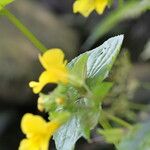
Erythranthe lutea
Yellow Monkey-Flower · Blood-drop emlets · Monkey musk · Yellow monkeyflower
Description
Source: leafsnapErythranthe lutea, commonly known as the yellow monkeyflower, is a flowering plant in the Phrymaceae family. Native to North America, it thrives in wetlands, meadows, and along streams. The plant grows up to 60 cm tall and features bright yellow flowers that bloom from late spring through summer. Its oval-shaped leaves, with toothed edges, are arranged oppositely on the stem. The yellow monkeyflower is a popular garden plant due to its attractive flowers and its ability to attract pollinators such as bees and butterflies. It prefers moist soil but can tolerate some drought once established. Traditionally, the plant has been used for its anti-inflammatory properties. Erythranthe lutea is also known for its ability to hybridize with other species of monkeyflowers, resulting in a wide range of flower colors, including pink, red, orange, white, or purple, depending on the species it crosses with. Overall, Erythranthe lutea is an appealing flowering plant that adds color and interest both in natural settings and gardens. With proper care, such as maintaining adequate moisture levels or well-draining soil, it can thrive. The plant's success can range from weeks to years, depending on the care it receives.
Care Guide
💧 Water Every 7 days
The yellow blotched monkey flower flourishes in moist environments and prefers consistent hydration without becoming waterlogged. For optimal growth, it's best to water it weekly and use soil that drains well while retaining moisture. Its growth cycles are influenced by water availability, making effective irrigation practices crucial for its development.
☀️ Light Full sun
Yellow blotched monkey flower grows best in locations that receive strong sunlight for most of the day, but it can also adapt to spots with fewer sun hours. Too little light can impede growth, while too much exposure may cause leaf burn. Because it comes from open habitats, it is more adaptable to a range of light conditions.
What are the sunlight requirements for Yellow blotched monkey flower?
Yellow blotched monkey flower requires full sun, meaning it thrives best in locations that receive more than 6 hours of direct sunlight per day. However, it can also grow in partial sun areas, where sunlight is present for about 3-6 hours. Observing how sunlight navigates through your garden will help in choosing the best spots that ensure a perfect balance of light and shade, ultimately contributing to the plant's well-being.
How does Yellow blotched monkey flower respond to different lighting conditions?
The Yellow blotched monkey flower is highly adaptable to varying lighting conditions, ideally flourishing in areas heavily bathed in sunlight throughout the day but can also adjust to lower sun exposure. An insufficient amount of light can impede growth, whereas too much light might cause leaf burn. This adaptability is attributed to its origin from open habitats.
Can artificial lighting be used for Yellow blotched monkey flower and what are the recommendations?
Yes, artificial lighting can be a crucial support for Yellow blotched monkey flowers, especially when natural sunlight is inadequate, such as during winter or in less sunlit spaces. Optimal growth under artificial lights requires selecting the right type, with LED lights being a popular choice due to their ability to offer specific wavelengths needed by plants. For full sun plants, 30-50W/sq ft of light is recommended, partial sun plants require 20-30W/sq ft, and full shade plants need 10-20W/sq ft. The light source should be positioned 12-36 inches above the plant to mimic the sun and be left on for 8-12 hours daily, depending on the plant species needs.
What symptoms might Yellow blotched monkey flower exhibit under inadequate lighting?
Under low light, the Yellow blotched monkey flower may show several signs of light deficiency, including smaller new leaves, leggy or sparse growth, faster leaf drop, halted new growth, and paler new leaves. These symptoms indicate the plant's struggle to adapt to insufficient lighting, shifting into a survival mode which affects its growth and overall health.
What are the symptoms of too much sunlight exposure for Yellow blotched monkey flower?
Excessive sunlight can lead to chlorosis, marked by leaves turning yellow due to chlorophyll breakdown, affecting photosynthesis. Sunscald might appear as pale, bleached, or damaged areas on the plant, and leaves can curl or twist as a defensive response to minimize water loss. Other signs include wilting from increased water loss, and leaf scorching, where leaves develop brown, dry, and crispy edges or patches.
🌡️ Temperature 10–35°C
Yellow blotched monkey flower can adapt to a wide range of temperatures, but its distribution may still be restricted by different combinations of water and heat. It does best in warm summer climates with sufficient rainfall or regular watering. Extended periods of cloudy, rainy weather or prolonged high temperatures can raise the chance of the Yellow blotched monkey flower dying. In winter, adequate protection from cold improves the plant's survival rate.
💨 Humidity
🪴 Soil 6-7
🌱 Fertilizer
For Yellow blotched monkey flower, the primary time to apply fertilizer is in early spring when the flowers are forming. The appropriate fertilizer encourages stronger blooms and helps the Yellow blotched monkey flower produce attractive flowers. Fertilizing in early spring ensures good flowers during the season and supplies energy for dormant growth phases.
🪴 Pot & Repot
✂️ Pruning
The yellow blotched monkey flower features vibrant yellow blooms and thrives in wet environments. To keep the plant healthy and visually appealing, prune it from early to late spring. This involves removing dead stems and spent flowers to encourage new growth and improve air circulation. These practices maximize blooming and ensure the plant remains robust throughout the growing season.
🌿 Propagating
🐛 Diseases & pets
☠️ Toxicity
Characteristics
- Plant Type
- Herb
- Life Cycle
- Perennial
- Genus
- Erythranthe
- Family
- Phrymaceae
- Hardiness Zone
- 6-9
- Mature Height
- 30 cm
- Mature Spread
- 20 cm
- Leaf Color
- Light Green, Yellow Green
- Leaf Type
- Semi-evergreen
- Flower Color
- Yellow
- Flower Size
- 2.54 cm to 4.06 cm
- Bloom Time
- Mid spring, Late spring, Early summer, Mid summer
- Planting Time
- Spring, Autumn
- Harvest Time
- Summer, Early fall