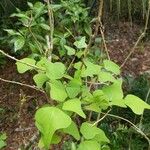
Erythrina flabelliformis
Chilicote · Western coral-bean · Coralbean · Indian bean
Description
Source: leafsnapErythrina flabelliformis, commonly known as the coral bean or Indian coral tree, is a deciduous tree in the Fabaceae family. Native to Mexico and Central America, this tree can reach heights of up to 20 feet. It is notable for its bright red flowers that bloom in clusters during the spring and summer. These flowers are followed by long seed pods containing bright red seeds, which are toxic if ingested. The leaves of Erythrina flabelliformis are large, fan-shaped, and glossy green, providing an attractive backdrop for the vibrant flowers. While the bark of the tree is smooth when young, it becomes rougher with age. Erythrina flabelliformis thrives in full sun but can tolerate partial shade in hotter climates. It requires well-draining soil with moderate moisture levels for optimal growth. This plant has several uses in traditional medicine, thanks to its anti-inflammatory properties. It has been used to treat various ailments, including arthritis pain and swelling caused by insect bites or stings. Overall, Erythrina flabelliformis is an attractive ornamental plant that adds color and interest to any garden landscape. It also offers medicinal benefits when used appropriately under professional guidance. However, it is crucial to handle it with care due to its toxic seeds, and to seek proper guidance from medical professionals or experts in traditional medicine involving this species and other plants in the Erythrina genus.
🎭 Safeguarding, spirit expulsion, wart-charming
Care Guide
💧 Water Every 7 days
☀️ Light Full sun
Coralbean is native to open habitats, such as sunny meadows and forest edges, which offer abundant light. It thrives in Full Sun but will also tolerate Partial Sun, adapting well to a range of sunlight conditions.
What type of sunlight does Coralbean (Erythrina flabelliformis) require?
Coralbean (Erythrina flabelliformis) thrives in various sunlight conditions. It requires full sun, which means it needs above 6 hours of sunlight daily, to perform well. It can also grow in partial sun, defined as about 3-6 hours of sunlight a day. It's essential to watch how sunlight moves through your garden, choosing spots that offer a perfect balance of light and shade for your plants, ensuring their happiness and health. This mindful approach helps in the successful growth of Coralbean by providing conditions that closely mimic its natural habitat.
🌡️ Temperature 20–37.8°C
Coralbean comes from tropical areas, where the climate is generally warm and humid. As a result, it is adapted to high temperatures and humidity. It does not tolerate sudden temperature changes and prefers a consistent thermal environment, so it is important to avoid temperature fluctuations indoors. It generally cannot endure cold and needs higher temperatures to grow. If the surrounding temperature falls too low, the plant may stop growing or even die.
What is the botanical name of Coralbean?
The botanical name of Coralbean is Erythrina flabelliformis.
💨 Humidity
🪴 Soil 6-8
🌱 Fertilizer
The best time to fertilize a Coralbean is in early spring, when it is coming out of dormancy. This supports overall growth and the development of flowers. Applying fertilizer improves the foliage, stems, and branches, and encourages flowers that are large, bright, and long-lasting. It also helps move nutrients from the roots to the blooms and boosts the plant’s health and resistance to disease.
🪴 Pot & Repot
✂️ Pruning
Coralbean, recognized for its bright red flowers and thorny branches, benefits from regular pruning in early spring. To promote healthy growth and abundant blooming, remove any dead or weak branches. Be sure to use clean, sharp tools to minimize the risk of disease. Pruning also helps maintain the plant's size and shape, ensuring optimal development.
🌿 Propagating
🐛 Diseases & pets
☠️ Toxicity
Characteristics
- Plant Type
- Shrub
- Life Cycle
- Perennial
- Genus
- Erythrina
- Family
- Fabaceae
- Hardiness Zone
- 9-11
- Mature Height
- 3.66 m to 10.97 m
- Mature Spread
- 3.96 m to 6.1 m
- Leaf Color
- Green, Dark Green
- Leaf Type
- Deciduous
- Flower Size
- 5.08 cm to 6.35 cm
- Bloom Time
- Mid spring, Late spring, Early summer
- Planting Time
- Spring, Autumn
- Harvest Time
- Mid summer, Late summer, Early fall
- Native Area
- Mexico