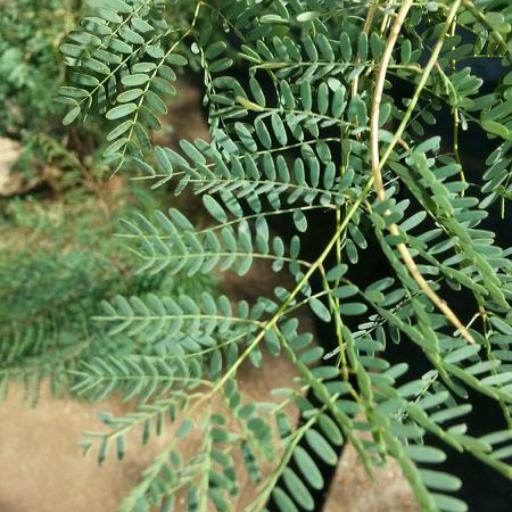
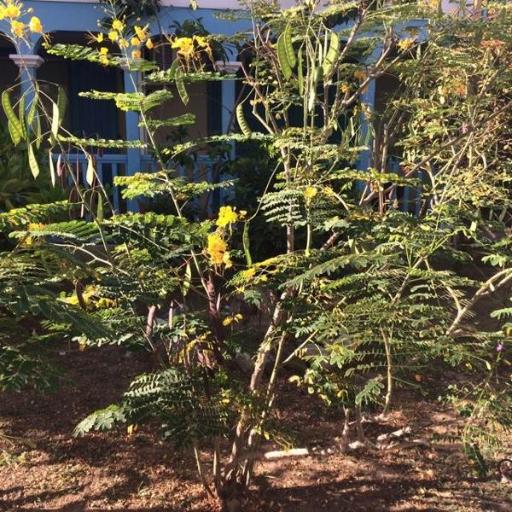
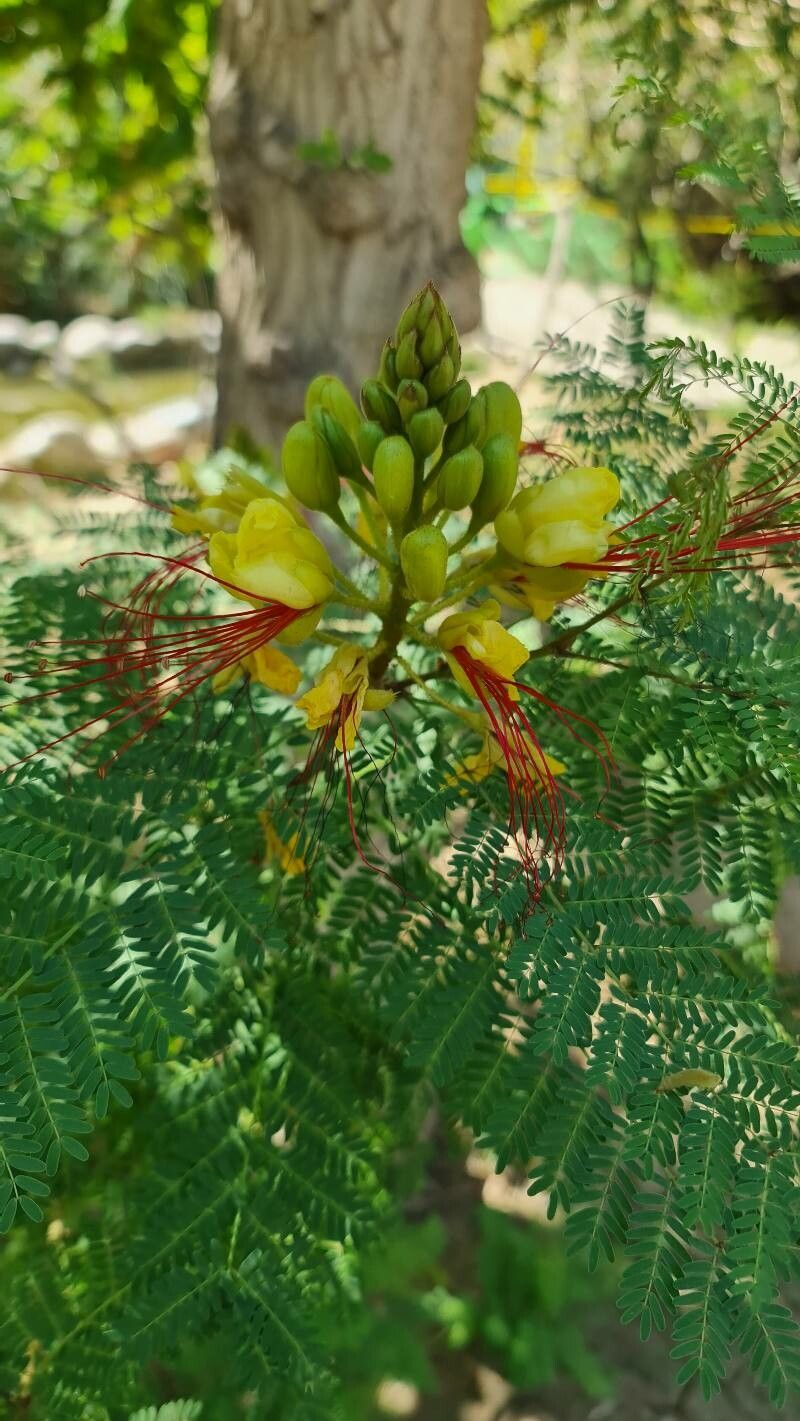
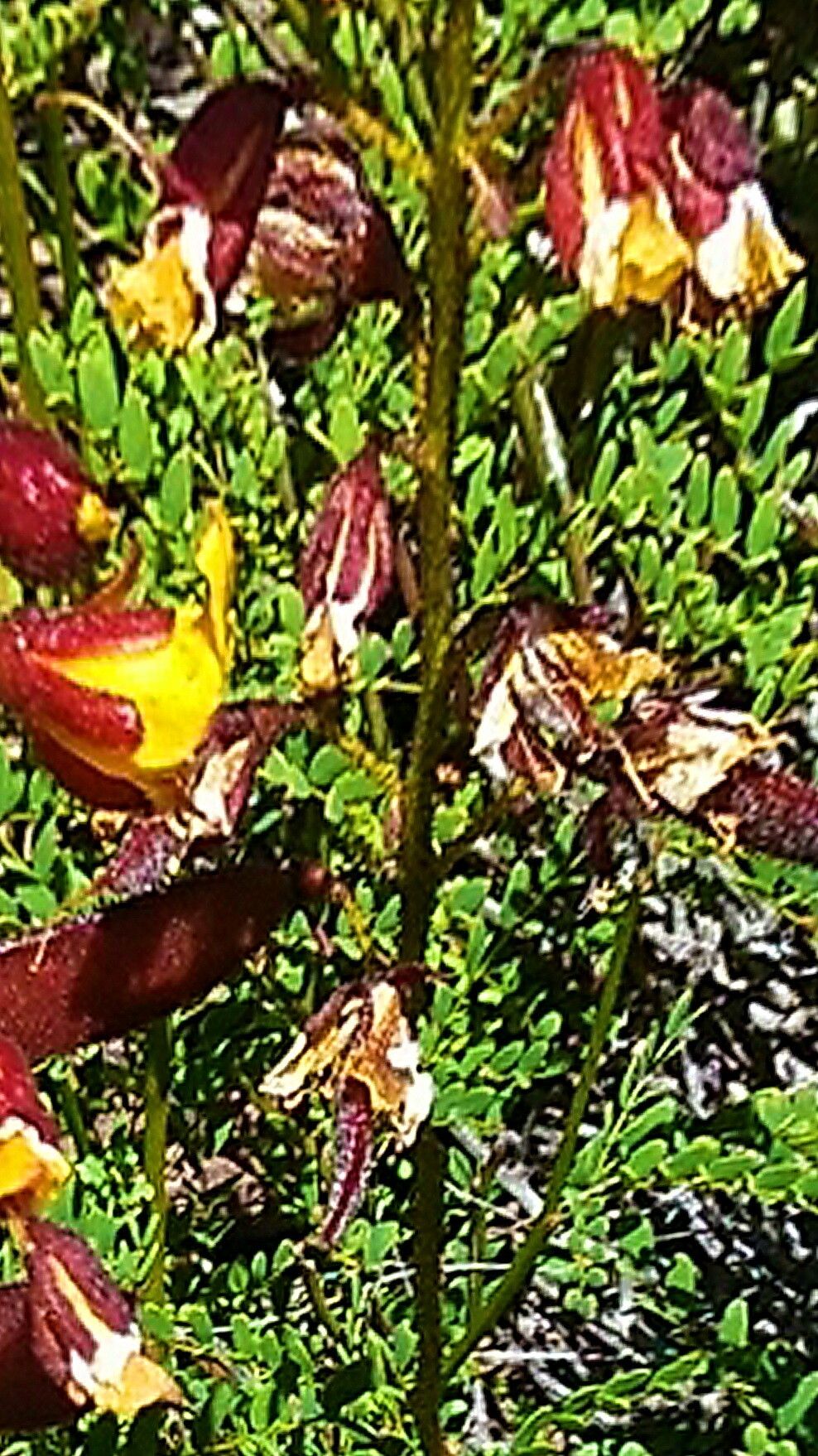
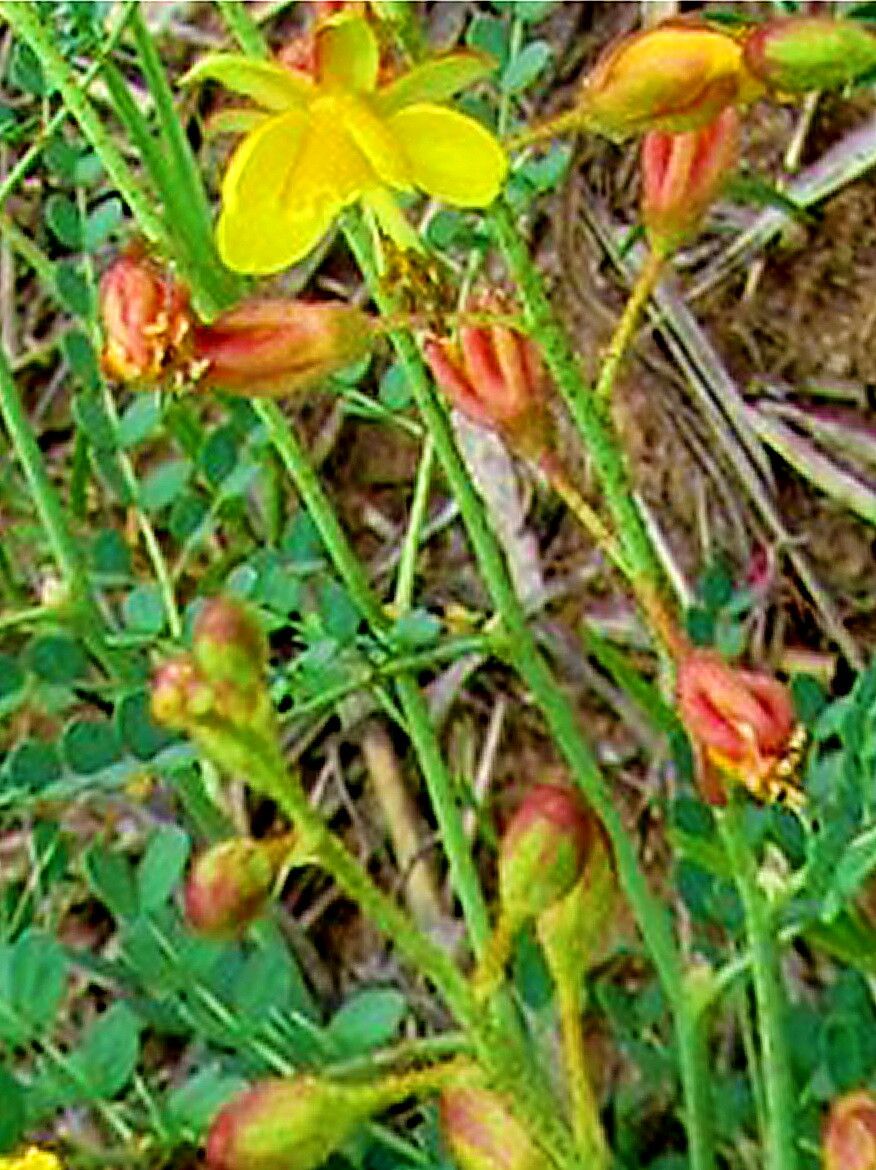
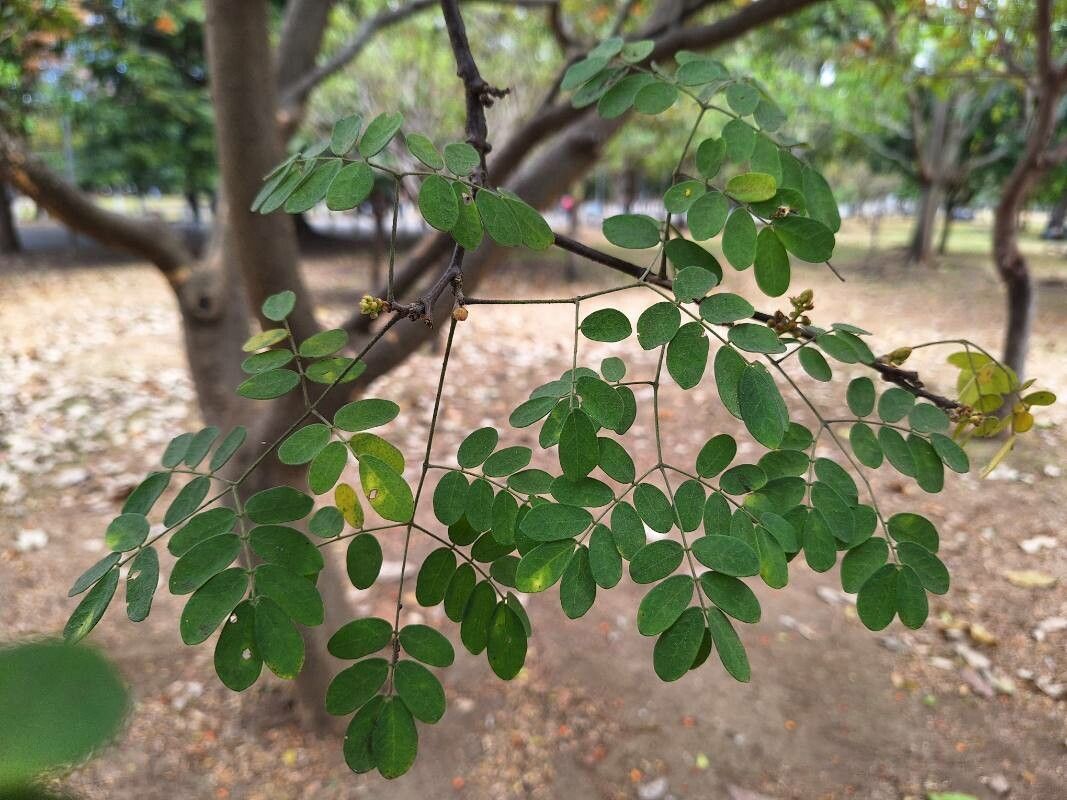
Erythrostemon gilliesii is a shrub in the legume family. It is commonly known as bird of paradise, but it is not related to the bird of paradise genus Strelitzia. It grows to 1–4 m tall, depending on rainfall. The leaves are bipinnate, 10–15 cm long, bearing 3-10 pairs of pinnae, each with 6-10 pairs of leaflets 5–6 mm long and 2–4 mm broad. The flowers are borne in racemes up to 20 cm long, each flower with five yellow petals with 10 long conspicuous red stamens. The pods are densely covered in short, red glandular hairs. It is a striking ornamental plant native to South America, mainly Argentina and Uruguay. It is naturalized in Texas, and fairly common in the rest of the southwestern United States, where it is known as bird of paradise bush, desert bird of paradise, yellow bird of paradise, and barba de chivo. Although it is a tropical plant adapted to dry climate, it also thrives in the climate of Avsa and neighboring islands in the south of Sea of Marmara in northwestern Turkey, where it is commonly known as Paşabıyığı (Pasabiyigi), Cennetkuşu ağacı (Cennetkusu agaci), which in Turkish means "bird of paradise tree," and Bodurakasya, which means "dwarf acacia". This species is also fairly common in the Karoo of South Africa.
Bird of paradise is fairly resistant to disease and, in general, is not susceptible to many illnesses. As for care, this plant is fairly low maintenance. When grown outdoors it needs only light watering, and larger specimens usually do not require pruning. Smaller plants, however, should be pruned after they finish blooming. Bird of paradise is appropriate for anyone who has outdoor space, such as a garden or deck, and it does not demand much experience in plant care.
How to keep Erythrostemon Gilliesii.
Light
Bird of paradise does best when it receives most of the day's sunlight. Since it is adapted to the sun-drenched habitats of its native range, it prefers steady, plentiful light. Insufficient or excessive light can harm it, causing stunted growth or leaf scorch, respectively.
Temperature
Bird of paradise is native to temperate regions and grows best in temperatures from 59 to 105.8 °F (15 to 41 ℃). It favors warmer conditions, so seasonal temperature adjustments may be necessary to mimic its natural habitat.
Fertilizer
The best time to fertilize a Bird of paradise is in early spring, when it comes out of dormancy. This stimulates overall growth and flower development. Feeding the plant improves its foliage, stems, and branches, while encouraging flowers that are large, vibrant, and long-lasting. It also helps move nutrients from the roots to the blooms and strengthens the plant's health and disease resistance.
Botanical profile.
- Plant Type
- Tree, Vine, Shrub
- Life Cycle
- Perennial
- Genus
- Erythrostemon
- Family
- Fabaceae
- Hardiness Zone
- 8-13
- Mature Height
- 1.83 m to 2.44 m
- Mature Spread
- 1.22 m to 1.83 m
- Leaf Color
- Green
- Leaf Type
- Evergreen
- Flower Color
- Yellow
- Flower Size
- 20.32 cm
- Bloom Time
- Early summer, Mid summer
- Planting Time
- Spring, Autumn
- Harvest Time
- Mid summer, Late summer
Other names.