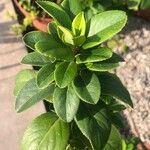
Escallonia laevis
Escallonia
Care Guide
💧 Water
☀️ Light Partial sun
Escallonia laevis naturally occurs in habitats like forest understories or rocky sites, where it grows in natural shade. It favors partial sun but can tolerate full sun or full shade, illustrating its adaptable and hardy nature.
🌡️ Temperature 15–35°C
Escallonia laevis shows strong adaptability to a range of climate conditions, whether in scorching summers or cold winters. However, it does have an optimal temperature range for growth. When temperatures become excessively high, the plant is susceptible to heat and humidity stress, which can result in its death. In regions where temperatures approach the lower limit of its cold tolerance, it is important to implement insulation measures to protect the plant.
💨 Humidity
🪴 Soil 6-8
🌱 Fertilizer
Correct timing is essential when fertilizing Escallonia laevis. Apply fertilizer in early spring and repeat monthly until early summer. Fertilizer encourages attractive blooms and supplies energy during both dormant and active growth phases.
🪴 Pot & Repot Every 12 months
✂️ Pruning
To enhance the growth of Escallonia laevis, it is important to prune the plant in early spring. Begin by removing any dead branches, then lightly shape the plant and thin it out to improve air circulation, which helps reduce the risk of pests. This maintenance not only promotes a tidy structure but also maximizes the plant's ornamental value, keeping your Escallonia laevis vibrant and flourishing.
🌿 Propagating
🐛 Diseases & pets
☠️ Toxicity
Characteristics
- Plant Type
- Shrub
- Life Cycle
- Perennial
- Genus
- Escallonia
- Family
- Escalloniaceae
- Hardiness Zone
- 8-10
- Mature Height
- 2.44 m
- Mature Spread
- 2.44 m
- Leaf Color
- Yellow, Green, Variegated
- Leaf Type
- Evergreen
- Flower Color
- Pink
- Flower Size
- 1.02 cm to 1.52 cm
- Bloom Time
- Summer, Early fall, Mid fall
- Planting Time
- Spring
- Harvest Time
- Fall