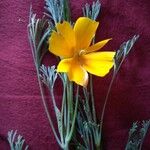
Eschscholzia glyptosperma
Desert poppy
Description
Source: leafsnapEschscholzia glyptosperma, commonly known as the Channel Island poppy, is a species of flowering plant in the Papaveraceae family. It is native to the Channel Islands off the coasts of California and Mexico. The plant typically grows to a height of 30-60 cm and produces bright yellow or orange flowers with four petals that bloom from spring to summer. Its leaves are finely divided and bluish-green in color. Eschscholzia glyptosperma prefers well-drained soils in full sun or partial shade. It is drought-tolerant and can thrive with minimal water once established, making it an ideal choice for xeriscaping gardens. Historically, Native Americans have used the plant for its medicinal properties, including its sedative effects and its ability to relieve pain and anxiety. It has also been traditionally employed to treat ailments such as insomnia, headaches, and toothaches. Overall, Eschscholzia glyptosperma is a beautiful flowering plant that adds vibrant color to any garden. Additionally, its medicinal properties have been utilized by various cultures throughout history.
🎭 Fecundity, Beloved slumber
Care Guide
💧 Water Every 7 days
To ensure the successful sprouting of desert poppy seeds, keep the soil consistently moist. Water the soil when it feels dry, adjusting the watering frequency based on the weather conditions. Once the seeds have sprouted, the desert poppy becomes drought-tolerant and generally does not require additional watering unless the climate is unusually dry. During the summer, especially when temperatures exceed 30℃, the plant enters a state of dormancy. If possible, use rainwater or distilled water for watering.
☀️ Light Full sun
Desert poppy comes from bright, open habitats and does best in full sun. It will tolerate partial sun but favors direct sunlight for optimal growth. This plant, which can be annual or biennial, is noted for its sun-loving nature.
What are the sunlight requirements for a Desert Poppy?
The Desert Poppy (Eschscholzia glyptosperma) needs specific sunlight conditions to thrive. It requires full sun, which means it should receive above 6 hours of sunlight daily. However, it can also tolerate partial sun, getting about 3-6 hours of sunlight. When planting, it's crucial to observe the patterns of sunlight movement through your garden. Selecting locations that offer the right balance of light and shade is essential for the happiness and growth of your Desert Poppy.
Is there any special advice for ensuring the happiness of my Desert Poppy?
Yes, there is special advice for the care of your Desert Poppy. It's important to watch how the sunlight moves through your garden throughout the day. Choosing the right spots that provide an ideal balance of light and shade is crucial. This careful selection ensures that your Desert Poppy, or Eschscholzia glyptosperma, receives the proper amount of sunlight it needs to flourish. By paying attention to the sunlight's patterns, you can greatly enhance the happiness and health of your plant.
🌡️ Temperature 15–35°C
Desert poppy can adjust to a wide range of temperatures, but its distribution may still be constrained by particular combinations of moisture and heat. It grows best in warm summer conditions with sufficient rainfall or watering. Long stretches of cloudy, rainy weather, as well as extended high temperatures, can raise the likelihood of Desert poppy dying. In winter, adequate protection from cold can increase the plant’s survival rate.
💨 Humidity
🪴 Soil 6-7
🌱 Fertilizer
When most of the Desert poppy's blooms have opened to full size, it's time to resume fertilizing. Around the peak of bloom production, start fertilizing again every three to four weeks, as weather allows. Then, once the Desert poppy begins producing fewer new blooms, stop fertilizing; there's no need to fertilize when the plant can no longer produce more blooms.
🪴 Pot & Repot
✂️ Pruning
The desert poppy flourishes in arid regions and is known for its bright flowers. To encourage healthy growth, it is best to prune the plant from early to late spring. This involves removing spent blooms and dead foliage. However, be careful not to over-prune, as this can damage the plant's delicate structure. Proper pruning offers several benefits, including extended blooming periods and reduced disease risk, ensuring a vibrant display throughout the growing season.
🌿 Propagating
🐛 Diseases & pets
☠️ Toxicity
Characteristics
- Plant Type
- Herb
- Life Cycle
- Annual
- Genus
- Eschscholzia
- Family
- Papaveraceae
- Hardiness Zone
- 8-10
- Mature Height
- 10 cm to 30 cm
- Mature Spread
- 15 cm to 25 cm
- Leaf Color
- Green
- Leaf Type
- Deciduous
- Flower Color
- Yellow, Orange
- Flower Size
- 2.03 cm to 4.06 cm
- Bloom Time
- Spring
- Planting Time
- Spring, Summer
- Harvest Time
- Late spring, Early summer, Mid summer