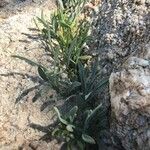
Eschscholzia parishii
Parish's poppy
Description
Source: leafsnapEschscholzia parishii, with the common name Parish's poppy, is an annual desert wildflower in the Poppy family (Papaveraceae), native to several North American desert regions. This desert species is related to the California poppy (Eschscholzia californica), that's found in Mediterranean climate regions of the state.
Care Guide
💧 Water
Parish’s poppy is well-suited for arid environments due to its high drought tolerance. It only needs to be watered once a week, allowing the soil to dry out between waterings. This plant prefers well-draining soil and easily adapts to low-water conditions, completing its growth cycle with minimal rainfall.
☀️ Light Full sun
Parish's poppy grows best in sites that receive abundant sunlight all day, though it can tolerate locations with only intermittent sun. Inadequate sun slows its growth and may cause health problems, while excessive sunlight can stress the plant. Its native habitat experiences similar light conditions.
What are the sunlight requirements for Parish's poppy?
Parish's poppy requires full sun exposure, meaning it thrives in areas that receive more than 6 hours of direct sunlight daily. It can also tolerate partial sun conditions, which consist of about 3-6 hours of sunlight per day. The plant's health and growth can be significantly affected by the amount of sunlight it receives, with insufficient light leading to slower growth and potential health issues, while excessive exposure can cause stress. Observing how sunlight moves through your garden can help you pick the ideal spots that provide the right balance of light and shade, ensuring your plants are happy.
How can artificial lighting benefit Parish's poppy indoors?
When natural sunlight is insufficient, particularly in indoor settings or during winter, artificial lighting can be a crucial aid for maintaining the optimal growth of Parish's poppy. LED lights are recommended due to their ability to be tailored to provide specific wavelengths needed by the plants. For full sun plants, 30-50W/sq ft of artificial light is ideal, whereas partial sun plants require 20-30W/sq ft, and full shade plants need 10-20W/sq ft. The light source should be positioned 12-36 inches above the plant to simulate natural sunlight conditions, ensuring plants receive 8-12 hours of light per day for most species.
What are the symptoms of insufficient or excessive sunlight in Parish's poppy?
Parish's poppy may show various symptoms when not receiving adequate sunlight, including smaller new leaves, leggy or sparse growth, faster leaf drop, slowed or halted growth, and lighter-colored or chlorotic leaves indicating a deficiency in light and nutrients. Excessive sunlight can cause chlorosis, sunscald, leaf curling, wilting, and leaf scorching, which are harmful to the plant's photosynthesis process and overall health. Monitoring these symptoms is vital for identifying and correcting lighting issues, whether the plant is grown indoors or outdoors.
What are the solutions for managing sunlight exposure for Parish's poppy?
To manage sunlight exposure for optimal growth of Parish's poppy, gradually acclimate the plant to the appropriate amount of sunlight. For indoor plants, move them to a sunnier spot each week or use artificial lighting, such as a desk or ceiling lamp for at least 8 hours daily, to supplement light. Outdoors, select the best location that avoids sudden changes in light intensity to prevent sunburn. Minimize obstructions by pruning or relocating the plant to an area with better sunlight and drainage. It's important to note that parts of the plant affected by previous poor light conditions may not recover, but new growth can be healthy with improved light exposure.
🌡️ Temperature 15–35°C
Parish's poppy is native to habitats with temperatures ranging from 68 to 95°F (20 to 35℃). It favors these warmer conditions, and for optimal growth keeping temperatures within that range is recommended. In colder seasons, indoor cultivation or temperature-controlled enclosures can be used.
What is the optimal temperature range for growing Parish's poppy?
Parish's poppy (Eschscholzia parishii) thrives in environments with temperatures ranging from 68 to 95°F (20 to 35°C). To ensure optimal growth, maintaining this temperature range is recommended. The plant prefers warmer climates and can be cultivated indoors or in temperature-regulated enclosures during colder seasons. Despite its strong cold resistance, precautions should be taken if winter temperatures are expected to drop below -15°C, including covering the plant with soil or straw and watering abundantly before the first freeze in autumn to keep the soil moist.
How does Parish's poppy react to low temperatures?
Parish's poppy is tolerant of cold temperatures, favoring conditions above 20°C (68°F) but should remain above 0°C (32°F) during winter. In climates where the temperature falls below -15°C, the plant might not show immediate distress, but you can expect a decrease in sprouting or a complete lack of sprouting in the spring. If parts of the plant fail to sprout with the arrival of spring, these should be removed.
What are the signs of Parish's poppy being affected by high temperatures and what remedial actions can be taken?
In high-temperature conditions, particularly above 35°C (95°F), Parish's poppy may exhibit several stress signs, including lighter leaf color, leaf curling, susceptibility to sunburn, and in severe cases, wilting and dryness of the entire plant. If the plant is affected by such conditions, it's advisable to trim away sunburned and dried-up parts, move the plant to a shaded location or provide shade during the intense midday and afternoon sun, and ensure the soil is kept moist by watering in the morning and evening.
💨 Humidity
🪴 Soil 6-7
🌱 Fertilizer
When most of the Parish's poppy blooms have opened to full size, resume fertilizing. Around the time flowering is at its peak, apply fertilizer once every three to four weeks, weather permitting. Then, when the plant begins to produce fewer new blooms, stop fertilizing; there is no need to feed it when it can no longer form additional flowers.
🪴 Pot & Repot
✂️ Pruning
Parish's poppy is a vibrant wildflower with delicate petals. To encourage continuous blooming and prevent seed formation, lightly prune the plant by deadheading in the spring. Regularly remove any dead foliage to promote new growth. Be sure to use clean, sharp tools when pruning to maintain the plant's health and prevent the spread of disease.
🌿 Propagating
🐛 Diseases & pets
☠️ Toxicity
Characteristics
- Plant Type
- Herb
- Life Cycle
- Annual
- Genus
- Eschscholzia
- Family
- Papaveraceae
- Hardiness Zone
- 7-10
- Mature Height
- 5 cm to 30 cm
- Mature Spread
- 15 cm to 25 cm
- Leaf Color
- Light Green, Gray
- Leaf Type
- Semi-evergreen
- Flower Color
- Yellow, Orange
- Flower Size
- 3.05 cm to 5.08 cm
- Bloom Time
- Spring
- Planting Time
- Spring, Summer
- Harvest Time
- Late spring, Early summer, Mid summer
- Native Area
- Mexico