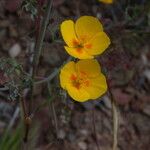
Eschscholzia ramosa
Channel Island poppy · Island poppy
Description
Source: leafsnapEschscholzia ramosa is a species of poppy known by the common name Channel Islands poppy, or simply island poppy. The plant is endemic to the Channel Islands of California off the Southern California coast (United States), and to Guadalupe Island off the western coast of Baja California state (Mexico). It is usually found in chaparral habitats.
Care Guide
💧 Water
Ensure the soil remains moist until the Channel Island poppy seeds sprout. You can check the moisture level by touching the soil. The frequency of watering will depend on the weather; you should water more frequently on hot days. Once the seeds have sprouted, the Channel Island poppy becomes drought-tolerant and typically does not need additional watering, except in extremely dry conditions. When watering, use rainwater or distilled water. If you use tap water, let it sit overnight before using it.
☀️ Light Full sun
The Channel Island poppy is native to well-lit, open settings where it flourishes under the full sun. It is capable of tolerating semi-shaded areas, but it tends to favor full sun exposure for its best growth. This plant, which is both an annual and biennial, is recognized for its preference for sunny conditions.
What are the sunlight requirements for the Channel Island Poppy (Eschscholzia ramosa)?
The Channel Island Poppy (Eschscholzia ramosa) thrives under specific sunlight conditions, categorized into full sun and partial sun. Full sun means the plant should receive above 6 hours of sunlight daily, ideal for its growth and flowering. Partial sun is about 3-6 hours of sunlight, suitable for those areas of your garden that might be lightly shaded for part of the day. It's important to observe how sunlight moves through your garden throughout the day to find spots that offer a great balance of light and shade, which ensures the plants grow happily and healthily.
🌡️ Temperature 15–35°C
The Channel island poppy can adapt to a broad spectrum of temperature scenarios, yet its spread may still be restricted by various combinations of heat and water conditions. It flourishes most optimally in summer's warm climates with sufficient rain or water supply. Extended bouts of overcast and wet weather, along with excessive heat, can enhance the risk of the Channel island poppy perishing. During the cold winter months, implementing appropriate protection promises a higher survival rate for the plant.
💨 Humidity
🪴 Soil 6-7
🌱 Fertilizer
When the Channel Island poppy has largely reached full bloom, it's an appropriate time to restart the fertilization process. Commence fertilizing once every three to four weeks when flowers are in maximum production, depending on the weather. However, once the Channel Island poppy begins to produce less new blossoms, discontinue fertilization as it's unnecessary to fertilize when the plant is unable to generate additional blooms.
🪴 Pot & Repot
✂️ Pruning
The Channel Island poppy is known for its unique blooms and thrives when pruned in early spring. To maintain its health and appearance, remove any dead stems and lightly trim overgrown areas to enhance shape and improve air circulation. Avoid heavy pruning while the plant is actively growing to prevent stress, which ensures a more attractive plant and promotes more vigorous blooming.
🌿 Propagating
🐛 Diseases & pets
☠️ Toxicity
Characteristics
- Plant Type
- Herb
- Life Cycle
- Annual
- Genus
- Eschscholzia
- Family
- Papaveraceae
- Hardiness Zone
- 8-10
- Mature Height
- 20 cm to 30 cm
- Mature Spread
- 15 cm to 25 cm
- Leaf Color
- Light Green, Pale Green
- Leaf Type
- Deciduous
- Flower Color
- Yellow, Orange
- Flower Size
- 3.05 cm to 5.08 cm
- Bloom Time
- Spring, Early summer
- Planting Time
- Spring, Summer, Autumn
- Harvest Time
- Late spring, Summer