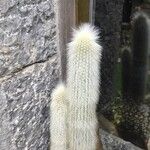
Espostoa lanata
Peruvian Old Man Cactus · Peruvian snowball cactus · Peruvian-old-man · Cotton-ball cactus · New old-man cactus
Description
Source: leafsnapEspostoa lanata, commonly known as the Peruvian Old Man Cactus, is a cactus species native to the Andes Mountains in Peru. This slow-growing, columnar cactus can reach heights of up to 6 meters and a diameter of 15-20 cm. Its stem is covered with numerous white spines, giving it a fuzzy appearance, which is why it bears its common name. During the summer nights, Espostoa lanata produces small white flowers. These blooms are followed by small red or green fruits that are edible, although they are not commonly consumed. This cactus thrives in well-drained soil and requires full sun exposure but can tolerate partial shade. It is drought-tolerant and needs minimal watering during its growing season, which spans from spring to fall. Espostoa lanata is often grown as an ornamental plant due to its unique appearance and low maintenance needs. It can be cultivated indoors or outdoors, provided it is in a warm climate with little to no frost. Overall, Espostoa lanata is an intriguing addition to any succulent or cactus collection, thanks to its striking appearance and ease of care.
Care Guide
💧 Water Every 7 days
The Peruvian old-man cactus is drought-tolerant and requires watering only when its soil is completely dry. During the growing season, you should water the cactus once or twice a week. In the winter, reduce watering to once a week. It's best to use rainwater or distilled water, and be careful not to let the water touch the stem to prevent rotting.
☀️ Light Full sun
Originating from arid areas, the Peruvian old-man cactus does best in full sun, since its native habitat has intense sunlight and very little shade. It can also tolerate partial sun, providing some flexibility in its growth.
🌡️ Temperature 20–37.8°C
The Peruvian old-man cactus grows best in warm surroundings and needs higher temperatures during the growing season to stimulate growth and metabolism. It prefers plenty of sunlight, suitable moisture, and good air circulation. However, it is vulnerable to harm from very low temperatures and from overwatering. It's important to maintain balance and avoid both excessively high temperatures and overly dry conditions.
💨 Humidity dry (<40%)
This plant prefers dry conditions, so don't mist it. However, watering it less often can also thrive in higher humidity.
🪴 Soil 6-7
🌱 Fertilizer
For the Peruvian old-man cactus, apply light amounts of fertilizer 1-2 times a year during the growing season. Avoid fertilizing in winter and summer when the plant is dormant. Reduce fertilizer for repotted plants and wait a couple of months after repotting before feeding. Fertilizing helps support healthy growth and encourages blooms.
🪴 Pot & Repot 2-3 years
Repot the Peruvian old-man cactus in spring or summer, selecting a pot slightly larger than the current one that has good drainage. Use a sandy or gritty cactus mix that drains well. Handle the plant carefully to avoid its spines. Let the cactus dry out before repotting to reduce the risk of root rot. After repotting, wait one week before watering so the roots can heal.
✂️ Pruning
The Peruvian old-man cactus needs very little pruning. Simply focus on removing any withered flowers and branches to help redirect nutrients toward healthy growth.
🌿 Propagating
🐛 Diseases & pets
☠️ Toxicity
Characteristics
- Plant Type
- Succulent
- Life Cycle
- Perennial
- Genus
- Espostoa
- Family
- Cactaceae
- Hardiness Zone
- 9-12
- Mature Height
- 7.01 m
- Mature Spread
- 20 cm
- Leaf Color
- Green, Gray
- Leaf Type
- Evergreen
- Flower Color
- White
- Flower Size
- 3.05 cm to 4.06 cm
- Bloom Time
- Summer
- Planting Time
- Summer
- Harvest Time
- Late summer, Early fall, Mid fall