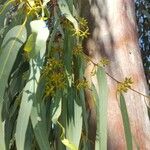
Eucalyptus camaldulensis
اکالیپتوس کامالدول · Eucalyptus · Murray red gum · Blue gum · Red gum
Description
Source: leafsnapEucalyptus camaldulensis, commonly known as the river red gum, is a tree that is endemic to Australia. It has smooth white or cream-coloured bark, lance-shaped or curved adult leaves, flower buds in groups of seven or nine, white flowers and hemispherical fruit with the valves extending beyond the rim. A familiar and iconic tree, it is seen along many watercourses across inland Australia, providing shade in the extreme temperatures of central Australia.
💡 The river red gum tree has been an integral part of Australian life. Aboriginal people utilized its timber to craft canoes, shields, and various utensils. Early settlers relied on it for construction and railway sleepers. Additionally, the tree is significant to the honey industry, as its abundant blossoms yield large amounts of pollen and nectar for bees.
🌳 River red gum has uses beyond the commonly recognized timber industry. It serves as an important habitat for wildlife, notably providing homes in its hollows for many species of birds and insects that nest there. Less widely known is that scientists use the presence of river red gum as an indicator of gold in the soil beneath. It also contributes to environmental cleanup by participating in biofiltration processes that help clean water.
🎭 Security
Care Guide
💧 Water
The river red gum is a drought-tolerant plant well-suited to arid regions. It requires watering only once every one to two weeks. Thriving in well-drained soil, this versatile plant can withstand various climate zones, making it an excellent choice for outdoor cultivation.
How should I water my River red gum tree?
Your River red gum doesn't have strict requirements for watering. You can use any common watering tool, like watering cans, hoses, or even cups. Just make sure to apply the water directly to the soil and moisten all areas equally to give the entire root system the water it needs. It's best to use filtered water, as tap water may contain harmful particles. Also, using water at or slightly above room temperature is recommended to avoid shocking the River red gum. However, this plant typically responds well to any kind of water.
If I give my River red gum tree too much or too little water, what should I do?
For outdoor plants, particularly newly planted ones or seedlings, a common issue is not watering them enough. It is important to remember that when the tree is small or newly planted, consistent watering is crucial for a few months. Once the roots are established, River red gum trees can rely on rain for hydration. When River red gum trees are planted in pots, overwatering is more likely to occur. If you accidentally overwater your plant, you should take immediate action to address the situation. First, stop watering the plant right away to minimize the impact of overwatering. Then, remove the River red gum from its pot to check the condition of the roots. If there is no sign of root rot, you can safely return the plant to its container. However, if you do find root rot, trim any affected roots and consider applying a fungicide to prevent further damage. Finally, repot the River red gum in well-draining soil. On the other hand, if your River red gum is underwatered, the solution is relatively simple. Water the plant more frequently. Underwatering can be identified by drooping and drying leaves, which will regain their fullness quickly after sufficient watering. Adjust your watering schedule as soon as you notice signs of underwatering.
How often should I water my River red gum tree?
If your area doesn't get much rainfall, you'll need to water your outdoor plants every 2 weeks in the spring and fall, and more often in the summer. In the winter, you can water less since the plants need less. If you have a young or newly planted River red gum, you'll need to water more frequently to help it establish and grow. For potted plants, you have two options for determining how often to water your River red gum. The first is to have a set schedule, like once a week or every other week. However, this may not always work because it doesn't take into account the specific conditions of your plant's environment. Your watering frequency can also change depending on the season. In the summer, when the plant needs more water, sticking to a set schedule may not be enough. Instead, you can wait until the top few inches of soil have completely dried out before watering again.
How much water does my River red gum tree need?
Watering your River red gum may not require a high volume of water. If only a few inches of soil have dried since your last watering, give it about five to ten ounces of water each time. You can determine the water volume based on soil moisture, specifically noting how many inches of soil have dried out between waterings. To ensure it gets enough moisture, water enough to moisten all dry soil layers since the last watering. If over half of the soil is dry, give more water until excess water drains. If your River red gum receives ample rain outdoors, it may not need additional watering. For young or newly established trees, ensure they receive 1-2 inches of rain per week. As they grow, they can rely on rainwater, only providing additional watering during hot weather without rainfall for 2-3 weeks to prevent stress.
How can I know if I am watering my River red gum tree enough?
River red gum is commonly affected by overwatering, which can be recognized by yellowing leaves and leaf drop. Overwatering can also cause the plant's structure to shrivel and promote root rot. On the other hand, an underwatered River red gum will start to wilt and have brown or brittle leaves. In either case, it is important to take action to restore the health of your River red gum.
☀️ Light Full sun
River red gum naturally occurs in places that receive abundant sunlight throughout the day. Sunlight plays an important role in its healthy growth and development. Still, it can tolerate periods of reduced light when necessary. In its native range it is often bathed in sun. Both excessive and insufficient sunlight can negatively affect its growth.
What are the sunlight requirements for River Red Gum?
River Red Gum, or Eucalyptus camaldulensis, thrives in areas with considerable sun exposure, requiring full sun conditions of above 6 hours of sunlight daily for healthy growth. However, it can also adapt to partial sun conditions, with about 3-6 hours of sunlight. It's essential to choose spots in your garden that provide a balance of light and shade, ensuring the plant's wellbeing. In its native habitat, the River Red Gum is often exposed to sun-drenched conditions, indicating its preference for substantial sunlight. Despite its adaptability, both excessive and insufficient sunlight can negatively impact its growth.
How does artificial lighting assist in the growth of indoor River Red Gum plants?
For River Red Gum plants kept indoors, artificial lighting can be crucial in ensuring optimal growth, especially when natural sunlight is insufficient, such as in winter or less sunny spaces. Artificial lights, including LED lights, can mimic natural sunlight by providing the specific wavelengths needed by the plants. Full sun plants require 30-50W/sq ft of artificial light, partial sun plants 20-30W/sq ft, and full shade plants 10-20W/sq ft. The light source should be placed 12-36 inches above the plant and left on for 8-12 hours per day to simulate natural daylight hours, promoting faster and healthier growth.
What are the signs of insufficient sunlight exposure in River Red Gum?
River Red Gum shows several symptoms when it doesn't receive adequate sunlight, including smaller new leaves, leggy or sparse growth, faster leaf drop, slower or no new growth, lighter-colored new leaves, and chlorosis, which is the yellowing of leaves due to a lack of chlorophyll. Excessive sunlight can also be harmful, leading to symptoms like sunscald, leaf curling, wilting, and leaf scorching. These symptoms indicate either an overabundance or scarcity of sunlight, both of which can adversely affect the plant's health.
What strategies can be employed to manage sunlight exposure for River Red Gum?
To manage sunlight exposure for River Red Gum effectively, consider gradually moving indoor plants to sunnier locations until they receive at least 6 hours of direct sunlight daily, using south-facing windows and keeping curtains open during the day. If moving the plant isn't feasible, artificial light can be used to supplement sunlight. For outdoor plants, it's important to shift them gradually to sunnier spots to prevent sunburn. Removing obstructions and transplanting smaller plants to areas with better sunlight and drainage can also help improve sunlight exposure. These strategies aim to optimize conditions for healthy plant growth.
🌡️ Temperature 10–35°C
River red gum is native to environments with temperatures between 50 and 95°F (10 and 35°C). It does best in warmer climates. In cooler seasons, consider supplying some form of warmth to keep temperatures at the optimal level.
What is the indigenous temperature range for River red gum and how does it respond to cooler seasons?
River red gum is indigenous to environments with a temperature range of 50 to 95°F (10 to 35°C), thriving best in warmer climates. Despite its strong cold resistance, in cooler seasons, it's important to consider providing warming measures to maintain the optimal temperature. Special frost protection measures aren't usually necessary during winter due to its cold resistance. However, if winter temperatures are expected to drop significantly, providing cold protection by wrapping the trunk and branches with materials such as non-woven fabric or cloth is advisable. To mitigate drought and water scarcity during winter and early spring, it's recommended to water the plant abundantly before the first freeze in autumn, ensuring the soil remains moist and enters a frozen state.
How should you care for River red gum in low temperatures?
River red gum is noted for its cold tolerance, flourishing best when the temperature is maintained above a certain minimum. During winter, ensuring the temperature stays above this minimum threshold is crucial. However, if the temperature falls below the recommended minimum, there may not be noticeable changes during winter, but come spring, the branches may turn brittle and dry, failing to produce new shoots. The recommended approach in spring for branches that have failed to produce new leaves is to prune away any dead branches.
What care does River red gum require in high temperatures?
During the summer, it's vital to ensure that the temperature around the River red gum remains below a certain maximum to prevent heat stress. When temperatures climb above this threshold, the plant's leaves may become lighter in color, with tips becoming dry and withered, increasing susceptibility to sunburn. To mitigate these effects, trim away the sunburned and dried-up parts of the plant and move it to a location that provides shade during the midday and afternoon sun, or use a shade cloth. Additionally, watering the plant in the morning and evening to keep the soil moist will help protect against high temperature stress.
💨 Humidity
🪴 Soil 6-7
🌱 Fertilizer
To encourage healthy development, apply fertilizer to your River red gum in early spring. Consistent feeding improves overall health, producing vigorous growth, a greater ability to withstand harsh conditions, and increased resistance to diseases and pests. Keep a defined fertilization schedule for your River red gum to maintain bright, richly colored foliage and a full, lush appearance.
Why is it necessary to put fertilizer on my River red gum tree?
If you have a River red gum, it's important to regularly fertilize it in order to promote good health. Proper nutrient supply will result in stronger growth, making your plant more resistant to harsh conditions and better equipped to fight off diseases and pests. The foliage of your River red gum is particularly appealing, so it's crucial to maintain it. This can be achieved by following a consistent fertilization schedule tailored to your specific tree, which will encourage the development of vibrant, lush leaves.
When should I put fertilizer on my River red gum tree?
To ensure healthy growth, the River red gum should be fertilized twice a year. The first time to fertilize is in late winter or early spring, giving the tree essential nutrients for growth once the weather warms up. In warm climate regions, it is also beneficial to fertilize in early fall. This provides additional nutrients for the upcoming growing season and makes the tree more resilient to winter cold, preventing damage to the foliage. Early fertilization allows new branches to develop stronger to withstand the cold winter.
When is it better not to use fertilizer on my River red gum?
There are specific times throughout the year when it is not recommended to fertilize your River red gum. The first occurrence is during the early and mid-winter months when the tree is dormant and does not require feeding. Additionally, it is unadvisable to fertilize the plant in late spring and throughout the summer due to hotter and drier weather conditions. These conditions can cause the tree to react negatively to fertilization. To prevent any issues, it is best to stick to a fertilization schedule that only includes feeding during early spring and early fall.
What kind of fertilizer does my River red gum tree need?
River red gums primarily require nitrogen as their most vital nutrient. Nevertheless, this does not diminish the importance of phosphorus and potassium. To foster healthy growth, your River red gum would generally benefit from a sufficient supply of all three main nutrients. Therefore, a well-balanced fertilizer, like a 10-10-10, can be effective. However, for optimal growth, a more nuanced nutrient ratio is often preferable for River red gums. Fertilizers that are slightly higher in nitrogen tend to yield better results, such as a ratio of 10-6-4. When it comes to fertilizing, both granular and liquid-based fertilizers can be used.
How should I fertilize my River red gum tree?
To fertilize your River red gum, there are two options: using granular fertilizer or liquid fertilizer. For granular fertilizer, simply sprinkle it onto the soil at the right time. The nutrients will be released slowly over time. It's generally recommended to water your tree before applying fertilizer. Using liquid fertilizer is less common, but it can be done by mixing the fertilizer with water and pouring it around the base of the tree. Occasionally, it may be helpful to perform a soil test before fertilizing to check if the pH needs adjustment.
🪴 Pot & Repot 2-3 years
When repotting River red gum, pick a pot 1-2 inches (2.5–5.1 cm) larger that provides good drainage. Use a well-draining potting mix. Repot in spring or fall, making sure the root ball sits slightly below the rim of the flower pot. Water thoroughly after repotting and place it in a warm location with indirect sunlight.
✂️ Pruning
The river red gum tree grows quickly and adapts well to a variety of environments. It's best to prune it between early and late winter to remove any dead or overcrowded branches. This pruning process improves airflow and sunlight penetration, reduces pests, and promotes healthy growth for the tree.
🌿 Propagating
🐛 Diseases & pets
☠️ Toxicity
Characteristics
- Plant Type
- Tree
- Life Cycle
- Perennial
- Genus
- Eucalyptus
- Family
- Myrtaceae
- Hardiness Zone
- 6-10
- Mature Height
- 20.12 m to 29.87 m
- Mature Spread
- 14.94 m
- Leaf Color
- Green, Gray
- Leaf Type
- Evergreen
- Flower Color
- White
- Flower Size
- 0.20 cm to 1.02 cm
- Bloom Time
- Early spring, Mid fall, Late fall, Winter
- Planting Time
- Spring
- Harvest Time
- Mid spring, Late spring, Early summer