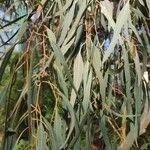
Eucalyptus leucoxylon
South Australian blue gum · White Ironbark · Australian-blue-gum · Black-mountain-ash · Blue gum
Description
Source: leafsnapEucalyptus leucoxylon, commonly known as yellow gum, blue gum or white ironbark, is a species of small to medium-sized tree that is endemic to south-eastern continental Australia. It has smooth yellowish bark with some rough bark near the base, lance-shaped or curved adult leaves, flower buds in groups of three and cylindrical, barrel-shaped or shortened spherical fruit. A widely cultivated species, it has white, red or pink flowers.
Care Guide
💧 Water
Yellow gum thrives with moderate watering, ideally once every 1-2 weeks, as it prefers consistent moisture. Being an evergreen plant, it is well-adapted to drought conditions and manages water effectively by retaining its leaves throughout the year.
☀️ Light Full sun
Yellow gum grows in open habitats, such as sunny meadows and the edges of forests, where ample light is available. It performs best in full sun but can also tolerate partial sun, adapting well to various light conditions.
What are the sunlight requirements for Yellow gum (Eucalyptus leucoxylon)?
Yellow gum (Eucalyptus leucoxylon) requires specific sunlight conditions to thrive. It needs full sun, which is above 6 hours of sunlight a day, for optimal growth. However, it can also tolerate partial sun, meaning about 3-6 hours of sunlight a day. It's important to observe the movement of sunlight through your garden carefully to find spots that offer a perfect balance of light and shade. This ensures that your Yellow gum, along with other plants, remains healthy and happy.
🌡️ Temperature 20–37.8°C
Yellow gum is highly adaptable to a variety of climates, from searing summers to frosty winters. It nevertheless has a preferred temperature range for growth. When temperatures rise too far, the plant can experience heat and humidity stress, which may cause it to die. In areas where temperatures approach the lower bound of its cold tolerance, insulating the plant is necessary to protect it.
What is Yellow gum?
Yellow gum, known botanically as Eucalyptus leucoxylon, is a species within the Eucalyptus genus.
💨 Humidity normal (40-60%)
This plant will thrive in moderate humidity, which is probably the level in your home. However, misting it a few times a week can be very beneficial. Make sure the room has good ventilation.
🪴 Soil 6-8
🌱 Fertilizer
Timing is essential when fertilizing Yellow gum. Apply fertilizer in early spring and continue monthly up to early summer. The fertilizer encourages lovely blooms and supplies energy during both dormant and active growth periods.
🪴 Pot & Repot
✂️ Pruning
Yellow gum trees have attractive bark and vibrant flowers, and they thrive when pruned regularly during their dormant period, from early to late winter. To maintain a healthy tree, focus on a few key pruning techniques: remove dead branches, thin out crowded areas, and shape the canopy. Proper pruning enhances air circulation, increases sunlight exposure, and reduces the risk of pests. For the best results, use clean and sharp tools.
🌿 Propagating
🐛 Diseases & pets
☠️ Toxicity
Characteristics
- Plant Type
- Tree
- Life Cycle
- Perennial
- Genus
- Eucalyptus
- Family
- Myrtaceae
- Hardiness Zone
- 9-11
- Mature Height
- 6.1 m
- Mature Spread
- 4.88 m
- Leaf Color
- Green
- Leaf Type
- Evergreen
- Flower Color
- Pink, White, Red
- Flower Size
- 2.03 cm to 3.05 cm
- Bloom Time
- Winter, Early spring, Mid spring
- Planting Time
- Spring
- Harvest Time
- Spring, Early summer