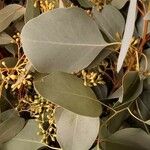
Eucalyptus polyanthemos
Redbox · Australian-beech · Bastard-box · Bastard-box-tree · Brown-box
Description
Source: leafsnapEucalyptus polyanthemos, commonly known as the silver dollar gum or red box, is a species of eucalyptus tree native to southeastern Australia. This medium-sized tree can grow up to 20 meters tall with a trunk diameter reaching up to 1 meter. Its bark is smooth and greyish-white, shedding in long ribbons. When young, the leaves are round and silvery-blue, transitioning to green as they mature. The flowers, which are white or cream-colored, bloom from autumn through winter. Eucalyptus polyanthemos serves various purposes, including timber production for furniture making and construction. It also possesses medicinal properties, with its essential oil being known for antiseptic qualities. This plant thrives in well-drained soils under full sun but can tolerate some shade. It is drought-tolerant once established, though it requires regular watering during the first few years of growth. Overall, Eucalyptus polyanthemos is an attractive tree that offers both aesthetic and functional benefits, making it a popular choice for landscaping projects worldwide.
💡 The leaves of the red box tree serve as food for the larvae of the moth species Trichiocercus sparshalli and the eucalyptus leaf mining sawfly. Mature Eucalyptus polyanthemos trees develop hollows, which provide nesting sites for the barking owl (Ninox connivens).
Care Guide
💧 Water Every 7 days
The red box plant thrives in arid environments by minimizing water loss and enhancing water absorption, making it highly drought-tolerant. For optimal growth, it should be watered every 2 to 3 weeks. As an evergreen, the red box retains its leaves throughout the year, efficiently managing water use during dry periods.
How should I water my Red box?
Your Red box doesn't have specific requirements for how you should water it. You can use any common watering tool, like watering cans, hoses, or even cups, to water the plant. Regardless of the tool you choose, it's important to water the soil directly. Make sure to evenly moisten all parts of the soil to ensure the entire root system gets the water it needs. Using filtered water is recommended, as tap water may contain harmful particles. It's also preferable to use water that is at or slightly above room temperature, as very cold or hot water can shock the Red box. However, the Red box generally responds well to any type of water you provide.
What do I do if I give too much or too little water to my Red box?
Outdoor plants, particularly newly planted ones or seedlings, are susceptible to being under-watered. It is important to consistently water them enough for the first few months, especially when the tree is still small or recently planted. Once the roots are established, the plant can generally rely on rainfall. When your plant is in a pot, overwatering is more likely to occur. If you accidentally overwater your plant, it is important to address the issue promptly. The first step is to stop watering the plant immediately to minimize the impact. Then, you should take the plant out of its pot to examine the roots. If there is no sign of root rot, you can return the plant to its container. However, if you do find signs of root rot, trim away any affected roots and consider using a fungicide to prevent further damage. Lastly, repot the plant in well-draining soil. In the case of underwatering, simply increase the frequency of watering. It is usually an easy problem to fix. If the plant's leaves droop, dry out, or fall off due to underwatering, they will regain their fullness quickly after sufficient watering. Make sure to adjust your watering frequency as soon as you notice signs of underwatering.
How often should I give water to my Red box?
If your area doesn't get enough rain, you'll need to water your outdoor plants every 2 weeks in the spring and fall, and more often in the summer. In the winter, you can water less frequently, or not at all. Young or newly planted Red box plants may need more frequent watering to establish themselves and become drought tolerant. For potted plants, you can either follow a set watering schedule or check the soil moisture before watering. During the summer, you'll likely need to water more often. Wait until the top few inches of soil have dried out before giving more water.
How much water does my Red box need?
To water your Red box effectively, it's important to understand its specific needs. Contrary to what you might expect, this plant doesn't always require a lot of water. If the soil has only dried out a few inches since the last watering, you can promote healthy growth by giving it around five to ten ounces of water each time. It can also be helpful to assess the soil moisture before deciding the watering volume. Take note of how many inches of soil have dried between waterings. To ensure your Red box receives adequate moisture, it's essential to moisten all the dried soil layers since the previous watering. If over half of the soil has dried out, you should consider giving more water than usual. Keep adding water until you see excess water draining from the pot's drainage holes. If your Red box is planted in an area that receives sufficient rainfall outdoors, it may not require additional watering. During the early stages or when establishing, aim for 1-2 inches of rain per week. As it continues to grow and establish itself, it can typically rely on rainwater alone. Only in hot weather conditions and prolonged absence of rainfall for 2-3 weeks, should you consider providing a full watering to prevent the plants from experiencing stress.
How can I know if I am giving enough water to my Red box?
Overwatering is a common issue for the Red box, and there are certain signs to look out for. If your Red box is overwatered, you may notice yellowing leaves and leaf drop. Additionally, overwatering can cause the plant's structure to shrink and lead to root rot. On the other hand, an underwatered Red box will start to droop and may have brown or brittle leaves. No matter if you observe signs of overwatering or underwatering, it's important to take action and revive the health of your Red box.
☀️ Light Full sun
Red box grows best in locations where sunlight penetrates fully during the day, although it remains resilient even when receiving only modest amounts of light. Ample sun supports its healthy development, whereas too little can be damaging. Its native habitat provides regular exposure to sunlight.
What are the sunlight requirements for Red Box (Eucalyptus polyanthemos)?
The Red Box thrives best under conditions where it can bask in the sun's rays throughout the day. It requires full sun, which is above 6 hours of sunlight per day, to promote healthy growth. However, it displays resilience in partial sun conditions, about 3-6 hours of sunlight per day. The origin habitat of Red Box offers it a consistent exposure to sunlight, critical for its development and vitality. It's important to observe the movement of sunlight through your garden to find spots that provide a balance of light and shade, ensuring your plants' happiness.
What should I do if natural sunlight is insufficient for my Red Box?
Indoor Red Box plants require adequate lighting to grow optimally. When natural sunlight is not enough, especially during winter or in spaces that receive limited sunlight, artificial lights serve as an excellent solution. LED lights are recommended for their ability to be tailored to provide specific wavelengths needed by plants. Full sun plants need 30-50W/sq ft of artificial light, partial sun plants require 20-30W/sq ft, and full shade plants need 10-20W/sq ft. Position the light source 12-36 inches above the plant, mimicking natural sunlight as closely as possible. Most plants will need 8-12 hours of artificial light per day to flourish.
What are the symptoms of light deficiency in Red Box?
When Red Box plants do not receive sufficient light, they may show several signs, such as smaller new leaves, leggy or sparse growth, faster leaf drop, slower or halted new growth, and lighter-colored or chlorotic leaves. Direct consequences of excessive sunlight include sunscald, leaf curling, wilting, and leaf scorching. These symptoms indicate that the plant's light environment needs adjustment to mimic its natural habitat more closely for optimal health.
How can I remedy light deficiency symptoms in my Red Box plant?
To address light deficiency in a Red Box plant, consider gradually shifting it to a location where it receives at least 6 hours of sunlight daily, especially if indoors. Utilize a south-facing window and keep curtains open during the day for maximum exposure. For large plants or those difficult to move, you might use artificial light sources, such as desk lamps or professional grow lights, for at least 8 hours daily. Outdoors, slowly acclimate your plant to more sunlight, avoiding sudden changes that could cause sunburn. Notice that parts of the plant damaged by insufficient sunlight might not recover, but new growth will be healthy with improved lighting conditions. Additionally, reduce obstructions by pruning or transplanting to ensure better sunlight access.
🌡️ Temperature 5–32.2°C
Red box naturally occurs in regions where temperatures mainly range from 41 to 89.6 °F (5 to 32 ℃). It favors a mild climate and can adapt to seasonal variations. In hotter seasons, it is advisable to observe it and limit its exposure to intense heat.
What is the preferred climate for Red box?
Red box, botanically known as Eucalyptus polyanthemos, thrives in environments where the temperature predominantly ranges between 41 to 89.6 °F (5 to 32 °C). It is well-suited to mild climates and capable of adjusting to seasonal changes. During the hotter seasons, it's crucial to monitor the plant closely and reduce its exposure to direct and intense heat to prevent any harm. Despite its strong resistance to cold, in regions where winter temperatures are expected to fall below -30°C, it is advisable to provide extra protection. This can include wrapping the trunk and branches with non-woven fabric or cloth. Additionally, watering the plant abundantly before the first freeze in autumn helps ensure that the soil remains moist, preventing drought and water scarcity during the colder months.
How does Red box react to low temperatures?
Red box exhibits a high tolerance to cold weather, thriving best in temperatures above 5°C. However, during winter, ensuring the temperature remains above -25°C is recommended for its optimal health. If the thermometer dips below -30°C, the plant might not show immediate signs of distress during winter, but come spring, the branches could turn brittle and dry, and no new shoots might emerge. To mitigate these effects, it's advisable to prune away any dead branches that have failed to produce new leaves come spring.
How should I care for Red box during high temperatures?
During the summer months, it's essential to keep the Red box's environment below 32°C to prevent heat stress. Should temperatures soar above 35°C, the plant's leaves may discolor, becoming lighter, with their tips drying out and possibly suffering from sunburn. To care for the Red box under these conditions, trim away the sunburned and dried parts of the plant. Moving the plant to a shadier location or employing a shade cloth can protect it from the harsh midday and afternoon sun. Additionally, watering the plant during the cooler morning and evening hours helps in maintaining soil moisture, thereby assisting in its overall health and resilience against high temperatures.
💨 Humidity
🪴 Soil 6-7
🌱 Fertilizer
Timing is important when fertilizing Red box. Apply fertilizer in early spring and continue once a month until early summer. The fertilizer encourages beautiful blooms and supplies energy during both dormant and active growth periods.
Why should I put fertilizer on my Red box?
No matter which type of Red box you own, regular fertilization is key to promoting overall plant health. Providing the proper nutrients not only results in stronger growth, but also increases the Red box's ability to withstand challenging growing conditions and resist diseases and pests. Maintaining the attractiveness of your Red box's foliage is a priority, and this can be achieved by adhering to a consistent fertilization schedule tailored to your plant's needs. By doing so, your Red box will produce vibrant leaves with a rich color and an overall lush appearance.
When should I fertilize my Red box?
The ideal time for fertilizing your Red box is in late winter or early spring. This provides the necessary nutrients for healthy growth as the weather begins to warm up. In warm climate regions, it is also beneficial to fertilize again in early fall. This not only adds nutrients for the following growing season but also helps the Red box withstand winter cold and prevent foliage damage. Fertilizing earlier will ensure sufficient growth of new branches to withstand the cold winter.
When shouldn't I fertilize my Red box?
There are a few occasions when it is not recommended to fertilize your Red box. First, avoid fertilizing during the early and mid-winter months when the plant is dormant and does not require nourishment. Additionally, it is not advisable to fertilize in late spring and throughout the summer. During this period, the weather is hotter and drier, increasing the chances of a negative reaction to fertilization. To prevent any problems, it is best to follow a fertilization schedule that involves feeding only in the early spring and early fall.
What kind of fertilizer does my Red box need?
In most cases, nitrogen is the most important nutrient for a Red box. However, this does not mean that phosphorus and potassium are unimportant. In fact, a Red box typically requires a decent amount of all three main nutrients to thrive. Using a balanced fertilizer like a 10-10-10 can be effective. However, for optimal growth, a more specific nutrient ratio is often better. Red boxes tend to benefit from fertilizers that have a slightly higher nitrogen content. For example, a ratio of 10-6-4 can work well. When fertilizing, you have the option of using either a granular or liquid-based fertilizer.
How can I give the Red box some fertilizer?
To fertilize your Red box, you have two options: granular or liquid fertilizer. If you choose to use granular fertilizer, simply sprinkle it on the soil at the right time. The nutrients will gradually release into the soil over time. It's a good idea to lightly water your Red box before applying the granular fertilizer. Alternatively, you can use liquid fertilizer, although this is less common. To do this, mix the fertilizer with water and pour it around the base of your Red box. Sometimes, it's beneficial to test the soil beforehand to determine if you need to adjust the pH before fertilizing.
🪴 Pot & Repot
✂️ Pruning
Winter pruning is essential for maintaining the health and appearance of a red box. During this time, focus on removing dead or diseased branches and thinning the plant to improve airflow. Pruning while the plant is dormant minimizes stress and encourages regrowth. This practice offers several benefits, including improved structure, a reduced risk of disease, and enhanced aesthetic appeal. These advantages are crucial for preserving both the vitality and ornamental value of the red box.
🌿 Propagating
🐛 Diseases & pets
☠️ Toxicity
Characteristics
- Plant Type
- Tree
- Life Cycle
- Perennial
- Genus
- Eucalyptus
- Family
- Myrtaceae
- Hardiness Zone
- 4-8
- Mature Height
- 20.12 m to 24.99 m
- Mature Spread
- 4.57 m to 13.41 m
- Leaf Color
- Green, Gray, Silver
- Leaf Type
- Evergreen
- Flower Color
- White
- Flower Size
- 2.54 cm
- Bloom Time
- Early spring, Mid fall, Late fall, Winter
- Planting Time
- Spring, Autumn
- Harvest Time
- Mid spring, Late spring, Early summer
- Native Area
- Australia