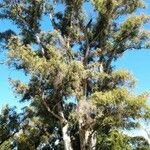
Eucalyptus tereticornis
Queensland blue gum · Blue gum · Forest red gum · Red gum · Red ironbark
Description
Source: leafsnapEucalyptus tereticornis, commonly known as forest red gum, blue gum or red irongum, is a species of tree that is native to eastern Australia and southern New Guinea. It has smooth bark, lance-shaped to curved adult leaves, flower buds in groups of seven, nine or eleven, white flowers and hemispherical fruit.
Care Guide
💧 Water
The Forest Red Gum is well-suited to both wet and dry environments, showcasing a moderate tolerance to drought. It grows best in well-drained soil and should be watered every 2-3 weeks, allowing the soil to dry out between waterings. Deep watering mimics the tree's natural exposure to irregular rainfall and promotes strong root development.
☀️ Light Full sun
The forest red gum thrives when exposed to plenty of light for optimal growth. Coming from an environment where sunlight is abundant, it does well under those conditions. Excessive light does not harm it. In contrast, too little light can stunt its growth and development.
What are the sunlight requirements for Forest Red Gum?
Forest Red Gum needs abundant sunlight for optimal growth, thriving in full sun conditions of above 6 hours of sunlight daily, but it can also manage in partial sun with about 3-6 hours of sunlight. Despite its preference for a lot of sunlight, it's crucial to ensure the plant isn't deprived of light, as insufficient light can hinder its growth and development. Observing your garden's light patterns can help in positioning your plants in areas that offer the right balance of light and shade, ensuring they remain healthy and happy.
How can artificial lighting benefit indoor plants like Forest Red Gum?
When natural sunlight is inadequate, especially during winter or in less sunny spaces, artificial lighting becomes crucial for indoor plants' growth, including Forest Red Gum. LED lights are recommended due to their ability to offer specific wavelengths required for plant growth. For full sun plants, 30-50W/sq ft of artificial light is needed, whereas partial sun plants require 20-30W/sq ft, and full shade plants 10-20W/sq ft. The light source should be positioned 12-36 inches above the plant to mimic natural light, and most plants will benefit from 8-12 hours of artificial light daily for healthier growth.
What are some common symptoms of light deficiency in Forest Red Gum?
When Forest Red Gum is cultivated indoors during winter or placed in areas with insufficient lighting, several symptoms can indicate light deficiency. Small, immature leaves compared to previous growth, leggy or sparse growth, faster leaf drop, halted or no new growth, lighter-colored new leaves, symptoms of chlorosis, sunscald, leaf curling, wilting, and leaf scorching are signs of inadequate sunlight. These symptoms highlight the plant's struggle with poor light conditions, which can severely affect its growth and overall health.
What solutions are recommended for addressing light deficiency in Forest Red Gum?
To combat light deficiency in Forest Red Gum, gradually relocating the plant to spots with at least 6 hours of direct sunlight daily is advised. For indoor plants, this may entail using a south-facing window or providing additional light with desk, ceiling, or professional grow lights for at least 8 hours daily. For outdoor plants, gradual adaptation to brighter spots while preventing sudden changes in light intensity is crucial to avoid sunburn. Minimizing obstructions by pruning or moving smaller plants to better-lit locations can also help. Although parts of the plant affected by poor light might not recover, new growth following these changes should be healthy.
🌡️ Temperature 20–37.8°C
Forest red gum is adapted to native growth conditions with moderate to high temperatures, doing best in the range of 68 to 100 °F (20 to 38 °C). In colder or hotter seasons, consider modifying its environment to replicate these ideal conditions.
What is the ideal temperature range for growing Forest Red Gum?
Forest red gum, also known by its botanical name Eucalyptus tereticornis, thrives in an environment with moderate to high temperatures, ideally within the range of 68 to 100°F (20 to 38°C). It is recommended to adjust the surroundings of the Forest red gum during colder or hotter seasons to mimic these optimal conditions. The plant is extremely heat-loving, and exposure to cold temperatures can be harmful. In autumn, it is advisable to bring outdoor-grown Forest red gum indoors, placing it near a bright window while keeping it away from heaters. To ensure healthy growth during winter, maintaining temperatures above 20°C is beneficial, as approaching 0°C can detrimentally affect the plant.
How should I care for Forest Red Gum during low temperatures?
Forest red gum prefers warm temperatures and does not tolerate low temperatures well. It thrives best when kept above 20°C, and during winter, it is crucial to keep it above 0°C to avoid damage. Exposure to temperatures below -5°C can cause the leaves to lighten in color, and following frost exposure, leaves can turn brown or black, exhibiting wilting and drooping. To care for it under these conditions, trim off the frost-damaged parts and immediately move the plant indoors to a warm environment for protection. Placing the plant near a south-facing window ensures ample sunlight, but it should be kept away from heaters or air conditioning vents to avoid excessively dry air.
What steps should be taken to protect Forest Red Gum from high temperatures?
During the summer, it is important to keep Forest red gum below 38°C to prevent heat stress. If the temperature exceeds 43°C, the leaves may lighten in color, indicating susceptibility to sunburn. To manage this, trim away any sunburned or dried-up parts of the plant. Relocate the plant to a shaded area, especially to protect it from the intense midday and afternoon sun. To ensure the soil remains moist, watering the plant in the morning and evening is recommended.
💨 Humidity
🪴 Soil 5-6
🌱 Fertilizer
Fertilizing is essential for caring for Forest red gum. Consistent feeding during the growing season maintains the energy needed for its showy leaves and supports overall growth. If fertilization is neglected, leaves can become unhealthy, its ornamental appeal can decline, and growth may be stunted or weak and prone to breaking.
🪴 Pot & Repot
✂️ Pruning
To maintain the health and structure of the forest red gum, it is important to prune it seasonally from early to late winter. Be sure to remove any dead or diseased branches to improve air circulation and reduce the risk of pests. This practice supports the tree's growth cycle and enhances both its appearance and overall vitality in the garden.
🌿 Propagating
🐛 Diseases & pets
☠️ Toxicity
Characteristics
- Plant Type
- Tree
- Life Cycle
- Perennial
- Genus
- Eucalyptus
- Family
- Myrtaceae
- Hardiness Zone
- 9-12
- Mature Height
- 48.77 m
- Mature Spread
- 14.94 m
- Leaf Color
- Dark Green, Forest Green
- Leaf Type
- Evergreen
- Flower Color
- White, Cream
- Flower Size
- 1.02 cm to 2.03 cm
- Bloom Time
- Mid summer, Late summer, Early fall
- Planting Time
- Spring, Autumn
- Harvest Time
- Mid fall, Late fall, Early winter