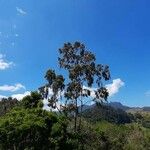
Eucalyptus viminalis
Manna gum · Ribbon gum · Rough-bark manna gum · White gum · Dropping-gum
Description
Source: leafsnapEucalyptus viminalis, commonly known as the manna gum, white gum or ribbon gum, is a species of small to very tall tree that is endemic to south-eastern Australia. It has smooth bark, sometimes with rough bark near the base, lance-shaped to curved adult leaves, flower buds in groups of three or seven, white flowers and cup-shaped or hemispherical fruit.
Care Guide
💧 Water
Manna gum is a drought-tolerant plant that thrives in arid regions with minimal water. It only needs watering every 2 to 3 weeks. This plant retains its leaves year-round, which helps conserve water during dry seasons.
☀️ Light Full sun
Manna gum is native to open habitats, such as sunny meadows and forest edges, which provide plenty of light. It thrives in Full Sun but can also tolerate Partial Sun, adapting well to various sunlight conditions.
What are the sunlight requirements for Manna Gum?
Manna Gum, also known by its botanical name Eucalyptus viminalis, requires full sun, characterized by above 6 hours of sunlight, to thrive but can also tolerate partial sun, which is about 3-6 hours of sunlight. It is imperative to observe the movement of sunlight through your garden to ensure you choose spots that provide an optimal balance for your plants, promoting their well-being.
How does artificial lighting benefit indoor plants, and what are the recommendations for Manna Gum?
Indoor plants, including Manna Gum, require adequate lighting for optimal growth. When natural sunlight is insufficient, artificial lights provide a vital solution. For indoor plant lighting, LED lights are recommended as they can be customized to provide specific wavelengths needed by the plants. Full sun plants need 30-50W/sq ft of artificial light, partial sun plants 20-30W/sq ft, and full shade plants 10-20W/sq ft. The artificial light source should be placed 12-36 inches above the plant, mimicking natural sunlight, and be kept on for 8-12 hours per day to simulate the natural daylight hours necessary for your plant species.
What are the symptoms of light deficiency in Manna Gum?
Manna Gum may show several symptoms when experiencing light deficiency, including smaller new leaves, leggy or sparse growth, faster leaf drop, slower or no new growth, lighter-colored new leaves, chlorosis, sunscald, leaf curling, wilting, and leaf scorching. These symptoms can result from either too little light or too much direct sunlight, affecting the plant's ability to photosynthesize and maintain healthy growth.
What solutions can address light deficiency symptoms in Manna Gum?
To address light deficiency in Manna Gum, consider gradually moving the plants to sunnier locations to achieve at least 6 hours of direct sunlight daily. For indoor plants, use south-facing windows or artificial lights such as desk lamps or grow lights for at least 8 hours daily. For outdoor plants, ensure a gradual transition to sunnier spots to avoid sunburn. If trees or other structures shade your plants, consider pruning or relocating your plants to reduce obstructions and increase sun exposure. Remember, while parts of the plant affected by insufficient sunlight may not recover, new growth should be healthy with improved light conditions.
🌡️ Temperature 15–37.8°C
Manna gum tolerates a wide range of climate conditions, from searing summers to cold winters. However, it does have an ideal temperature range for growth. When temperatures become too high, the plant can suffer heat and humidity stress that may cause it to die. In areas where temperatures approach the lower limit of its cold tolerance, it is important to use insulation measures to protect the plant.
What is the botanical name of Manna gum?
The botanical name of Manna gum is Eucalyptus viminalis. Manna gum is a species of Eucalyptus that is known for its distinct characteristics and uses, although the detailed information on its essentials, contents, and symptoms was not provided.
💨 Humidity
🪴 Soil 6-7
🌱 Fertilizer
Fertilize your Manna gum in early spring to encourage healthy growth. Regular feeding boosts overall health, producing vigorous growth, increased resilience to harsh conditions, and improved resistance to pests and diseases. Adhere to a specific fertilization schedule for your Manna gum to keep its foliage vibrant, deeply colored, and lush.
🪴 Pot & Repot
✂️ Pruning
Manna gum is a fast-growing tree with attractive bark. To keep it healthy and looking its best, it is important to prune it annually during its dormant period, which is from early to late winter. When pruning, concentrate on removing dead branches and thinning out crowded areas. This helps increase light penetration, promoting better growth. Always use clean, sharp tools to enhance growth, prevent disease, and improve the tree's appearance.
🌿 Propagating
🐛 Diseases & pets
☠️ Toxicity
Characteristics
- Plant Type
- Tree
- Life Cycle
- Perennial
- Genus
- Eucalyptus
- Family
- Myrtaceae
- Hardiness Zone
- 8-11
- Mature Height
- 39.93 m
- Mature Spread
- 7.92 m
- Leaf Color
- Green
- Leaf Type
- Evergreen
- Flower Color
- White
- Flower Size
- 1.27 cm
- Bloom Time
- Winter
- Planting Time
- Spring, Summer, Autumn
- Harvest Time
- Spring