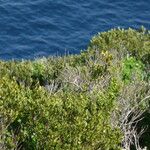
Euclea racemosa
Dune Guarri · Bush guarri
Description
Source: leafsnapEuclea racemosa (the sea guarrie or dune guarrie) is a small to medium-sized evergreen tree that is indigenous to the Indian Ocean coast of Africa from Egypt to South Africa, as well as in Comoros, Oman and Yemen.Euclea racemosa has leathery foliage that can be exceptionally even and dense - making it an ideal plant for hedges. A dioecious tree (male and female flowers on separate trees), it produces small white flowers, which are followed by red, purple and black fruits that attract birds. The berries are used locally to make "Guarrie vinegar". The name guarrie appears to derive from the local Khoe language, in which it is spelled gwarri.
Care Guide
💧 Water
Dune guarrie is a drought-tolerant plant native to arid regions. It requires weekly watering but is efficient at storing moisture. As an evergreen, it retains its foliage throughout the year, reducing the need for frequent irrigation. This makes it an excellent choice for outdoor cultivation, especially in areas where rainfall can help meet its water needs.
☀️ Light Full sun
Dune guarrie comes from open habitats, such as sunny meadows and forest edges, which offer abundant light. It thrives in Full Sun but can also tolerate Partial Sun, adapting well to various sunlight conditions.
What are the sun requirements for Dune guarrie (Euclea racemosa)?
The Dune guarrie, or Euclea racemosa, thrives in conditions of varying sunlight. It requires full sun, which means it should receive above 6 hours of sunlight daily, or partial sun, meaning about 3-6 hours of sunlight each day. It's important to observe how sunlight moves through your garden throughout the day. By understanding these patterns, you can find the ideal spots that offer the right balance of light and shade to ensure that your Dune guarrie plants are happy and healthy.
🌡️ Temperature 20–37.8°C
Dune guarrie demonstrates strong temperature adaptability, able to endure higher heat and wider temperature swings. When temperatures are high, attention should be paid to watering and providing suitable shade to prevent sunburn. However, dune guarrie is comparatively less tolerant of low temperatures. While it can tolerate some cold, overly cold conditions can cause frost damage.
💨 Humidity
🪴 Soil 6-7
🌱 Fertilizer
Timing is critical when fertilizing Dune guarrie. Apply fertilizer in early spring and continue monthly through early summer. Fertilizer encourages attractive blooms and supplies energy during both dormant and active growth periods.
🪴 Pot & Repot
✂️ Pruning
Dune guarrie is a hardy coastal shrub with dense foliage and small white flowers. For best results, prune it in early to late winter using clean tools to promote dense growth and good airflow. Avoid heavy pruning during its active growing season to minimize stress, which will help ensure its strong presence in the landscape.
🌿 Propagating
🐛 Diseases & pets
☠️ Toxicity
Characteristics
- Plant Type
- Tree
- Life Cycle
- Perennial
- Genus
- Euclea
- Family
- Ebenaceae
- Hardiness Zone
- 9-11
- Mature Height
- 11.89 m
- Mature Spread
- 2.13 m to 3.96 m
- Leaf Color
- Green
- Leaf Type
- Evergreen
- Flower Color
- White
- Flower Size
- 1.27 cm to 3.30 cm
- Bloom Time
- Mid fall, Late fall, Early winter
- Planting Time
- Spring, Summer, Autumn
- Harvest Time
- Late winter, Early spring, Mid spring