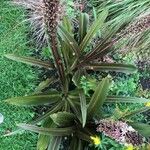
Eucomis comosa
Pineapple flower · Wine eucomis · Pineapple lily
Description
Source: leafsnapEucomis comosa, the pineapple flower, pineapple lily or wine eucomis, is a species of flowering plant in the asparagus family Asparagaceae (subfamily Scilloideae). A deciduous bulbous perennial used as an ornamental plant, it is endemic to South Africa. The white to purple flowers appear in summer and are arranged in a spike (raceme), topped by a "head" of green leaflike bracts.
🌳 Although the pineapple lily has an inconspicuous role in everyday life, it serves as a notable source of inspiration in botanical illustration and garden design. Its distinctive, pineapple-like appearance provides visual interest and is replicated in gardens to add an exotic touch. This aesthetic appeal also appears at horticultural shows, where the pineapple lily is presented as a centerpiece, captivating viewers with its unusual inflorescence and rosette of leaves.
Care Guide
💧 Water Every 7 days
The pineapple lily, native to South Africa, thrives in well-drained, semi-arid conditions and is tolerant of drought. During its growth phase, it should be watered weekly, followed by a dry rest period after flowering. To ensure its unique flower spikes bloom optimally, provide adequate sunlight and warmth, along with proper water management.
☀️ Light Full sun
Pineapple lily does best when it gets direct sunlight for most of the day, reflecting its natural habitat where it evolved to prosper with abundant sun. However, it can tolerate some shade. Too much shading or excessively intense sunlight can impair its vigorous growth.
What are the sunlight requirements for growing Pineapple Lily?
Pineapple Lily (Eucomis comosa) thrives best when exposed to full sunlight, which means the plant should receive more than 6 hours of direct sunlight daily. However, it can also grow in partial sun, needing about 3-6 hours of sunlight. It's crucial to observe the movement of sunlight through your garden to find the ideal spots that offer a blend of light and shade, ensuring your Pineapple Lily's health and happiness. Excessive shading or too much direct sunlight can negatively affect its growth. For indoor cultivation, especially in less sunny spaces or during the winter, artificial lighting can be used to promote optimal growth. LED lights are recommended, with intensity and duration adjusted according to the plant's natural sunlight needs.
What are the symptoms of improper lighting on Pineapple Lily?
If a Pineapple Lily is not receiving adequate light, it may exhibit several symptoms indicating light deficiency or overexposure. Symptoms of insufficient light include new leaves growing smaller than previous ones, leggy or sparse growth, premature leaf drop, halted new growth, and lighter-colored or pale new leaves. Overexposure to sunlight can lead to chlorosis (leaves turning yellow), sunscald (pale, bleached areas on leaves), leaf curling, wilting from excessive water loss, and leaf scorching (brown, dry edges on leaves). These symptoms reflect the plant's struggle to adapt to its lighting conditions, whether too little or too much light.
How can I address lighting issues for my Pineapple Lily?
To ensure your Pineapple Lily receives adequate light, gradually transition it to a sunnier spot, aiming for at least 6 hours of direct sunlight per day. For indoor plants, maximize natural light exposure by placing them near south-facing windows and keeping curtains open. If natural light is insufficient, artificial plant grow lights can be used, keeping them on for at least 8 hours daily. Outdoors, avoid rapid changes in light exposure to prevent sunburn, and for plants in the ground, consider pruning surrounding trees or transplanting the Pineapple Lily to a sunnier location with good drainage. Remember that parts of the plant already damaged by poor lighting might not recover, but new growth should be healthy with improved lighting conditions.
🌡️ Temperature 20–35°C
Pineapple lily is native to temperate regions and grows best in temperatures of 70 to 95 °F (20 to 35 °C). During colder seasons, consider providing adequate insulation or growing it indoors to preserve its preferred temperature range.
What is the ideal temperature range for Pineapple lily?
The Pineapple lily, or Eucomis comosa, thrives in temperate climates with an ideal temperature range of 70 to 95 °F (20 to 35 °C). To ensure the plant's health, it's important to maintain this temperature range, especially during the colder seasons. If you're in a region with temperatures falling outside this range, consider measures like providing insulation or moving the plant indoors.
Does Pineapple lily have any cold tolerance?
Yes, Pineapple lily has some cold tolerance and can generally withstand temperatures above 0°C without needing additional protection. However, if temperatures are expected to drop below 0°C, it's essential to take temporary protective measures against the cold. This can include wrapping the plant with plastic film, fabric, or other insulating materials. Once temperatures rise again, these protective measures should be removed to avoid any potential damage to the plant.
How should I care for Pineapple lily in low temperatures?
In low temperatures, specifically when the temperature falls below -5°C, Pineapple lily's leaves may droop and, if the cold persists, wilt and fall off. To help your plant recover from mild frost damage, trim off the frost-damaged parts. To prevent damage from future cold spells, wrap the plant with protective materials like non-woven fabric or cloth and set up a wind barrier to shield it from cold winds.
How does high temperature affect Pineapple lily, and what are the solutions?
High temperatures, particularly above 38°C, can negatively affect Pineapple lily, causing leaves to lighten in color, dry, and curl, making the plant more susceptible to sunburn. To mitigate these effects, remove sunburned and dried-up parts of the plant. Relocate the plant to a shadier spot or use a shade cloth to protect it from intense midday and afternoon sun. Additionally, ensure the soil remains moist by watering the plant in the morning and evening.
💨 Humidity normal (40-60%)
This plant will thrive in moderate humidity, which is probably the level in your home. However, misting it a few times a week can be very beneficial. Make sure the room has good ventilation.
🪴 Soil 5-7
🌱 Fertilizer
The ideal time to fertilize a Pineapple lily is in early spring, when it is coming out of dormancy and beginning active growth. Fertilization supplies essential nutrients for healthy development. Although the Pineapple lily has relatively low fertilizer requirements, an annual application can improve its survival and encourage better, longer-lasting flowers.
🪴 Pot & Repot Every 12 months
✂️ Pruning
The Pineapple Lily, known for its distinctive pineapple-like flowers, requires minimal pruning. To promote healthy growth, trim faded flower stalks from early to late spring. Removing dead or yellow leaves not only enhances the plant's appearance but also helps reduce pests. It's important to prune at the right time to prevent disease and encourage new growth.
🌿 Propagating
🐛 Diseases & pets
☠️ Toxicity
Characteristics
- Plant Type
- Herb
- Life Cycle
- Perennial
- Genus
- Eucomis
- Family
- Asparagaceae
- Hardiness Zone
- 9
- Mature Height
- 46 cm to 49 cm
- Mature Spread
- 10 cm to 49 cm
- Leaf Color
- Green, Purple
- Leaf Type
- Deciduous
- Flower Color
- White
- Flower Size
- 60.96 cm
- Bloom Time
- Mid summer
- Planting Time
- Spring
- Harvest Time
- Mid summer, Late summer
- Native Area
- South Africa