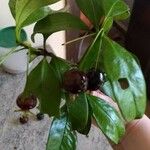
Eugenia brasiliensis
Brazil-cherry · Grumichama · Brazil eugenia · Brazilian cherry · Grumix-aneira of Brazil
Description
Source: leafsnapEugenia brasiliensis, commonly known as Grumixama, is a species of flowering plant in the Myrtaceae family. Native to Brazil, it thrives in the Atlantic Forest biome. This tree can reach up to 10 meters in height and features a dense crown of glossy green leaves. Its flowers are small and white, while its dark purple berries resemble cherries. Traditionally, the indigenous communities have utilized Grumixama fruit for its medicinal properties, as it is rich in antioxidants and anti-inflammatory compounds. The fruit also has various culinary uses, including in jams, jellies, and juices, or it can be enjoyed fresh due to its sweet-tart flavor. In addition to its practical uses, the Grumixama tree is valued for its ornamental qualities. Its attractive foliage and showy fruits often attract birds such as toucans and parrots. However, Eugenia brasiliensis faces threats from habitat loss due to deforestation for agricultural and urbanization purposes. Conservation efforts are being undertaken by organizations like the Brazilian government's Atlantic Forest Restoration Pact, which aims to restore degraded areas within this biome, including habitats of Eugenia brasiliensis.
🌳 Beyond being a juicy snack, the grumichama's berries are earning recognition in the small world of artisanal winemaking. This surprising shift—from simple eating to a refined beverage—reveals the plant's adaptable potential beyond raw consumption. The fleshy, purple-black fruit, when fully ripe, can be fermented into a rich, distinctively flavored wine that is beginning to draw the attention of boutique vineyards and hobbyist vintners alike.
Care Guide
💧 Water Every 7 days
Grumichama flourishes in tropical climates and is tolerant of drought. It only needs to be watered every 2-3 weeks, and the soil should be allowed to dry slightly between waterings. This plant retains moisture well, which supports its lush foliage throughout the year. Because of these qualities, grumichama is a popular choice for outdoor cultivation.
How should I water my Grumichama plant?
Your Grumichama is not particular about how you water it, so you can use any common watering tool. This includes watering cans, hoses, or even cups. It is important to water the plant directly on the soil, making sure to evenly moisten all areas so that all parts of the root system receive the necessary water. Using filtered water is recommended to avoid harmful particles that may be present in tap water. It is also best to use water that is at or slightly above room temperature, as very cold or hot water can be a shock to the Grumichama. However, the plant typically responds well to any kind of water you provide.
What should I do if I give my Grumichama plant too much or too little water?
Outdoor plants, especially newly planted ones or seedlings, are prone to lack of watering. To ensure sufficient water supply, remember to water them regularly for a few months, especially when they are small or recently planted. Once the roots are established, Grumichama plants can usually rely on rainwater. When Grumichama is planted in pots, overwatering is more likely. If you accidentally overwater your Grumichama, take immediate action to remedy the situation. First, stop watering the plant to reduce the effects of overwatering. Then, remove the Grumichama from its pot to inspect the roots. If no root rot is found, you can return the plant to its container. However, if you notice signs of root rot, trim the affected roots and apply a fungicide to prevent further damage. Finally, repot the Grumichama in well-draining soil. In the case of underwatering, simply water the Grumichama more frequently. This is an easy fix as the plant's leaves will droop, dry out, and may fall off when underwatered. Once the plant is adequately watered, the leaves will quickly regain their fullness. Remember to adjust your watering frequency as soon as you notice underwatering.
How many times should I water my Grumichama?
If your area lacks rainfall, you should give your plants adequate watering every 2 weeks in the spring and fall, and more often in the summer. In the winter, when plants need less water, water more sparingly or not at all. Young or newly planted Grumichama should be watered more frequently to help establish growth. For potted plants, you can either set a predetermined watering schedule or base it on soil moisture. If you choose a schedule, plan to water once a week or every other week, but be aware that it may not account for unique growing conditions. Consider adjusting the frequency during summer when water needs are highest. Alternatively, wait until the top two to four inches of soil have dried out before giving more water.
How much water does my Grumichama tree need?
To properly water your Grumichama, you don't always need to use a large amount of water. Instead, if only a few inches of the soil have dried out since the last watering, give it about five to ten ounces of water each time. You can also adjust the amount based on how dry the soil is. If more than half of the soil is dry, consider giving it more water until you see excess water draining from the pot's holes. If the Grumichama is planted in a rainy area, it may not need extra watering. When it's young, make sure it receives 1-2 inches of rain per week. As it grows, it can rely on rainwater, but if there is a hot weather spell with no rainfall for 2-3 weeks, give it a thorough watering to prevent stress.
How do I know if I'm giving enough water to my Grumichama?
The Grumichama often suffers from overwatering, which can be identified by yellowing and dropping leaves, as well as a shriveled structure and potential root rot. Conversely, an underwatered Grumichama will wilt and exhibit brown or brittle leaves. In either case, immediate action is needed to restore the plant's health.
☀️ Light Full sun
The grumichama prefers plenty of sunlight, which stimulates its metabolism and supports healthy growth. Native to places with abundant sun, it can also tolerate moderately sunny conditions. However, too little or too much sun can impair its growth.
What are the sunlight requirements for Grumichama (Eugenia brasiliensis)?
Grumichama needs ample sunlight to grow healthily. Ideally, it requires full sun exposure of more than 6 hours of sunlight daily, but it can also tolerate partial sun, about 3-6 hours of sunlight. Ensuring that your Grumichama receives the right balance of light and shade is crucial for its growth and happiness. Be mindful of the light's movement through your garden when choosing the perfect spot for your plant.
How does sunlight affect Grumichama's growth?
Sunlight plays a vital role in the growth and health of Grumichama. Originating from environments with abundant sun exposure, this plant thrives under ample sunlight, which energizes its metabolism and promotes healthy growth. However, it's important to note that both an excess and a deficiency of sunlight can adversely affect its growth processes. In less sunny spaces or during winter, when natural sunlight is insufficient, consider using artificial lighting solutions, such as LED lights, to provide the necessary wavelengths of light. For indoor plants, you might need 30-50W/sq ft of artificial light for full sun plants, 20-30W/sq ft for partial sun plants, and 10-20W/sq ft for full shade plants.
What symptoms indicate a Grumichama plant is getting insufficient light?
Grumichama may exhibit several symptoms when it doesn't receive enough light, including smaller new leaves, leggy or sparse growth, faster leaf drop, slower or no new growth, lighter-colored new leaves, chlorosis, sunscald, leaf curling, wilting, and leaf scorching. These symptoms can range from subtle signs of light deficiency, such as pale leaves indicating a lack of chlorophyll, to more severe issues like chlorosis or wilting due to insufficient sunlight exposure.
How can I address issues related to sunlight exposure for Grumichama?
To remedy sunlight exposure problems with Grumichama, consider the following solutions: For indoor plants, gradually increasing sunlight exposure each week until reaching at least 6 hours of direct sunlight daily can be beneficial. Utilize a south-facing window and keep curtains open during the day. If moving the plant is not feasible, artificial lighting can supplement natural light. For outdoor plants, find an optimal spot that gradually introduces them to more sunlight, avoiding sudden changes to prevent sunburn. Reducing obstructions by pruning trees or transplanting smaller plants to locations with better sunlight and drainage can also improve sunlight access. Note that while new growth will be healthy with improved light conditions, parts of the plant previously affected may not recover.
🌡️ Temperature 20–37.8°C
Grumichama comes from tropical areas, where the climate is typically warm and humid. Consequently it is well adapted to high heat and moisture. It does not tolerate sudden temperature shifts and prefers a consistent thermal environment, so indoor temperature fluctuations should be avoided. It usually cannot tolerate cold and requires relatively high temperatures to grow. If the surrounding temperature falls too low, the plant may stop growing or even die.
💨 Humidity normal (40-60%)
This plant will thrive in moderate humidity, which is probably the level in your home. However, misting it a few times a week can be very beneficial. Make sure the room has good ventilation.
🪴 Soil 5-6
🌱 Fertilizer
Use organic fertilizers (e.g., fish emulsion, compost) rather than chemical ones for Grumichama. Provide higher nitrogen and phosphorus to young plants in spring. Incorporate compost or fertilizer into the soil before or after planting. For mature plants, supplement in spring with a balanced fertilizer or one targeted to a specific deficiency. Nutrient deficiency causes small leaves, short branches, yellow/bronze leaves, acidic fruits, premature fruit fall, and splitting.
🪴 Pot & Repot
✂️ Pruning
Grumichama is an evergreen shrub known for its glossy leaves and small, edible fruits. To promote growth and increase fruit yield, it's best to prune the plant from early to late spring. Key pruning techniques include removing dead wood, thinning dense areas, and shaping the shrub. Make sure to use clean tools to prevent disease and minimize damage.
🌿 Propagating
🐛 Diseases & pets
☠️ Toxicity
Characteristics
- Plant Type
- Tree, Shrub
- Life Cycle
- Perennial
- Genus
- Eugenia
- Family
- Myrtaceae
- Hardiness Zone
- 10-12
- Mature Height
- 6.1 m
- Mature Spread
- 3.96 m
- Leaf Color
- Green
- Leaf Type
- Evergreen
- Flower Color
- White
- Flower Size
- 2.54 cm
- Bloom Time
- Early summer, Mid summer
- Planting Time
- Spring, Autumn
- Harvest Time
- Mid summer, Late summer, Early fall
- Native Area
- Brazil