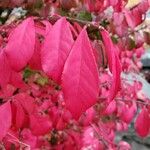
Euonymus alatus
Burning bush · Winged burning bush · Winged euonymus · Winged spindletree · Winged Spindle
Description
Source: leafsnapEuonymus alatus, commonly known as winged euonymus or burning bush, is a deciduous shrub native to eastern Asia. It is a popular ornamental plant in gardens and landscapes due to its attractive foliage and vibrant fall color. The plant typically grows up to 15 feet tall and wide with a dense, rounded habit. The leaves are dark green in summer but turn bright red in autumn before falling off. The stems of the plant are distinctive, with corky ridges that give it the name "winged" euonymus. In late spring or early summer, small greenish-yellow flowers appear on the branches, followed by pinkish-red fruit capsules that split open in autumn to reveal bright orange-red seeds. While it is an attractive addition to any garden or landscape design, Euonymus alatus can be invasive if not properly managed, as it can spread rapidly through seed dispersal and root suckering.
🌳 Although primarily recognized for its ornamental use, the distinctive traits of burning bush make it suitable for several lesser-known purposes. One notable use is its bark and fruit as natural dyes in traditional textile production to achieve subtle shades. Woodworkers prize its dense, hard wood for making durable, fine-grained furniture. In addition, its resistance to pests makes burning bush a potential option in integrated pest management, where it functions as a host for certain beneficial insect species that help control agricultural pests without chemical interventions.
🎭 Enchantment of the heart, encouragement, cleansing, benedictions
Care Guide
💧 Water Every 7 days
Burning bush plants thrive in a variety of moisture conditions and have a moderate tolerance for drought. Ideally, they should be watered every 1 to 2 weeks, allowing the soil to dry out slightly between waterings. Applying mulch around the base of the plant helps retain moisture and protects the roots during extreme weather, which contributes to the plant's overall health as an outdoor shrub.
When Should I Water My Burning Bush?
Watering your burning bush is vital for its health, contributing to its growth, the vibrancy of its foliage, and its resistance to diseases. To determine the right time to water, check the soil moisture by inserting your finger about 1 to 2 inches deep near the plant's base; if the soil feels dry at that depth, it's time to water. Observing the leaves for signs of thirst, such as dullness, wilting, crisping, or yellowing, also indicates the need for watering. Pay attention to weather conditions, as the burning bush may require more frequent watering during hot and dry periods and less during cooler, wetter times. Be mindful of potential issues from both over-watering and under-watering, such as root diseases or stunted growth, to maintain the health and longevity of your burning bush.
How Should I Water My Burning Bush?
To ensure the health of your burning bush, use the top-watering technique by gently pouring water over the soil until it seeps out of the pot's drainage holes, which helps the roots receive adequate moisture and promotes downward growth. Utilizing a watering can with a long, narrow spout, focus on watering the soil directly around the plant's base and avoid wetting the foliage to prevent fungal diseases. Burning bush is drought-tolerant to some extent; thus, it's better to underwater if you're unsure. Always check that the top two inches of soil have dried out before proceeding with the next watering session.
How Much Water Does Burning Bush Really Need?
To mimic its natural environment, ensure your burning bush's soil is consistently moist but not oversaturated. The required water amount depends on factors like pot size and the plant's size. For example, a mature burning bush in a 10-inch pot may need around 4-5 cups of water. Optimal watering leaves the soil moist to the touch just below the surface and keeps the foliage vibrant. Be wary of the symptoms of both over and under-watering, such as yellowing leaves or root rot, which can harm the plant's health significantly.
What Kind of Water is Best for Burning Bush?
Burning bush plants are versatile regarding water type; they can thrive on distilled, rainwater, tap water, or filtered water without a specific preference. They aren't overly sensitive to water quality issues like fluoride; however, if your tap water is heavily chlorinated, letting it sit out for 24 hours before use may benefit your plant by allowing chlorine to evaporate. Always use room temperature water to avoid shocking the plant's roots, keeping in mind the primary goal is providing proper drainage to prevent waterlogged conditions.
How Do Burning Bush's Watering Needs Change with the Seasons?
Watering needs for burning bush vary seasonally. In spring, water to keep the soil slightly moist as the plant begins its growth phase, allowing topsoil to dry between waterings. Summer's heat may increase the need for more frequent watering, but always avoid over-watering. In autumn, reduce watering frequency as growth slows, ensuring soil is dry before the next watering. During winter, water sparingly, letting the soil dry completely between sessions, to match the plant's dormancy and reduced water needs, while guarding against the drying effects of indoor heating.
☀️ Light Full sun
Burning bush grows best with plenty of sunlight throughout the day and can withstand occasional light shade. It originates from areas that experience long stretches of sun. Too much shade or excessively strong light can negatively impact its growth, causing stunted development or leaves to turn yellow.
What are the sunlight requirements for a burning bush?
A burning bush requires a generous amount of sun exposure throughout the day to thrive, ideally in environments that mimic its natural habitat characterized by extended sunny periods. It can tolerate slight shade, but too much shade or overly intense light can negatively impact its growth, potentially causing hindered development or yellowing of leaves. It's crucial to provide at least 6 hours of direct sunlight for full sun conditions, while partial sun involves about 3-6 hours of sunlight. Observing how sunlight moves through your garden will help in finding spots that ensure the perfect balance for your plants.
How does artificial lighting support burning bush growth indoors?
For indoor plants, especially in conditions where natural sunlight is scarce, such as during winter or in less sunny spaces, artificial lighting can be crucial. It ensures optimal growth by providing necessary light wavelengths. LED lights are recommended due to their ability to offer specific wavelengths. For full sun plants, 30-50W per square foot is ideal; partial sun plants need 20-30W per square foot, and full shade plants require 10-20W per square foot. The light source should be placed 12-36 inches above the plant to mimic natural sunlight and should remain on for 8-12 hours per day, depending on the plant species.
What are the signs of insufficient or excessive sunlight in burning bush?
When a burning bush receives too little sunlight, it may exhibit symptoms such as smaller new leaves, leggy or sparse growth, faster leaf drop, slower or halted growth, and leaves with lighter color or irregular patterns. On the other hand, excessive sunlight can cause chlorosis (leaves turning yellow), sunscald (damage from intense exposure), leaf curling, wilting, and leaf scorching (brown, dry patches on leaves). These signs highlight the plant's struggle with the current light conditions, indicating a need for adjustment.
What solutions can mitigate sunlight-related issues for burning bush?
For indoor burning bushes facing insufficient sunlight, gradually moving them to a sunnier location each week until they receive at least 6 hours of direct sunlight daily is recommended. Keeping them near a south-facing window and using curtains to maximize daylight exposure helps. If moving the plant isn't feasible, providing artificial light for at least 8 hours a day can supplement its needs. Outdoors, slowly transitioning plants to sunnier spots can prevent sunburn. Pruning obstructive branches or transplanting smaller plants to sunnier locations may also enhance sunlight access. It's important to note that parts of the plant affected by inadequate light might not recover, but new growth will be healthy with improved light exposure.
🌡️ Temperature 5–35°C
Burning bush is a plant that grows in temperate climates and prefers temperatures from 5 to 35 ℃ (41 to 95 ℉). To adapt to seasonal changes, it is recommended to keep temperatures between 5 and 20 ℃ (41 and 68 ℉) in fall and winter, and between 20 and 35 ℃ (68 and 95 ℉) in spring and summer.
What is the ideal temperature range for a Burning Bush?
The Burning Bush thrives in a temperate environment, preferring temperatures between 5 to 35°C (41 to 95°F). To adjust to the changing seasons, maintaining a temperature range of 5 to 20°C (41 to 68°F) during the fall and winter months, and 20 to 35°C (68 to 95°F) during the spring and summer months is recommended. This plant has strong cold resistance, so special frost protection measures are usually not needed. However, if temperatures are expected to drop below -30°C, it's important to wrap the trunk and branches with protective materials like non-woven fabric or cloth. Additionally, watering the plant abundantly before the first freeze in autumn to ensure the soil remains moist and enters a frozen state can help prevent drought and water scarcity during winter and early spring.
How does the Burning Bush react to low temperatures, and what measures should be taken?
The Burning Bush is cold-tolerant and best thrives when the temperature is above 5°C. Despite its cold tolerance, when temperatures fall below -30°C, the plant might not show noticeable changes immediately; however, its branches may become brittle and dry by spring, with no new shoots emerging. To mitigate damage from low temperatures, it's recommended to prune away any dead branches that have failed to produce new leaves in the spring.
What are the effects of high temperatures on the Burning Bush, and how can they be mitigated?
During the summer, it's crucial to keep the Burning Bush's environment below 35°C. If temperatures exceed 38°C, the leaves of the plant may lighten in color, and the tips can become dry and withered, increasing the risk of sunburn. To alleviate the effects of high temperatures, trim away sunburned and dried parts of the plant. Move the Burning Bush to a location that provides shade during the midday and afternoon sun or use a shade cloth. Water the plant in the morning and evening to maintain moist soil.
💨 Humidity
🪴 Soil 6-7
🌱 Fertilizer
Fertilize your Burning bush in early spring to promote healthy growth. Regular feeding boosts overall health, leading to vigorous growth, increased resilience to harsh conditions, and improved resistance to pests and diseases. Follow a consistent fertilization schedule to maintain vibrant, deep-colored foliage and a lush appearance.
Why do I have to add fertilizer to my Burning bush?
No matter the type of Burning bush you own, regular fertilization is key to ensuring its overall health. Proper nutrient supply promotes stronger growth, making your Burning bush more resilient to challenging growing conditions and better equipped to combat diseases and pests. Since the foliage of your Burning bush is one of its most appealing features, it's important to prioritize its maintenance. This involves establishing and following a regular fertilization schedule tailored specifically to your Burning bush. By doing so, you can expect your Burning bush to develop vibrant, lush leaves.
When should I fertilize my Burning bush?
To keep your Burning bush healthy and strong, it's important to fertilize it at the right times. The first time to fertilize is in late winter or early spring, which gives the plant the nutrients it needs to thrive when the weather gets warmer. If you live in a warm climate region, it's helpful to give another round of fertilizer in early fall. This not only provides extra nutrients for the next growing season but also enhances the plant's ability to withstand winter cold without damage to its leaves. Fertilizing earlier in the season will ensure that new branches have sufficient time to grow and tolerate the cold winter.
When is the best time to not fertilize my Burning bush?
To ensure optimal growth of your Burning bush, it is important to know when not to fertilize. Firstly, avoid fertilizing during the cold months of early and mid-winter when the plant is dormant and does not require any nutrition. Secondly, it is advisable to refrain from fertilizing during late spring and throughout the summer. This period often brings hotter and drier weather, which can have adverse effects on the plant if fertilized. To prevent any potential issues, it is best to schedule fertilization exclusively for the early spring and early fall.
What kind of fertilizer does my Burning bush plant need?
Burning bushes primarily require nitrogen, but phosphorus and potassium are also important for their growth. To ensure your Burning bush gets all three nutrients, a balanced fertilizer like a 10-10-10 is recommended. However, a more customized nutrient ratio often promotes optimal growth. It is often beneficial to use fertilizers with slightly higher nitrogen content, such as a 10-6-4 ratio. When fertilizing, you can choose between granular or liquid-based fertilizers.
How can I make my Burning bush plant grow better?
To fertilize your Burning bush, you can use either granular or liquid fertilizer. If you opt for granular fertilizer, simply sprinkle it on the soil at the appropriate time. The nutrients in granular fertilizer are released slowly over time. It's generally advisable to lightly water your Burning bush before applying the fertilizer. On the other hand, liquid fertilizer is less commonly used but can also be effective. To use it, mix the fertilizer with water and pour the mixture around the base of your Burning bush. It can be helpful to conduct a soil test beforehand to determine if any pH adjustments are needed.
🪴 Pot & Repot 2-3 years
When repotting a Burning bush, select a pot 1-2 inches (2.5–5.1 cm) larger with good drainage. Use a well-draining potting mix. Repot in spring or fall, making sure the root ball is slightly lower than the rim of the pot. Water thoroughly after repotting and place it in a warm spot with indirect sunlight.
✂️ Pruning
Known for its vibrant red foliage in the fall, the burning bush benefits from annual pruning in early spring. Important techniques include removing dead branches, thinning out dense areas, and shaping the bush for better aesthetics. Pruning encourages healthier growth and more vivid colors. Always use clean, sharp tools, and be sure to consult local horticultural guidelines before you begin.
🌿 Propagating
🐛 Diseases & pets
☠️ Toxicity
Characteristics
- Plant Type
- Shrub
- Life Cycle
- Perennial
- Genus
- Euonymus
- Family
- Celastraceae
- Hardiness Zone
- 4-9
- Mature Height
- 0.91 m to 7.01 m
- Mature Spread
- 4.57 m to 6.1 m
- Leaf Color
- Green, Red
- Leaf Type
- Deciduous
- Flower Color
- Green, Yellow
- Flower Size
- 0.15 cm to 0.20 cm
- Bloom Time
- Late spring, Early summer
- Planting Time
- Spring, Autumn
- Harvest Time
- Mid summer, Late summer
- Native Area
- Russia, Japan, South Korea