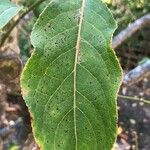
Euonymus hamiltonianus
Hamilton's spindle · Himalayan spindle · Hamilton's spindletree · Hamilton's strawberry bush · Hamilton’s spindletree
Description
Source: leafsnapEuonymus hamiltonianus, known as Hamilton's spindle, is a species of flowering plant in the Celastraceae family. Native to the Himalayas and other parts of Asia, it thrives in forests and scrublands. This plant typically grows as a shrub or small tree, reaching up to 6 meters in height. Its glossy green leaves are oval-shaped with serrated edges and can grow up to 10 cm long. From May to June, Euonymus hamiltonianus produces small, greenish-white flowers. These are followed by bright pink capsules that split open when ripe, revealing orange-red seeds inside. In traditional Chinese medicine, Euonymus hamiltonianus is valued for its anti-inflammatory properties. It also serves an ornamental purpose, thanks to its attractive foliage and colorful fruit capsules. The plant prefers well-drained soil and can grow in partial shade or full sun. It is versatile and can tolerate various soil types, including clay. Once established, Euonymus hamiltonianus requires minimal maintenance, though occasional pruning can help with shaping and removing dead wood. Overall, Euonymus hamiltonianus is an appealing shrub or small tree with both ornamental and medicinal value. It makes an excellent addition to any garden or landscape design where it can thrive under suitable conditions.
Care Guide
💧 Water Every 7 days
Hamilton's spindletree thrives in moderately moist conditions, needing consistent soil moisture without becoming waterlogged. Watering it every two weeks is ideal. As a hardy outdoor plant in temperate regions, Hamilton's spindletree efficiently withstands periods of low rainfall by effectively storing water.
☀️ Light Full sun
Hamilton's spindletree prefers abundant sunlight, yet is adaptable enough to thrive even with moderate sun exposure. Because it originates from sun-rich habitats, sunlight is essential for its healthy growth. However, too much or too little sun can stunt growth and impair overall health.
What are the sunlight requirements for Hamilton's Spindletree?
Hamilton's Spindletree requires ample sunlight to thrive, ideally thriving in full sun, which is defined as above 6 hours of sunlight per day, but it can also grow well in partial sun, or about 3-6 hours of sunlight a day. It's important to observe how sunlight moves through your garden to find the perfect spot for your plant, ensuring it gets a balanced amount of light and shade for optimal growth. Excessive or insufficient sun exposure can negatively affect the plant's health and growth.
What are the essentials for growing Hamilton's Spindletree?
Growing successfully requires knowledge of its native habitat, which is rich in sunlight. Artificial lighting can be crucial for indoor plants, especially when natural sunlight is scarce. LED lights are recommended because they can be customized to provide specific wavelengths needed by plants. Depending on the plant's sunlight needs, artificial light ranging from 10-50W/sq ft is required. The light should be placed 12-36 inches above the plant for 8-12 hours per day to mimic natural sunlight.
What are important symptoms of light deficiency or overexposure in Hamilton's Spindletree?
Light deficiency in Hamilton's Spindletree can lead to symptoms such as small leaves, leggy or sparse growth, faster leaf drop, slower or no new growth, and lighter-colored new leaves. Excessive sunlight exposure can cause chlorosis, sunscald, leaf curling, wilting, and leaf scorching. These symptoms indicate the plant is not receiving the optimal light conditions it requires for healthy growth, either too little or too much, affecting its ability to photosynthesize efficiently.
How can I address Hamilton's Spindletree's light-related issues?
To address light-related issues for indoor plants, gradually move the plant to a sunnier location, ensuring it receives at least 6 hours of direct sunlight daily and consider using artificial light if needed. For outdoor plants, slowly acclimate them to sunnier spots to avoid sunburn. If sunlight is obstructed, you might need to prune blocking trees or transplant smaller plants to sunnier locations. Remember, parts of the plant damaged by insufficient light might not recover, but new growth should be healthy once proper light levels are restored.
🌡️ Temperature 0–32.2°C
Hamilton's spindletree is highly adaptable to various climates, whether experiencing scorching summers or chilly winters. However, it does have an optimal temperature range for healthy growth. When temperatures become too high, the plant is susceptible to heat and humidity stress, which can cause it to die. In areas where temperatures approach the lower limit of its cold tolerance, applying insulation to protect the plant is important.
What is Hamilton's spindletree?
Hamilton's spindletree, scientifically known as Euonymus hamiltonianus, is a plant recognized for its distinct features and botanical significance. Unfortunately, further details on its essentials, symptoms, or additional information have not been provided.
💨 Humidity
🪴 Soil 6-6
🌱 Fertilizer
Timing is essential when fertilizing Hamilton's spindletree. Begin fertilizing in early spring and continue monthly through early summer. Fertilizer encourages beautiful blooms and supplies energy during both dormant and active growth periods.
🪴 Pot & Repot
✂️ Pruning
To ensure healthy growth, Hamilton's spindletree benefits from pruning in early spring. Focus on removing dead branches, thinning out crowded areas, and shaping the plant. This timing enhances the tree's recovery and promotes blooming. Regular maintenance also improves air circulation and light access. Be sure to use sharp, clean tools during pruning to prevent the spread of disease.
🌿 Propagating
🐛 Diseases & pets
☠️ Toxicity
Characteristics
- Plant Type
- Tree, Shrub
- Life Cycle
- Perennial
- Genus
- Euonymus
- Family
- Celastraceae
- Hardiness Zone
- 3-8
- Mature Height
- 3.05 m
- Mature Spread
- 2.13 m
- Leaf Color
- Green, Red
- Leaf Type
- Deciduous
- Flower Color
- White, Green
- Flower Size
- 0.76 cm
- Bloom Time
- Late spring, Early summer
- Planting Time
- Spring, Autumn, Winter
- Harvest Time
- Fall
- Native Area
- Russia, Nepal, Afghanistan, India, Myanmar, Japan, Koppen, Bhutan, Pakistan, South Korea, Thailand, China