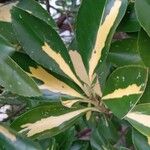
Euonymus japonicus
شمشاد رسمی · Japanese Spindle · Evergreen euonymus · Japanese spindletree · Evergreen spindle
Description
Source: leafsnapEuonymus japonicus, commonly known as the Japanese spindle or evergreen spindle, is a species of flowering plant belonging to the Celastraceae family. Native to Japan, Korea, and China, it is widely cultivated around the globe as an ornamental plant. The Japanese spindle is an evergreen shrub that can grow up to 6 meters tall with a spread of 3 meters. Its glossy, dark green leaves are oval-shaped with pointed tips and serrated edges, arranged opposite each other along the stem. In late spring or early summer, Euonymus japonicus produces small, greenish-white flowers that eventually give way to pinkish-red fruits. These fruits split open to reveal bright orange seeds. This plant thrives in well-drained soil and partial shade but can also tolerate full sun exposure. It is relatively easy to grow and maintain, although pruning may be needed to maintain its shape. Several cultivars of Euonymus japonicus feature different leaf colors, such as variegated white or yellow-green. These variations make it a popular choice for landscaping in gardens, parks, and public spaces. However, it is important to note that all parts of this plant contain toxic compounds called alkaloids, which can cause skin irritation if touched or gastrointestinal problems if ingested by humans or animals. Therefore, caution should be exercised when handling this plant, especially around children and pets who might accidentally ingest its parts.
💡 The evergreen spindle is a highly ornamental bonsai plant that offers a variety of beautiful forms. It can be shaped into a cascading bonsai or pruned into oblique or curved styles, with countless variations.
🌳 Commonly found in varied environments, japanese euonymus hides unexpected uses. Its leaves, with a bold yellow-and-green pattern, offer more than mere visual appeal. In the past they were used as an unusual art medium: when rubbed they reveal a pale cream background, ideal for drawings with natural plant inks. Also, the frequently overlooked toxic berries of japanese euonymus are important for birds, supplying essential nourishment during the cold winter season.
🎭 Prescience, mysticism
Care Guide
💧 Water Every 7 days
Evergreen spindle thrives in subtropical climates, where it enjoys moderate humidity and can withstand short periods of dryness. This evergreen plant requires soil that is kept consistently moist and should ideally be watered every 1-2 weeks. To help retain moisture, especially during hot weather or in sunny climates, it benefits from mulching.
When Should I Water My Evergreen Spindle?
Watering your Evergreen Spindle is crucial for its health, growth, and resistance against diseases. Key indicators to water include dry soil at a depth of 1-2 inches, wilted or droopy leaves, yellowing or browning of leaves, curling leaves, and increased soil dryness due to dry periods. Providing water in the early morning maximizes moisture absorption and minimizes disease risk. Avoid late-day watering to prevent moisture-related issues and fungal diseases.
How Should I Water My Evergreen Spindle?
The Evergreen Spindle benefits from deep, infrequent watering over shallow, frequent watering. Ensure the top inch of soil dries out before the next watering session and avoid overwatering to prevent root rot. A bottom-watering technique or using a watering can with a narrow spout is ideal. This ensures the water reaches the roots without excessively wetting the foliage, catering to the plant's specific hydration needs.
How Much Water Does Evergreen Spindle Really Need?
The Evergreen Spindle requires moderate watering to keep its soil consistently moist but well-draining. Determine water needs based on factors like pot size, plant size, and root depth, ensuring a thorough watering that moistens the top 6-8 inches of soil for its shallow root system. An optimally watered plant displays lush, green foliage without signs of over or under-watering, like yellowing leaves, wilt, or a musty soil scent.
What Kind of Water is Best for Evergreen Spindle?
Evergreen Spindle thrives with distilled or rainwater, benefiting from their purity and balanced pH. While tap water is an option, it should be treated to remove chlorine due to the plant's slight sensitivity. Highly mineralized water can lead to issues like leaf discoloration, making filtered or distilled water preferable. Room temperature water (68-72°F or 20-22°C) is ideal, avoiding extremes that could shock the plant.
How Do Evergreen Spindle's Watering Needs Change with the Seasons?
Seasonal changes significantly impact the Evergreen Spindle's watering needs. Spring's active growth requires abundant moisture for foliage and root development. Summer demands the most water to offset soil moisture evaporation. In autumn, reduce watering as growth slows, preparing the plant for winter. During winter's dormancy, water sparingly, ensuring the soil's top layer dries out between sessions, thus preventing root-rot.
☀️ Light Full sun
Japanese euonymus grows best when it gets plenty of sunlight during the day, though it can also persist in places with less intense sun. Too little light can restrict its growth, while too much can cause leaf scorch. Its native habitat indicates a preference for sunlit areas.
What are the sunlight requirements for the Evergreen spindle?
The Evergreen spindle, or Euonymus japonicus, thrives in locations with full sun exposure, which means it requires more than 6 hours of sunlight daily. However, it can also survive in partial sun conditions, receiving about 3-6 hours of sunlight. It's essential to find the perfect balance of light and shade in your garden to ensure the plant's health and happiness. Keeping an eye on how sunlight moves throughout your garden can help in choosing the best spots for your plants.
What essentials should be considered for the Evergreen spindle's growth?
For optimal growth, the Evergreen spindle requires ample sunlight throughout the day. Although it is adaptable to less intensive sun, insufficient sunlight can stunt its growth, and excessive exposure can cause leaf scorch. In environments where natural sunlight is scarce, especially during winter or in darker spaces, artificial lighting can be beneficial. Indoor plants under such conditions should be provided with 30-50W/sq ft of LED light for full sun plants, 20-30W/sq ft for partial sun plants, and 10-20W/sq ft for full shade plants. Placing the light source 12-36 inches above the plant and ensuring it receives 8-12 hours of light per day can mimic natural sunlight conditions closely.
What are the symptoms of light deficiency in Evergreen spindle?
When exposed to suboptimal lighting conditions, the Evergreen spindle may exhibit several symptoms indicating stress. New leaves may grow smaller, and the plant can develop a leggy or sparse appearance due to longer spaces between leaves or stems. There may also be faster leaf drop as the plant attempts to conserve resources. Inadequate light can halt new growth entirely and cause new leaves to develop pale or discolored, indicating a lack of essential nutrients. Additionally, excessive sunlight can lead to chlorosis, sunscald, leaf curling, wilting, and leaf scorching, impacting the plant's photosynthesis and overall health negatively.
How can you address light-related issues for the Evergreen spindle?
To remedy light-related issues for the Evergreen spindle, it's crucial to adjust the plant's exposure to sunlight gradually. For indoor plants, moving them to a south-facing window or employing artificial lights are effective strategies. Ensure the plant or light source is adjusted weekly to slowly increase its exposure to sunlight, aiming for at least 6 hours of direct sunlight daily. Outdoor plants should also be shifted to sunnier spots gradually to avoid shock from sudden changes. If sunlight obstruction is an issue, consider pruning or transplanting to more favorable locations. It's important to note that while parts of the plant affected by insufficient sunlight may not fully recover, new growth should be healthy following these adjustments.
🌡️ Temperature 10–35°C
Although Japanese euonymus is a temperate woody plant, it tolerates a wide span of temperatures and does well in its native growing conditions when temperatures range from 10 to 35 ℃ (50 to 95 ℉). In summer, it’s best to reduce the plant’s exposure to strong sunlight to prevent leaf dehydration and discoloration. Winter temperatures under 10 ℃ (50 ℉) can cause leaves to drop. Keeping the air humid can aid the plant in coping with dry winter months.
What are the ideal temperature conditions for Evergreen Spindle?
Evergreen spindle, known botanically as Euonymus japonicus, thrives in a wide range of temperatures, ideally between 10 to 35°C (50 to 95°F). To maintain its health and vigor, it is crucial to avoid exposing the plant to intense sunlight during the summer months to prevent dehydration and discoloration of the leaves. In winter, temperatures below 10°C (50°F) can lead to leaf shedding, but the plant has strong cold resistance, usually not requiring special frost protection measures. However, if temperatures are expected to fall below the critical growth limit, it's vital to wrap the trunk and branches with protective materials and ensure the soil is moist before the first freeze.
How can I protect Evergreen Spindle from low and high temperatures?
To protect Evergreen spindle from low temperature effects, it's important to ensure the plant is kept above the tolerable growing temperature minimum during winter. If the temperature falls below the critical growth limit, there might not be noticeable changes immediately, but come spring, branches may become brittle, dry, and fail to produce new shoots. Pruning dead branches early in spring can mitigate this issue. In cases of high temperature, keep the plant under the suitable growth temperature maximum during summer. Exceeding the tolerable maximum may cause the leaves to lighten in color and become susceptible to sunburn. To address this, trim the sunburned parts, provide midday shade, and ensure the soil remains moist through careful watering in the cooler parts of the day.
💨 Humidity normal (40-60%)
This plant will thrive in moderate humidity, which is probably the level in your home. However, misting it a few times a week can be very beneficial. Make sure the room has good ventilation.
🪴 Soil 6-7
🌱 Fertilizer
To encourage healthy growth, fertilize your Japanese euonymus in early spring. Consistent feeding boosts overall health, producing strong growth, better tolerance of harsh conditions, and greater resistance to diseases and pests. Keep to a regular fertilization routine for your Japanese euonymus to preserve vibrant, deeply colored foliage and a full, lush appearance.
Why is it necessary to add fertilizer to my Evergreen spindle?
No matter which kind of Evergreen spindle you have, regularly fertilizing it will improve its overall health. Providing the right nutrients will stimulate vigorous growth and make it more resilient to tough conditions while also strengthening its ability to fight off diseases and pests. Keeping the foliage intact is vital, as it is one of the most appealing aspects of the Evergreen spindle. To achieve this, establish and follow a specific fertilization schedule for your Evergreen spindle. By doing so, you will encourage the development of vibrant, lush leaves with a rich color.
When should I fertilize my Evergreen spindle plant?
First, fertilize your Evergreen spindle during late winter or early spring to provide it with the necessary nutrients for healthy growth once the weather warms up. Additionally, if you live in a warm climate region, it is beneficial to provide another fertilizer feeding in early fall. This will not only add nutrients for the following growing season but also help the Evergreen spindle withstand the winter cold and prevent foliage damage. Fertilizing earlier will ensure sufficient time for new branches to grow and withstand the cold winter.
When is it not a good idea to put fertilizer on my Evergreen spindle?
Avoid fertilizing your Evergreen spindle a few times during the year. First, skip fertilization during the early and mid-winter months when the plant is dormant. Also, it's not recommended to fertilize in late spring and throughout the summer as the hot and dry weather can have a negative impact on the plant's response to fertilization. To prevent any issues, stick to a fertilization schedule that only involves feeding in early spring and early fall.
Which kind of fertilizer does my Evergreen spindle plant require?
The most important nutrient for an Evergreen spindle is usually nitrogen, but phosphorus and potassium are not unimportant. In fact, an Evergreen spindle typically needs a decent amount of all three main nutrients. That's why a balanced fertilizer like a 10-10-10 can be effective. However, a more nuanced nutrient ratio often results in optimal growth for an Evergreen spindle. Fertilizers that are slightly higher in nitrogen tend to work better, such as a ratio of 10-6-4. When fertilizing, you can choose between granular or liquid-based fertilizers.
How can I give my Evergreen spindle plant the nutrients it needs?
To fertilize your Evergreen spindle, you have two options: using granular fertilizer or liquid fertilizer. With granular fertilizer, just sprinkle it on the soil at the right time. The nutrients will gradually be released into the soil. It's a good idea to lightly water your spindle before applying the fertilizer. On the other hand, liquid fertilizer is less common. Mix it with water and pour the mixture around the base of your spindle. Before fertilizing, it may be helpful to do a soil test to determine if the pH needs any adjustments.
🪴 Pot & Repot 2-3 years
When repotting Japanese euonymus, choose a pot 1–2 inches (2.5–5.1 cm) larger with ample drainage. Use a well-draining potting mix. Repot in spring or fall, ensuring the root ball sits slightly lower than the rim of the pot. Water thoroughly after repotting and place it in a warm spot with indirect sunlight.
✂️ Pruning
Pruning the evergreen spindle is important for forming hedges, and medium to heavy pruning is suggested for shaping or creating topiary designs. The ideal time for pruning and trimming the evergreen spindle is in the winter. However, evergreen shrubs can be left unpruned.
🌿 Propagating
🐛 Diseases & pets
☠️ Toxicity
Characteristics
- Plant Type
- Shrub
- Life Cycle
- Perennial
- Genus
- Euonymus
- Family
- Celastraceae
- Hardiness Zone
- 6-10
- Mature Height
- 2.13 m to 7.92 m
- Mature Spread
- 2.13 m
- Leaf Color
- Green, Variegated
- Leaf Type
- Evergreen
- Flower Color
- White
- Flower Size
- 0.51 cm to 0.76 cm
- Bloom Time
- Late spring, Early summer
- Planting Time
- Spring, Autumn
- Harvest Time
- Mid summer, Late summer
- Native Area
- Cambodia, Myanmar, Japan, Philippines, Koppen, South Korea, Thailand, China