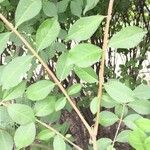
Euonymus occidentalis
Western burningbush · Western Wahoo · Western burning bush · Western strawberry-bush · Western euonymus
Description
Source: leafsnapEuonymus occidentalis, commonly known as the Western burning bush or Western wahoo, is a deciduous shrub native to western North America. It typically reaches up to 3 meters in height and has a spreading habit with multiple stems. The oval-shaped leaves have serrated edges and a glossy dark green color that transforms into a reddish-purple hue in the fall. Its flowers are small and greenish-yellow, blooming in late spring or early summer. The plant produces bright pink capsules that split open to reveal orange seeds. Euonymus occidentalis thrives in well-drained soils and prefers conditions ranging from full sun to partial shade. Once established, it exhibits drought tolerance but benefits from occasional watering during dry periods. Historically, Native American tribes have used this plant for its medicinal properties, particularly for its anti-inflammatory benefits and as an aid for digestive issues. Although Euonymus occidentalis can be cultivated as an ornamental plant due to its striking fall foliage, it is important to note that it can become invasive if not properly managed. The plant has the ability to spread through seed dispersal by birds and other animals.
Care Guide
💧 Water Every 7 days
The Western burning bush thrives best with deep watering every 2-3 weeks and does well in dry, drought-tolerant conditions. It's an excellent choice for water-wise gardens and excels in outdoor landscaping and container planting. This resilient plant is perfect for areas that prioritize water conservation.
☀️ Light Full sun
The western burning bush performs best in locations that get full, direct sun throughout the day. It can tolerate areas where sunlight is filtered or indirect, but this often slows its growth. Excessive shade or too little light can cause a lackluster appearance and poor vigor. Its native habitats are chiefly open and well-lit environments.
What are the sunlight requirements for Western Burning Bush?
Western Burning Bush (Euonymus occidentalis) thrives best in full sun conditions, requiring more than 6 hours of sunlight daily to maintain optimal health and growth. It can also grow in partial sun, which means about 3-6 hours of sunlight a day. It's crucial to observe how sunlight moves through your garden throughout the day to find locations that offer a suitable balance of light and shade, ensuring your plants remain healthy and vibrant.
How does insufficient sunlight affect the Western Burning Bush?
In conditions of insufficient sunlight, the Western Burning Bush may exhibit several symptoms indicating suboptimal health. These include smaller new leaves, leggy or sparse growth, faster leaf drop, a stop in new growth, lighter-colored new leaves, chlorosis (yellowing of leaves), sunscald on leaves or stems, leaf curling, wilting, and leaf scorching. These symptoms highlight the plant’s struggle to photosynthesize effectively and maintain its health in low-light conditions.
How can indoor Western Burning Bush plants receive adequate lighting?
Indoor Western Burning Bush plants require sufficient lighting to mimic their natural outdoor environment. When natural sunlight is not enough, especially in winter or less sunny locations, artificial light sources can be a solution. LED lights are recommended due to their ability to provide specific wavelengths needed by plants. For full sun plants, 30-50W/sq ft of artificial light is advisable, while partial sun plants need 20-30W/sq ft. The light source should be placed 12-36 inches above the plant and kept on for 8-12 hours per day to simulate natural daylight hours effectively.
What are some solutions for providing more light to Western Burning Bush plants?
To ensure Western Burning Bush plants receive optimal sunlight, gradually move them to sunnier spots, aiming for at least 6 hours of direct sunlight daily. For indoor plants, use south-facing windows and keep curtains open, or consider artificial lighting with a desk or ceiling lamp for at least 8 hours a day. For outdoor plants, avoid sudden changes in light exposure to prevent sunburn. Removing obstructions like tree branches can also increase sunlight access. For smaller plants that can be moved, consider transplanting them during their dormant period to a location with more sunlight and good drainage.
🌡️ Temperature 15–35°C
Western burning bush is a plant that flourishes in temperatures between 59 and 95 °F (15 and 35 °C), a range characteristic of the temperate climate of its native habitat. When seasons change, matching temperatures to this range can help promote optimal growth.
What is the optimal temperature range for the growth of the Western burning bush?
The Western burning bush thrives in a temperature range of 59 to 95 °F (15 to 35 °C), which reflects the temperate climate of its native habitat. Adjusting the temperature to stay within this range, especially during seasonal changes, is crucial for the plant's optimal growth. The plant also exhibits some degree of cold tolerance and does not require special care when temperatures are above its minimum tolerable growing temperature. However, temporary protective measures, such as wrapping with plastic film or fabric, are recommended to safeguard the plant against colder temperatures until conditions improve.
How does the Western burning bush respond to low temperatures?
The Western burning bush has a moderate tolerance to low temperatures and performs best when kept above its suitable growth temperature minimum. During the winter, it's important to ensure the temperature stays above its tolerable growing temperature minimum to prevent damage. Exposure to temperatures below its growth limit may cause the leaves to droop, and in cases of prolonged exposure to such conditions, the leaves may wilt and eventually fall off. To protect the plant from frost damage, trim off the frost-damaged parts and wrap the plant with insulating materials. Additionally, constructing a wind barrier can help protect it from cold winds.
What should be done if the Western burning bush experiences high temperatures?
During the summer, it's essential to keep the Western burning bush below its maximum suitable growth temperature to prevent stress and damage. Excessive temperatures can lighten the color of the leaves, cause dryness and withering at the leaf tips, curling of the leaves, and increase susceptibility to sunburn. If these symptoms occur, trim away the sunburned and dried parts of the plant. Moving the plant to a shaded location or using a shade cloth can protect it from the harsh midday and afternoon sun. Additionally, watering the plant in the morning and evening will help keep the soil moist and support the plant's health.
💨 Humidity
🪴 Soil 6-7
🌱 Fertilizer
Timing is critical when feeding Western burning bush. Start fertilizing in early spring and repeat monthly through early summer. Fertilizer promotes attractive blooms and supplies energy both during dormancy and throughout active growth.
🪴 Pot & Repot
✂️ Pruning
To ensure the health and appearance of a western burning bush, it is best to prune it from early to late winter. Focus on removing dead branches, thinning out crowded areas to improve air circulation, and shaping the bush to maintain its natural form. This dormant-season pruning encourages healthy growth and flowering in the spring, while also controlling the bush's spread and improving its overall appearance. Always use clean, sharp tools when pruning to prevent the spread of disease.
🌿 Propagating
🐛 Diseases & pets
☠️ Toxicity
Characteristics
- Plant Type
- Shrub
- Life Cycle
- Perennial
- Genus
- Euonymus
- Family
- Celastraceae
- Hardiness Zone
- 8-10
- Mature Height
- 1.83 m to 6.1 m
- Mature Spread
- 3.05 m to 6.1 m
- Leaf Color
- Green
- Leaf Type
- Evergreen, Deciduous
- Flower Color
- Red, Brown, White, Pink, Purple, Burgundy
- Flower Size
- 1.02 cm to 1.78 cm
- Bloom Time
- Mid spring, Late spring
- Planting Time
- Spring, Summer
- Harvest Time
- Late summer, Early fall, Mid fall