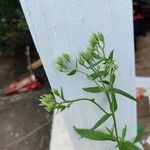
Eupatorium altissimum
Tall thoroughwort · Tall boneset · Upland boneset · Tall Joe-Pye weed
Description
Source: leafsnapEupatorium altissimum, commonly known as tall boneset or tall thoroughwort, is a perennial herbaceous plant in the Asteraceae family. Native to North America, it thrives in a variety of habitats including prairies, meadows, and open woods. This plant can reach a height of up to 6 feet with a spread of 2 to 3 feet. It features an upright growth habit with sturdy, fine-haired stems that bear lance-shaped, dark green leaves arranged oppositely. The leaves have serrated edges. From late summer through fall, Eupatorium altissimum produces clusters of small, white flowers at the tops of its stems, attracting butterflies and other pollinators. These flowers eventually give way to small seeds that are dispersed by the wind. Historically, Native Americans have utilized Eupatorium altissimum for its medicinal properties to treat various ailments such as fevers, colds, coughs, and headaches. Overall, Eupatorium altissimum is an attractive, ornamental plant that adds significant ecological value by attracting pollinators. Its height and striking blooms make it a valuable addition to both gardens and natural areas.
🎭 Fortune, wealth, eternal youth
Care Guide
💧 Water Every 7 days
Tall boneset thrives in humid environments and prefers moist conditions, needing to be watered weekly. Although it has moderate drought tolerance, it benefits from rainwater during its growing season, when it blooms outdoors.
How do I water my Tall boneset plant properly?
To properly water the Tall boneset plant, it is recommended to use filtered water that is at room temperature. This is because tap water may contain harmful particles for the plant. Since the Tall boneset comes from a warm environment, it is important to avoid using cold water as it can be a shock to its system. Additionally, overhead watering should be avoided as it can cause problems with the foliage. Instead, it is best to apply filtered room temperature water directly to the soil until it is completely soaked. This method allows the roots to be properly moisturized and encourages their growth and nutrient uptake.
What should I do if I give too much or too little water to my Tall boneset?
Overwatering can cause wilted and yellowing stems and leaves in your Tall boneset, while underwatering may lead to brittle and brown leaves. Overwatering is more common and can result in diseases like root rot, mold, and mildew. It is important to be vigilant for signs of overwatering and address them promptly. Reduce your watering schedule and consider improving soil drainage if necessary. If your Tall boneset shows signs of underwatering, simply water more frequently until the symptoms improve.
How frequently should I water my Tall boneset plant?
If your Tall boneset is in a pot, you can check if it needs water by sticking your finger into the soil. If the top two to three inches of soil are dry, it's time to water it. The same method can be used if you grow your Tall boneset outdoors in the ground. When the top few inches of soil have dried out, it's time to add water. In the spring and early fall, this usually means watering about once a week. In very hot weather, you may need to water two or more times a week. However, mature Tall boneset plants can handle dry spells quite well.
How much water should I give my Tall boneset plant?
To properly water your Tall boneset, don't be afraid to give it a generous amount of water. Wait until the first two to three inches of soil are dry before watering, and then make sure to thoroughly soak the entire soil. The water should be enough to cause excess water to flow out of the drainage holes at the bottom of the pot. If you don't see any excess water draining, you may have underwatered the plant. Avoid letting water accumulate in the soil, as this can harm the plant. On the other hand, if water isn't draining through the pot, it could mean the soil is not draining well, which can negatively affect the plant's health. If the plant is outdoors, about an inch of rain per week should be enough.
How should I give my Tall boneset water when it's growing at different stages?
The water needs of the Tall boneset can change depending on its growth stages. In the first few years of its life or after transplanting to a new location, it requires more water. During this time, the plant focuses on developing roots to support future growth, so a bit more moisture is necessary. After a few seasons, the Tall boneset requires less water. Additionally, during the bloom period, when flowers are developing, more water may be needed.
☀️ Light Partial sun
White snakeroot does best in areas where sunlight is neither excessive nor too weak. Its growth can be constrained in places exposed to continuous sunlight or subjected to prolonged shading. Its original habitat includes environments that combine sun and shade. Unbalanced light conditions may negatively affect its overall growth health.
What are the sunlight requirements for Tall Boneset?
Tall boneset requires full sun, meaning it thrives in locations receiving above 6 hours of direct sunlight daily. It can also adapt to partial sun conditions, with about 3-6 hours of sunlight. However, it's crucial to observe the movement of sunlight in your garden to find spots that offer a perfect balance of light and shade, ensuring the plants' health and happiness.
What essentials should be considered for the growth of Tall Boneset?
Tall boneset prefers areas generously bathed in the sun but can tolerate moderate sunlight. Originating from naturally light-abundant habitats, it requires sufficient light for healthy growth; excessive sun exposure or inadequate light can be detrimental. For indoor plants, artificial lighting may be necessary, especially in less sunny spaces or during winter. LED lights are recommended, with specific wattage requirements based on the plant's sunlight needs: 30-50W/sq ft for full sun, 20-30W/sq ft for partial sun, and 10-20W/sq ft for full shade plants. Ensuring the correct distance (12-36 inches above the plant) and duration (8-12 hours per day) of artificial light is crucial.
What symptoms indicate inadequate lighting for Tall Boneset?
Symptoms of light deficiency in Tall boneset include smaller new leaves, leggy or sparse growth, faster leaf drop, slower or no new growth, lighter-colored new leaves, and symptoms of excessive sunlight exposure such as chlorosis, sunscald, leaf curling, wilting, and leaf scorching. These signs indicate either insufficient sunlight or overexposure, affecting the plant's ability to photosynthesize and maintain healthy growth.
What solutions can address light-related issues in Tall Boneset?
To address light-related issues in Tall boneset, for indoor settings, gradually move the plant to a sunnier location, ensuring at least 6 hours of sunlight, or use artificial light sources such as desk, ceiling lamps, or professional grow lights for at least 8 hours daily. For outdoor plants, gradually acclimate them to brighter conditions by moving them weekly to sunnier spots, avoiding sudden changes to prevent sunburn. Minimize obstructions by pruning or relocating the plant to ensure ample sunlight and good drainage. Note that parts of the plant damaged by insufficient light may not recover, but new growth should be healthy with improved light conditions.
🌡️ Temperature 0–32.2°C
White snakeroot thrives in temperatures between 32 and 90 ℉ (0 to 32 ℃) because it is a temperate species. It naturally grows in places with cool, moist soils, such as woodlands, prairies, and meadows. In colder seasons the plant can acclimate to lower temperatures, and in warmer seasons it can endure slightly higher heat.
What is tall boneset and where does it originate?
Tall boneset, botanically known as Eupatorium altissimum, is indigenous to environments with moderate temperatures. It thrives best in a temperature range of 41 to 89.6 °F (5 to 32 °C), favoring conditions that mimic its native environment.
How does tall boneset handle cold temperatures?
Tall boneset has strong cold resistance and usually does not require special frost protection measures during winter. However, in regions where winter temperatures are expected to drop below -30°C, it is essential to provide cold protection by covering the plant with soil or straw. Additionally, watering the plant abundantly before the first freeze in autumn to maintain moist soil can help prevent drought and water scarcity during the colder months.
What should be done if tall boneset is exposed to temperatures below -30°C?
Although tall boneset is cold-tolerant and generally thrives best when the temperature is above 5°C, exposure to temperatures below -30°C may not show immediate changes but could lead to decreased sprouting or even no sprouting during spring. In such cases, removing any parts that have failed to sprout in the spring is recommended.
How does tall boneset react to high temperatures?
During the summer months, it is crucial to ensure that tall boneset is not exposed to temperatures exceeding 32°C. When the temperature rises above 35°C, the plant's leaves may become lighter in color, curl, become susceptible to sunburn, and in severe cases, the entire plant may wilt and dry. To combat this, trim away sunburned and dried-up parts, move the plant to a shaded location or use a shade cloth to protect it from the midday and afternoon sun, and water it in the morning and evening to keep the soil moist.
💨 Humidity
🪴 Soil 6-7
🌱 Fertilizer
One fertilizer application in spring is generally adequate for White snakeroot, although multiple feedings can boost growth to its fullest. Apply fertilizer about every month to six weeks. Fertilizing improves the leaves' appearance and function, supporting uniform color and a healthy texture. It also promotes root development and nutrient uptake, contributing to the plant's long-term health.
Why do I have to add fertilizer to my Tall boneset plant?
The Tall boneset's leaves are essential for its structure, so it's important to fertilize them to maintain their appearance and functionality. By properly fertilizing, you can ensure that the leaves of your Tall boneset have a consistent color and a healthy texture. Additionally, fertilization goes beyond the surface level. It helps the plant generate new roots and maintain existing ones, which not only keeps the plant healthy in the present but also improves its ability to absorb nutrients from the soil in the future.
When should I fertilize my Tall boneset?
When you grow your Tall boneset outdoors, it will send out new growth in early spring. This is a signal that it's time to start fertilizing for the year. Usually, a single application of fertilizer in spring is sufficient for the plant's health. However, if you want to promote maximum growth, you can fertilize multiple times during the spring and early summer. In this case, feed your Tall boneset about once every month to a month and a half.
When should I not put fertilizer on my Tall boneset?
During the late fall and winter, your Tall boneset will go into a dormant phase and stop growing. It's important not to fertilize it during this time. If you decide to fertilize it during the spring and summer, you should gradually reduce the amount of fertilizer as summer approaches since the growth rate of your Tall boneset will also slow down. It's generally not recommended to fertilize your Tall boneset during exceptionally hot weather or when the soil is very dry as it can cause stress and lead to premature death.
What kind of fertilizer does my Tall boneset plant need?
Choosing the best fertilizer for a Tall boneset is quite easy. They do well with a general-purpose garden fertilizer that contains equal amounts of nitrogen, phosphorus, and potassium, ideally in a 10-10-10 ratio or similar. Avoid fertilizers with high nitrogen content if unsure. Granular fertilizers, specifically slow-release ones, are the most effective option for Tall bonesets. Additionally, using organic soil amendments like compost can be beneficial for feeding your Tall boneset.
How can I make my Tall boneset grow better?
To ensure the best growth for your Tall boneset, wait until its first leaves emerge in early spring. Then, apply a granular slow-release fertilizer with a balanced formula around the base of the plant. You can repeat this process later in the season as well. Remember to apply the fertilizer to the soil, not the plant itself, which may require moving some leaves aside to access the soil above the roots. It's also beneficial to water your Tall boneset before and after fertilizing.
🪴 Pot & Repot
✂️ Pruning
Tall boneset is a hardy perennial, distinguished by its tall clumps and clusters of white flowers. To encourage bushier growth, enhance flowering, and improve airflow, prune the plant in early spring by removing any dead stems. Regular pruning not only boosts the plant's vigor but also improves its appearance. For more detailed pruning methods, be sure to consult specific guidelines.
🌿 Propagating
🐛 Diseases & pets
☠️ Toxicity
Characteristics
- Plant Type
- Herb
- Life Cycle
- Perennial
- Genus
- Eupatorium
- Family
- Asteraceae
- Hardiness Zone
- 3-8
- Mature Height
- 1.52 m
- Mature Spread
- 0.61 m to 1.22 m
- Leaf Color
- Green
- Leaf Type
- Deciduous
- Flower Color
- White
- Flower Size
- 5.08 cm to 15.24 cm
- Bloom Time
- Mid summer
- Planting Time
- Spring, Summer
- Harvest Time
- Mid summer, Late summer