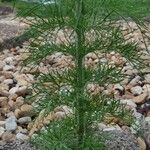
Eupatorium capillifolium
Dog fennel · French fennel · Sneeze Weed
Description
Source: leafsnapEupatorium capillifolium, or dogfennel (also written "dog fennel"), is a North American perennial herbaceous plant in the family Asteraceae, native to the eastern and south-central United States. It is generally between 50 cm and 2 meters tall with several stems that fork from a substantial base. The stems and base are covered in leaves so dissected that they resemble branching green threads coming out of the stem in fractal patterns. When crushed, the leaves and flowers smell rather unpleasant.
💡 Dog fennel is a tall, fuzzy weed that emits an unpleasant odor when crushed. Unfortunately, this poisonous plant can quickly spread across pastures and lawns. To effectively control dog fennel, it's best to mow it down before it grows taller than 15 cm or to dig it out completely. Some herbicides may also be effective in eradicating dog fennel.
🌳 Dog fennel is often overlooked despite being a common presence in nature, yet it has notable uses. It is employed in home remedies and also serves as a natural option for controlling mosquitoes. Drying and burning its leaves creates an effective mosquito deterrent, particularly useful in places where those insects carry disease. Additionally, dog fennel can provide natural pigments; its flowers can be converted into a high-quality dye for textiles.
🎭 Postponement, I/it will be postponed, autonomy
Care Guide
💧 Water Every 7 days
Dog fennel thrives when it receives consistent moisture, needing to be watered weekly to keep the soil slightly damp. While it is drought-tolerant, it truly flourishes with periodic rainfall. This resilient outdoor plant can adapt to seasonal rainfall patterns, making it suitable for a variety of garden environments.
How should I water my Dog fennel plant?
To properly water the Dog fennel plant, it is important to follow a few guidelines. Firstly, it is recommended to use filtered water that is at room temperature. Filtered water is preferable because tap water can contain harmful particles. Additionally, the water should be at room temperature or slightly warmer to avoid shocking the plant, as Dog fennel is accustomed to warm environments. It is advised to refrain from overhead watering, as this can cause complications with the foliage. Instead, it is best to gently pour the filtered room temperature water onto the soil until it is thoroughly soaked. This method benefits the plant by providing moisture to the roots, allowing them to spread and collect necessary nutrients from the soil.
What should I do if I give my Dog fennel too much or too little water?
Both overwatering and underwatering can harm your Dog fennel, but overwatering is more common. When this plant gets too much water, its stems and leaves can wilt and turn yellow. Overwatering for a long time can also cause diseases like root rot, mold, and mildew, which can kill the plant. Underwatering is less likely for Dog fennel because it can tolerate drought. However, it can still happen, and if it does, the leaves may become brittle and brown. It's important to identify the signs of overwatering early when taking care of your Dog fennel. Some diseases caused by overwatering, like root rot, may not be fixable if you wait too long. If you notice early signs of overwatering, reduce your watering schedule immediately. Also, check the soil where your Dog fennel is growing. If it drains poorly, replace it with a loose, well-draining potting mix. If you see signs of underwatering, simply water more regularly until the signs disappear.
How often should I give water to my Dog fennel plant?
If your Dog fennel is in a pot, the most precise way to determine if it needs water is to stick your finger into the soil. When the top two to three inches of soil feel dry, it's time to water. If you're growing Dog fennel outdoors in the ground, you can use the same method. When the top few inches of soil are dry, it's time to water. In the spring and early fall, you'll likely need to water about once a week using this method. However, during extremely hot weather, you may need to water twice or more per week. Interestingly, mature and well-established Dog fennel plants can surprisingly tolerate drought very well.
How much water does my Dog fennel require?
When watering your Dog fennel, make sure to water it generously. If the top two to three inches of soil are dry, give it a thorough watering so that the soil is soaked completely. Water until you see excess water flowing out from the drainage holes at the bottom of the pot. If there is no excess water draining, it means you haven't watered enough. However, be careful not to let water accumulate in the soil as it can harm the plant. On the other hand, if the water doesn't drain well through the pot, it may indicate poorly draining soil, which is not good for the plant's health. In outdoor conditions, one inch of rain per week will be sufficient for the plant.
How much water does Dog fennel need at different stages of growth?
The water needs of the Dog fennel can vary depending on its growth stages. In the first few years or after transplanting, more water is needed as the plant focuses on developing new roots. These roots require extra moisture for optimal growth. As the Dog fennel matures, it will require less water. Additionally, during the bloom period, when flowers are developing, the plant may require more water to support this process.
☀️ Light Full sun
Dog fennel performs optimally with clear, unblocked sunlight for most of the day, though it can also adjust to environments where the sun is obscured for part of the day. Plenty of light supports its healthy development. Both insufficient and excessive sunlight can impact the plant's well-being and growth cycle. Its native habitat presents similar light conditions.
What are the sunlight requirements for Dog Fennel?
Dog Fennel requires full sun, defined as over 6 hours of sunlight per day, but can also grow in partial sun, which is about 3-6 hours of sunlight daily. It's vital to observe how sunlight moves through your garden to find spots that offer the optimal balance of light and shade, ensuring the plant's health and happiness. In its natural habitat, Dog Fennel thrives under conditions of unobstructed solar exposure for most of the day, though it can adapt to some shade. Adequate light is crucial for its growth, and deviations from its ideal sunlight exposure may impact its well-being and growth cycle.
How can artificial lighting be used for Dog Fennel indoors?
For indoor Dog Fennel plants, or when natural sunlight is insufficient, artificial lighting is a critical alternative to promote healthy growth. Using the correct type of artificial light, such as LED lights, can provide the specific wavelengths your plants need. For full sun plants, 30-50W/sq ft of artificial light is recommended; for partial sun, 20-30W/sq ft; and for full shade, 10-20W/sq ft. Place the light source 12-36 inches above the plant, simulating natural sunlight distance, and ensure it receives 8-12 hours of light per day to mimic natural daylight hours.
What are the symptoms of light deficiency or excess in Dog Fennel?
Symptoms of light deficiency in Dog Fennel include smaller new leaves, leggy or sparse growth, faster leaf drop, slower or halted new growth, lighter-colored new leaves, and chlorosis (yellowing leaves). On the other hand, symptoms of excessive sunlight exposure include sunscald, which appears as pale or necrotic spots on leaves or stems, leaf curling as a defense against water loss, wilting due to increased transpiration, and leaf scorching characterized by brown or crispy leaf edges.
How can I address the lighting needs of my Dog Fennel?
To address the lighting needs of Dog Fennel, indoor plants should be moved gradually to a sunnier location until they receive at least 6 hours of direct sunlight daily, utilizing a south-facing window for maximum exposure. For large or immobile plants, consider supplementing with artificial lighting for at least 8 hours a day. For outdoor plants, move them gradually to sunnier spots to prevent sunburn, starting with partial shade and increasing exposure each week. If trees or structures obstruct sunlight, prune or adjust them to improve light access. For smaller plants, consider transplanting during their dormant period to a location with more sunlight and good drainage.
🌡️ Temperature 10–35°C
Dog fennel's natural growing conditions are within a temperature range of 10 to 35 ℃ (50 to 95 ℉). It prefers temperatures in this range and can tolerate fluctuations but cannot withstand extreme heat or cold. In colder seasons, it may need protection from frost.
What is the native growth environment for Dog Fennel?
Dog Fennel, scientifically known as Eupatorium capillifolium, thrives in its native growth environment with temperatures ranging from 10 to 35°C (50 to 95°F). It is well-adapted to handle temperature fluctuations within this range but may struggle in extreme heat or cold. Although Dog Fennel has strong cold resistance and does not usually require special frost protection measures, it's important to safeguard it when winter temperatures drop below its tolerance limit. To protect the plant during colder seasons, especially if temperatures are expected to fall below the growth limit, applying a layer of soil or straw for insulation can help. Another tip for cold protection is to water the plant abundantly before the first freeze of autumn, ensuring the soil remains moist and better prepared for winter and early spring conditions.
How does Dog Fennel react to low and high temperatures?
Dog Fennel shows different reactions to temperature extremes. When exposed to temperatures below its minimum suitability range, the plant remains cold-tolerant but best performance is observed above this minimum threshold. In winters, keeping Dog Fennel above its tolerable minimum temperature is crucial. If temperatures drop below this limit, you might not notice immediate changes, but there could be a decrease in the plant's ability to sprout in spring or it might not sprout at all. The solution in spring is to remove any parts of the plant that fail to sprout. Conversely, during high temperatures, particularly above the plant's maximum suitable level, the leaves may lighten, curl, become prone to sunburn, or in severe cases, the plant might wilt and dry out. To combat this, trim sunburned or dried parts, relocate the plant to a shaded area or use a shade cloth to protect it from intense midday and afternoon sun. Additionally, keeping the soil moist is crucial, so watering in the morning and evening is recommended.
💨 Humidity
🪴 Soil 6-7
🌱 Fertilizer
One application of fertilizer in spring is typically enough for Dog fennel, although repeated feedings can maximize growth. Apply fertilizer every month to six weeks. Fertilization improves the leaves' appearance and function, encouraging even color and a healthy texture. It also promotes root development and nutrient uptake, supporting the plant's long-term health.
🪴 Pot & Repot Every 12 months
For dog fennel to thrive in pots, it needs excellent drainage. This helps maintain the right moisture levels and prevents root rot.
✂️ Pruning
Dog fennel has fine foliage and grows quite tall. It benefits from pruning between early and late spring. To promote healthy new growth and maintain its shape, cut the stems to half their height after the frost, and remove any damaged branches. For detailed pruning techniques, refer to reliable horticultural resources.
🌿 Propagating
🐛 Diseases & pets
☠️ Toxicity
Characteristics
- Plant Type
- Herb
- Life Cycle
- Perennial
- Genus
- Eupatorium
- Family
- Asteraceae
- Hardiness Zone
- 6-9
- Mature Height
- 0.49 m to 2.13 m
- Mature Spread
- 30 cm to 61 cm
- Leaf Color
- Green
- Leaf Type
- Deciduous
- Flower Color
- White
- Flower Size
- 0.20 cm to 0.25 cm
- Bloom Time
- Early summer, Mid summer
- Planting Time
- Spring, Summer
- Harvest Time
- Mid summer, Late summer, Early fall
- Native Area
- Bahamas