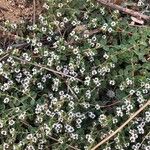
Euphorbia albomarginata
Rattlesnake weed · White-margin Broomspurge · Whitemargin sandmat · Whitemargin spurge · White-margin sandmat
Description
Source: leafsnapEuphorbia albomarginata, commonly known as snow on the mountain, is a herbaceous perennial plant that belongs to the Euphorbiaceae family. Native to North America, it thrives in a variety of habitats, including prairies, meadows, and open woodlands. The plant typically reaches a height of up to 2 feet and has a spreading growth habit. Its green leaves are edged with white margins, giving the plant a distinctive and attractive appearance. Although the flowers of Euphorbia albomarginata are small and inconspicuous, they are surrounded by showy white bracts that resemble petals, adding to its visual appeal. Easy to grow, Euphorbia albomarginata thrives in full sun or partial shade, provided the soil is well-drained. Once established, it is drought-tolerant but will benefit from occasional watering during extended dry periods. However, the sap of Euphorbia albomarginata contains toxic compounds that may cause skin irritation or allergic reactions in some individuals. Care should be taken when pruning or handling the plant to avoid contact with the sap. In summary, Euphorbia albomarginata is an attractive ornamental plant well-suited for rock gardens and mixed borders. Its striking foliage and low maintenance requirements make it a desirable addition to many landscapes.
Care Guide
💧 Water Every 7 days
Rattlesnake weed thrives in dry conditions, needing very little extra watering and low humidity. For optimal health, it should be watered once a week. This drought-resistant plant prefers well-draining soil to avoid root rot during its growing season.
☀️ Light Full sun
Rattlesnake weed prefers habitats with ample sunlight, though it can persist in areas with somewhat reduced light. Both excessive and insufficient light can impede its growth, causing problems like yellowing or wilting. Because of the environmental conditions in its native range, it has evolved to tolerate a wide variety of sunlight exposure levels.
🌡️ Temperature 20–35°C
Rattlesnake weed comes from environments where temperatures typically range from 68 to 95°F (20 to 35°C). This plant thrives under those conditions, and any necessary adjustments should reproduce that temperature range as seasons change.
💨 Humidity
🪴 Soil 6-7
🌱 Fertilizer
A single fertilizer application in spring is generally enough for Rattlesnake weed, although multiple feedings can help maximize growth. Feed every month to every month and a half. Fertilization improves leaf appearance and function, helping maintain even color and a healthy texture. It also encourages root development and enhances nutrient uptake for long-term plant health.
🪴 Pot & Repot
✂️ Pruning
Rattlesnake weed is a low-growing perennial characterized by its leaves with white edges. To keep the plant healthy and attractive, it's best to prune it from early to late spring. Pruning helps remove dead stems, improve flowering, and maintain the plant's shape. Regular trimming also promotes airflow and prevents overcrowding, enhancing both its ornamental appeal and overall health.
🌿 Propagating
🐛 Diseases & pets
☠️ Toxicity
Characteristics
- Plant Type
- Herb
- Life Cycle
- Perennial
- Genus
- Euphorbia
- Family
- Euphorbiaceae
- Hardiness Zone
- 9-10
- Mature Height
- 1 cm
- Mature Spread
- 30 cm
- Leaf Color
- Green, White
- Leaf Type
- Semi-evergreen
- Flower Color
- White
- Flower Size
- 0.18 cm
- Bloom Time
- All year round
- Planting Time
- Spring, Summer, Autumn
- Harvest Time
- All year round
- Native Area
- Mexico