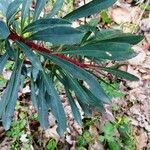
Euphorbia amygdaloides
Wood Spurge · Greater Honeywort · Laptele câinelui (RO) · Шумска млечика (RS)
Description
Source: leafsnapEuphorbia amygdaloides, commonly known as wood spurge, is a perennial plant belonging to the Euphorbiaceae family. Native to Europe, it thrives in woodlands, meadows, and hedgerows. The plant typically grows up to 60 cm in height and has a bushy appearance with dark green leaves arranged alternately along the stem. The leaves are oval-shaped with pointed tips and slightly wavy edges. The flowers of Euphorbia amygdaloides, though small, are numerous and form clusters at the top of each stem. They feature yellow-green petals surrounding smaller greenish-yellow flowers in the center. The flowering period extends from April to June. Euphorbia amygdaloides is an easy-to-grow plant that prefers well-drained soil and can thrive in both partial shade and full sun. It can be propagated by division or by taking cuttings from mature plants. The sap of Euphorbia amygdaloides contains toxic compounds that can cause skin irritation or allergic reactions if handled improperly. Therefore, care should be taken when pruning or managing the plant. In traditional medicine, extracts from this plant have been used for their anti-inflammatory properties and to treat skin conditions such as warts and eczema. Overall, Euphorbia amygdaloides is an attractive ornamental plant with unique foliage and vibrant yellow-green flowers. It adds interest to any garden setting while also offering medicinal properties when used properly under the guidance of medical professionals.
🌳 Aside from its ornamental appeal, wood spurge is seldom recognized for its potential in eco-dyeing. The complex compounds in wood spurge can be used to create dyes. This use could be an unexplored opportunity for sustainable textile production, linking the fashion industry with traditional botanical knowledge in a novel way. Recent studies have emphasized the potential of plant-derived dyes as alternatives to synthetic ones, identifying wood spurge as a potential candidate.
Care Guide
💧 Water Every 7 days
Wood spurge prospers in environments with dappled sunlight and moist soil. It prefers consistent moisture but can withstand short dry spells. To encourage lush foliage, water it weekly. Although ideal for outdoor cultivation, wood spurge also benefits from natural rainfall. Being an evergreen, it retains its vibrant green appearance in a range of climates.
How should I water my Wood spurge plant?
To properly water the Wood spurge plant, it's best to use filtered water at room temperature. Tap water may contain harmful particles, so filtered water is preferred. The reason for using room temperature water is that the Wood spurge is accustomed to warm conditions and cold water can be a shock to its system. It's also important to avoid overhead watering as it can cause issues with the foliage. Instead, you should apply the filtered room temperature water directly to the soil until it becomes thoroughly moistened. This helps to nourish the roots and aids in their spread through the soil, allowing them to collect the necessary nutrients.
What should I do if I give my Wood spurge too much or too little water?
Overwatering is a more common issue than underwatering for Wood spurge. When this plant gets too much water, its stems and leaves wilt and turn yellow. Over time, overwatering can cause diseases like root rot, mold, and mildew, which can be fatal to the plant. Underwatering is less common, but can still happen. When Wood spurge is underwatered, the leaves become brittle and brown. It is important to notice signs of overwatering early to prevent irreversible damage. If you see these signs, reduce your watering schedule and check the soil drainage. If it drains poorly, replace it with a well-draining potting mix. Conversely, if your Wood spurge is not getting enough water, simply increase your watering frequency until the signs improve.
How frequently should I water my Wood spurge plant?
If your Wood spurge is in a pot, the easiest way to know if it needs water is to stick your finger in the soil. If the top two to three inches of soil are dry, it's time to water it. If your Wood spurge is planted outside, you can use the same method. When the top few inches of soil are dry, it's time to water. Typically, in spring and early fall, you'll need to water about once a week. In very hot weather, you may need to water twice a week or more. However, mature Wood spurge plants are quite resilient and can withstand periods of drought.
How much water does my Wood spurge plant require?
To water your Wood spurge effectively, it is important to give the plant plenty of water. Make sure that the first two to three inches of soil are dry before watering. When you water, ensure that you thoroughly soak the soil. The goal is for the excess water to flow through the drainage holes at the bottom of the pot. It is not ideal if you don't see the water draining, as this could mean you haven't watered enough. However, you also don't want the water to build up in the soil, as this can harm the plant. If you notice that water is not draining properly, it could be due to poorly draining soil, which is not good for the plant's health. If your Wood spurge is kept outside, 1 inch of rain per week should be enough water.
How do I water my Wood spurge at different growth stages?
The water needs of the Wood spurge can vary depending on its growth stages. When your Wood spurge is young or has just been transplanted, it requires more water than usual. This is because it is focused on developing new roots to support future growth, which require extra moisture. However, as your Wood spurge matures after a few seasons, it will require less water. Another stage where it may require more water is during the blooming period, as flower development consumes a significant amount of moisture.
☀️ Light Partial sun
Wood spurge prefers locations with moderate sunlight, though it can withstand brighter sun. It originates from semi-shaded forests where sunlight filters through the trees. Too much sun can scorch the leaves, while too little can produce weak growth.
What are the sunlight requirements for Wood spurge?
Wood spurge requires partial sun, which means about 3-6 hours of sunlight, or full sun, meaning above 6 hours of sunlight daily. Observing how sunlight moves through your garden allows you to choose spots that offer a good balance of light and shade, ensuring your plants thrive. Wood spurge originally grows in semi-shaded forests, where it receives filtered sunlight. It can endure stronger sun but too much direct exposure may cause leaf scorching, while too little sunlight leads to weak growth.
How can artificial lighting support indoor Wood spurge plants?
Indoor Wood spurge plants require adequate lighting, especially when natural sunlight is insufficient. Artificial lighting, such as LED lights which can be tailored to provide specific wavelengths needed by the plants, is a great solution. For full sun plants, 30-50W/sq ft is needed; partial sun plants require 20-30W/sq ft; and full shade plants need 10-20W/sq ft. The light source should be placed 12-36 inches above the plant, mimicking natural sunlight as closely as possible, and should be provided for 8-12 hours per day.
What symptoms indicate insufficient sunlight for Wood spurge?
Symptoms of insufficient sunlight in Wood spurge include smaller new leaves, leggy or sparse growth, faster leaf drop, slower or no new growth, and lighter-colored or pale new leaves. Excessive sunlight can result in chlorosis, where leaves turn yellow due to the breakdown of chlorophyll, sunscald with damaged plant tissues, leaf curling to minimize water loss, wilting from increased transpiration, and leaf scorching with brown, dry edges on leaves. These symptoms highlight the plant's struggle with inappropriate light levels.
What solutions can help Wood spurge adapt to light conditions?
To help Wood spurge adapt to light conditions, gradually move them to sunnier spots each week for either indoor or outdoor plants, ensuring they receive the appropriate amount of sunlight without sudden changes. If moving the plant is not feasible, consider providing additional light with desk, ceiling, or professional grow lights for at least 8 hours daily. For ground plants, reduce obstructions by pruning trees or relocate the plant during its dormant period to a sunnier location with good drainage. It's important to note that parts of the plant affected by light deficiency may not recover, but new growth should be healthy with adjusted light exposure.
🌡️ Temperature 10–35°C
Wood spurge is native to areas with moderate climates where temperatures range from 68 to 95 °F (20 to 35 ℃). It prefers these warmer conditions and may need temperature adjustments during the colder seasons.
What are the ideal temperature conditions for Wood Spurge?
Wood spurge, or Euphorbia amygdaloides, thrives in moderate climates, favoring temperatures between 68 to 95 °F (20 to 35 °C). These conditions are preferable for the plant, indicating that it enjoys warmer environments. While wood spurge has a strong resistance to cold and doesn't usually require special frost protection measures during winter, precautions are advised when temperatures are expected to drop below -25°C. In such cases, it's beneficial to protect the plant by covering it with soil or straw. Additionally, ensuring the soil is moist before the first freeze in autumn can help the plant avoid drought and water scarcity throughout the winter and early spring.
How does low temperature affect Wood Spurge, and what measures should be taken?
Wood spurge is known for its cold tolerance, ideally keeping above 0°C during winter months. However, exposure to temperatures below -25°C can lead to potential issues with the plant, such as a decrease in sprouting or a complete lack of sprouting come springtime. Despite being cold-tolerant and not displaying noticeable changes in winter, the decrease in sprouting suggests that sustained very low temperatures can impact its growth cycle. The recommended solution in spring for any parts of the plant that failed to sprout is to simply remove them.
How does high temperature affect Wood Spurge, and what steps can be taken?
In the warmer months, it's crucial to ensure that Wood spurge's exposure to heat is regulated, keeping it below 35°C. Beyond 38°C, the plant may exhibit stress signs such as lighter leaf colors, curling, susceptibility to sunburn, and in severe cases, wilting and complete drying out. To mitigate these issues, any sunburned or dried-up parts of the plant should be trimmed away. Employ strategies like moving the plant to a shade, particularly to avoid midday and afternoon sun, or using a shade cloth to protect it. Additionally, maintaining soil moisture with watering routines in the morning and evening can be beneficial.
💨 Humidity
🪴 Soil 6-7
🌱 Fertilizer
The best time to fertilize a Wood spurge is in early spring, as it comes out of dormancy and begins active growth. Fertilizing supplies essential nutrients for healthy development. Although Wood spurge has fairly low fertilizer needs, applying fertilizer once a year can improve its survival and encourage better, longer-lasting flowers.
Why is it important to put fertilizer on my Wood spurge?
Fertilization is important for the Wood spurge because it provides key nutrients that help the plant grow both above and below ground. Although the Wood spurge has relatively low fertilization needs and can sometimes survive without it, annual fertilization is highly beneficial. It helps the plant stay healthy and may result in better and longer-lasting flowers. Therefore, those who want their Wood spurge to look its best should regularly fertilize it.
When should I fertilize my Wood spurge plant?
The best time to fertilize a Wood spurge is late winter to early spring when it is coming out of dormancy and starting to grow actively. Fertilizing during this time helps promote healthy growth and gives the plant a strong start for the season. While it is generally recommended to fertilize in early spring, it is also acceptable to fertilize in the fall. However, it is not recommended to feed a Wood spurge during the summer or winter.
When is not a good time to fertilize my Wood spurge?
To ensure proper care for your Wood spurge, it is important to only fertilize it during the late winter and early spring. This plant has low fertilization needs, so a single annual feeding during this time is sufficient. It is crucial to avoid fertilizing throughout the spring, summer, and fall, as this can easily lead to overfertilization and its associated complications. The only exception to this rule is if you forgot to fertilize in the spring, in which case it is acceptable to feed the plant in the fall. Additionally, there is no need to fertilize the Wood spurge during the winter. During this dormant growth phase, the plant does not produce new growth, making fertilization during most of the winter inadvisable.
What kind of fertilizer does my Wood spurge plant require?
When choosing a fertilizer for Wood spurge, most general-purpose fertilizers with a balanced amount of three main plant nutrients will work well. However, some nutrient blends can be even more beneficial. For example, higher levels of phosphorus are believed to promote stronger roots and better flowers, making it a good choice for flowering plants like Wood spurge. Whether in granular or liquid form, as long as there are sufficient nutrients present, either can be used. Additionally, organic options such as compost, manure, and similar materials can greatly improve the soil and create a healthy growing medium for Wood spurge.
How can I feed my Wood spurge?
To fertilize a Wood spurge, the most common method is to use granular or pellet fertilizer applied to the soil around the plant. It's important to remember that the best time to fertilize is when the plant is transitioning from its dormant winter phase to active growth. In early spring, wait for the plant to start growing shoots before applying the fertilizer. Alternatively, some people prefer using liquid fertilizer, which should be diluted with water before use. Regardless of the fertilizer type, it's recommended to moisten the soil before, during, and after application.
🪴 Pot & Repot Every 12 months
✂️ Pruning
Wood spurge benefits greatly from pruning between early spring and late winter. This helps to shape the plant and remove any damaged growth. Key techniques involve cutting back stems and rejuvenating older plants. Regular pruning also improves air circulation and light penetration, which reduces the risk of disease. Be sure to use clean, sharp tools to prevent infections.
🌿 Propagating
🐛 Diseases & pets
☠️ Toxicity
The milky sap (latex) running throughout Euphorbia plants is toxic to people and animals both via skin contact and ingestion. The plants actually use the sap as a defense mechanism to prevent animals from feeding on it, and the sap has some antifungal and antibacterial properties.
Characteristics
- Plant Type
- Herb
- Life Cycle
- Perennial, Annual
- Genus
- Euphorbia
- Family
- Euphorbiaceae
- Hardiness Zone
- 6-9
- Mature Height
- 76 cm
- Mature Spread
- 23 cm to 46 cm
- Leaf Color
- Green, Red, Purple
- Leaf Type
- Evergreen
- Flower Color
- Yellow
- Flower Size
- 2.54 cm
- Bloom Time
- Mid spring, Late spring, Early summer
- Planting Time
- Spring, Autumn
- Harvest Time
- Early summer, Mid summer
- Native Area
- Africa, Asia, North America, South America