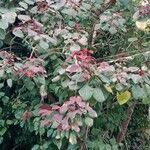
Euphorbia cotinifolia
Tropical smokebush · Caribbean copperplant · Caribbean cooper plant · Mexican shrubby spurge · Red spurge
Description
Source: leafsnapEuphorbia cotinifolia is a broadleaf red shrub native to Mexico and South America. Treated as a shrub, it reaches 10 to 15 ft (3.0 to 4.6 m) but can be grown as a tree reaching 30 ft (9.1 m). Small white flowers with creamy bracts bloom at the ends of the branches in summer. The purplish stems, when broken, exude a sap that is a skin irritant.The scientific name of the plant comes from the words cotinus meaning "smoketree" and folia meaning "leaf". Common names for the species include smoketree spurge, tropical smoke bush, Caribbean copper plant, and Mexican shrubby spurge.
🌳 Although the Caribbean copper plant is mainly valued for its ornamental qualities, particularly its striking reddish-purple leaves, there is cultural and artisan potential in its appearance. Indigenous communities may have used the plant's vivid pigments for body painting or fabric dyeing, but such uses are not widely documented. In modern contexts, it can inspire artists and designers and could potentially lead to the extraction of natural dyes for eco-friendly fashion. However, the absence of evidence in current literature means these applications remain largely speculative and invite further exploration.
Care Guide
💧 Water Every 7 days
The Caribbean copper plant, which is native to tropical regions, thrives in environments with high moisture and humidity. To keep the soil moist, water it every two weeks, but be careful to avoid waterlogging. When grown indoors, regularly misting the leaves helps maintain the necessary humidity levels. Since this plant is evergreen, it is important to consistently monitor the soil moisture throughout the year, even during periods of slower growth.
☀️ Light Partial sun
The Caribbean copper plant prefers abundant sunlight, absorbing intense rays to support its lush growth. Too little light causes stunted development and leaden foliage, while too much can produce temporary discoloration. Native to sun-rich habitats, it has adapted to thrive in those bright conditions.
What are the sunlight requirements for plants?
Plants generally need varying degrees of sunlight to thrive. Full sun plants require above 6 hours of sunlight per day, while partial sun plants need about 3-6 hours of sunlight. It's important to monitor how sunlight moves through your garden throughout the day to find the ideal spots for your plants, balancing light and shade to ensure their health and happiness.
Why is sunlight important for Caribbean copper plants?
Sunlight is crucial for Caribbean copper plants, enhancing their growth and foliage health. These plants originate from sun-rich environments and have adapted to absorb a significant amount of sunlight. Insufficient sunlight can lead to stunted growth and dull foliage, while too much sunlight might cause temporary discoloration. Artificial lighting, such as LED lights, can be used to supplement natural light, especially indoors or during less sunny periods. For a healthy growth, full sun plants might need 30-50 W/sq ft of artificial light, partial sun plants 20-30 W/sq ft, and full shade plants 10-20 W/sq ft.
What are the symptoms of insufficient sunlight in Caribbean copper plants?
Caribbean copper plants may exhibit various symptoms if they don't receive enough sunlight. These include smaller new leaves, leggy or sparse growth, faster leaf drop, halted growth, lighter-colored or yellow leaves (chlorosis), and physical damage like sunscald, leaf curling, wilting, and leaf scorching. Each of these symptoms indicates that the plant isn't receiving the adequate amount of sunlight it needs to perform photosynthesis efficiently and maintain healthy growth.
What solutions can help Caribbean copper plants get adequate sunlight?
To ensure Caribbean copper plants receive enough sunlight, indoor plants can be gradually moved closer to sunlight sources, aiming for at least 6 hours daily, or supplemented with artificial lighting for at least 8 hours daily. Outdoor plants should also be gradually introduced to sunnier spots to avoid sunburn. If natural sunlight is blocked by obstacles, consider pruning obstructions or transplanting smaller plants during their dormant period to sunnier locations with good drainage. It's crucial to adjust these solutions based on the specific needs and conditions of your plant to promote healthy new growth.
🌡️ Temperature 20–37.8°C
Caribbean copper plant is native to the Caribbean, where temperatures generally range between 68 and 100 °F (20 and 38 ℃), which are ideal for its growth. In colder seasons, consider moving it indoors or using a heat lamp to maintain the temperature.
What is the native environment of the Caribbean copper plant?
The Caribbean copper plant, scientifically known as Euphorbia cotinifolia, thrives in its native Caribbean environment, where the temperatures generally range between 68 to 100 °F (20 to 38 ℃). This range is ideal for its growth, indicating its preference for warm climates.
How should I care for a Caribbean copper plant in colder seasons?
During the colder seasons, it's crucial to protect the Caribbean copper plant from cold temperatures as it is extremely heat-loving. Any exposure to cold can harm the plant. You should consider moving it indoors or using a heat lamp to maintain the temperature. In the autumn, outdoor-grown Caribbean copper plants should be brought indoors and placed near a bright window, though not too close to heaters to avoid overheating. Keeping the temperature above the plant's minimum tolerable growth temperature during winter supports its health. However, temperatures nearing its limit for cold tolerance are detrimental.
What are the signs of temperature stress in Caribbean copper plants?
Signs of temperature stress in Caribbean copper plants include a change in leaf color to lighter shades when temperatures fall below its growth limit or exceed its maximum tolerable summer temperature. Specifically, cold temperatures can cause leaves to lighten, then gradually turn brown or black after frost damage, accompanied by wilting and drooping. For high temperatures, exceeding the maximum tolerable limit can make the leaves' color lighter and increase susceptibility to sunburn.
How can I manage temperature stress in Caribbean copper plants?
Managing temperature stress in Caribbean copper plants involves several strategies. For cold stress, trim off the frost-damaged parts and move the plant to a warmer indoor setting immediately for protection. Place it near a south-facing window for ample sunlight but avoid direct exposure to heaters or air conditioning vents to prevent air dryness. For heat stress, trim sunburned and dried parts, relocate the plant to a shaded area during the midday and afternoon sun, and water the plant in the morning and evening to maintain soil moisture.
💨 Humidity
🪴 Soil
🌱 Fertilizer
The Caribbean copper plant needs very little fertilizer to grow. Many varieties do well in poor, well-drained soils. You should only apply fertilizer if you notice the lower leaves turning yellow, which is a sign of nutrient deficiency. In such cases, use a half-strength liquid fertilizer to support the plant for several months.
🪴 Pot & Repot Every 12 months
✂️ Pruning
The Caribbean copper plant, known for its vibrant copper-colored foliage, thrives when pruned in the winter. This pruning encourages new growth and helps maintain its shape. Be sure to remove any dead branches and thin out crowded areas to improve air circulation. Regular pruning not only promotes a healthier plant but also enhances its striking appearance in any garden.
🌿 Propagating
🐛 Diseases & pets
☠️ Toxicity
Characteristics
- Plant Type
- Shrub
- Life Cycle
- Perennial
- Genus
- Euphorbia
- Family
- Euphorbiaceae
- Hardiness Zone
- 9-11
- Mature Height
- 3.05 m to 9.14 m
- Mature Spread
- 11 cm to 18 cm
- Leaf Color
- Red, Green, Brown
- Leaf Type
- Evergreen
- Flower Color
- White, Yellow, Cream
- Flower Size
- 0.51 cm to 1.02 cm
- Bloom Time
- Late spring, Early summer, Mid summer
- Planting Time
- Spring
- Harvest Time
- Mid summer, Late summer