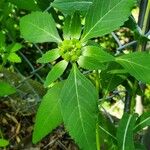
Euphorbia davidii
Toothed spurge · Wild poinsettia · David's spurge · Milkweed
Description
Source: leafsnapEuphorbia davidii is a perennial succulent belonging to the Euphorbia family. Native to China, this plant can grow up to 60 cm in height. Its striking appearance is characterized by blue-green leaves arranged in whorls around the stem, creating a spiral-like effect. The flowers of Euphorbia davidii are small and yellow-green, appearing in clusters at the top of the stem during late spring and early summer. The plant thrives in well-drained soil and full sun exposure, making it an excellent choice for rock gardens or as an accent plant. Euphorbia davidii is also known for its medicinal properties. Traditionally, its latex has been used to treat skin diseases, warts, tumors, and other ailments. However, it is important to note that all parts of this plant contain toxic sap. Contact with the sap can cause skin irritation and ingestion or contact with the eyes can lead to serious harm, including blindness. Therefore, proper precautions should be taken when handling this beautiful yet hazardous succulent.
Care Guide
💧 Water Every 7 days
David's spurge is native to arid regions and is highly drought-tolerant. To mimic its natural environment, it thrives best with weekly watering. Although it is typically grown outdoors, David's spurge can also do well in containers if you manage the watering carefully to reflect the sporadic rainfall of its native habitat.
☀️ Light Full sun
David's spurge comes from sunny, open habitats and performs best in full sun. It will tolerate partial shade but favors direct sunlight for optimal growth. This plant, which can be annual or biennial, is noted for its sun-loving habit.
What are the sunlight requirements for David's spurge?
David's spurge thrives in full sun, requiring more than 6 hours of sunlight daily for optimal growth. It can also tolerate partial sun, which means about 3-6 hours of sunlight each day. It's crucial to observe the movement of sunlight through your garden to choose locations that provide the right balance of light and shade, ensuring your plants grow happily. Originally from bright, open environments, David's spurge prefers direct sunlight but can manage with partial sun.
How can artificial lighting support David's spurge's growth indoors?
When natural sunlight is insufficient for indoor plants like David's spurge, especially during winter or in less sunny spaces, artificial lights can be a crucial solution. Artificial lights provide adequate lighting for optimal growth, promoting faster and healthier development. LED lights are recommended because they can be customized to offer the specific wavelengths of light that plants need. Full sun plants require 30-50W/sq ft, partial sun plants need 20-30W/sq ft, and full shade plants should get 10-20W/sq ft of artificial light. The light source should be placed 12-36 inches above the plant to mimic natural sunlight, and plants generally need 8-12 hours of light per day.
What are the symptoms of inadequate light for David's spurge?
When grown indoors with inadequate light, David's spurge may exhibit small, mature leaves, leggy or sparse growth, faster leaf drop, slower or no new growth, and light-colored new leaves. Chlorosis, or the loss of green color and turning yellow of leaves due to excessive sunlight, and sunscald, where leaves or stems are damaged by intense sunlight exposure, are conditions that can affect the plant. Leaf curling, as a defense mechanism against extreme sunlight, wilting due to water loss through transpiration, and leaf scorching characterized by brown, dry edges on leaves, can also occur.
What solutions can address David's spurge light deficiency symptoms indoors and outdoors?
For plants like David's spurge experiencing light deficiency indoors, gradually increasing sunlight exposure to at least 6 hours daily by moving them closer to a south-facing window or using artificial plant grow lights is recommended. Outdoors, plants should be gradually moved to sunnier areas to adapt without risk of sunburn. For grounded plants, reducing obstructions such as pruning trees can allow more sunlight to reach the plants. Transplanting smaller plants during their dormant period to locations with ample sunlight and good drainage can also help. It's important to note that parts of the plant affected by insufficient sunlight may not recover, but new growth following increased light exposure will be healthy.
🌡️ Temperature 5–35°C
David's spurge can tolerate a wide range of temperatures, but its distribution may still be constrained by different combinations of moisture and heat. It performs best in warm summer climates with sufficient rainfall or watering. Extended periods of cloudy and rainy weather, as well as prolonged high temperatures, can increase the chance of David's spurge dying. In winter, proper protection from cold can improve the plant's survival rate.
What kind of temperature conditions can David's spurge adapt to?
David's spurge is quite adaptable to a wide range of temperature conditions, making it a resilient plant. Despite its adaptability, its distribution is affected by various combinations of water and heat conditions. It shows optimal growth in warm climates, especially during the summer, provided that there is adequate rainfall or watering. Extreme weather conditions, such as prolonged periods of cloudiness, rain, or high temperatures, can, however, increase the risk of the plant dying. In the winter, it has a strong cold resistance and typically doesn't require special frost protection measures. But in exceptionally cold winters, where temperatures are expected to drop below -30°C, it is crucial to provide added protection with soil or straw coverings. Watering the plant abundantly before winter sets in helps the soil retain moisture and protects the plant from drought and water scarcity during the colder months.
How does low temperature affect David's spurge, and what are the solutions?
David's spurge is quite tolerant of cold conditions and generally thrives when the temperature remains above 20°C. During winter, it's important to ensure that temperatures do not fall below 0°C to avoid damaging the plant. When temperatures plummet below -30°C, the plant may not show immediate damage but can experience reduced sprouting or fail to sprout at all come spring. The solution in these cases is to wait until spring and then remove any parts of the plant that have failed to sprout, allowing healthy new growth to come through.
What should be done if David's spurge is affected by high temperatures?
David's spurge tends to struggle with high temperatures, particularly when the mercury climbs above 35°C during the summer. Symptoms of heat stress include leaves becoming lighter in color, curling, prone to sunburn, and, in severe cases, the plant may wilt and dry out completely. To mitigate these effects, trim away any sunburned and dried parts of the plant. It's also advisable to move the plant to a shaded location or use a shade cloth to protect it from the harsh midday and afternoon sun. Ensuring the soil is kept moist with watering in the morning and evening will also help the plant cope with the heat.
💨 Humidity
🪴 Soil 6-8
🌱 Fertilizer
David's spurge responds well to regular, light applications of fertilizer to encourage healthy leaf growth. Fertilize David's spurge about once a month during the summer months. Nitrogen is important for foliage, and adding nitrogen-rich sources helps David's spurge thrive.
🪴 Pot & Repot
✂️ Pruning
David's spurge is a fast-growing and resilient plant. To promote its health and shape, prune it from early to late spring. Start by removing any dead stems, then thin out dense areas to improve air circulation. Be careful not to over-prune. Using clean tools can help prevent disease and promote healing.
🌿 Propagating
🐛 Diseases & pets
☠️ Toxicity
Characteristics
- Plant Type
- Herb
- Life Cycle
- Annual
- Genus
- Euphorbia
- Family
- Euphorbiaceae
- Hardiness Zone
- 4-10
- Mature Height
- 20 cm to 76 cm
- Mature Spread
- 20 cm to 40 cm
- Leaf Color
- Green, Dark Green
- Leaf Type
- Deciduous
- Flower Color
- White
- Flower Size
- 0.20 cm to 0.25 cm
- Bloom Time
- Summer, Fall
- Planting Time
- Spring, Summer, Autumn
- Harvest Time
- Late summer, Fall, Early winter