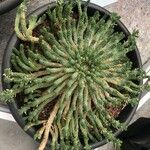
Euphorbia flanaganii
Medusa's Head · Flanagan's euphorbia
Description
Source: leafsnapEuphorbia flanaganii is a succulent plant that belongs to the Euphorbia family, native to South Africa and commonly known as the Medusa's Head plant due to its distinctive appearance. It features a thick, fleshy stem that grows upright and branches out into multiple stems, creating a dense cluster of cylindrical shapes. These stems are adorned with small, green leaves arranged in spirals around the stem. During the spring and summer months, the Medusa's Head plant produces small yellow flowers at the tips of its stems. However, it is primarily valued for its striking appearance rather than its flowers. Euphorbia flanaganii requires well-draining soil and ample sunlight to thrive. It can be grown both indoors and outdoors, provided it receives sufficient light exposure. A crucial consideration when handling this plant is its milky sap, which is released when the plant is cut or damaged. This sap can be toxic if ingested or if it comes into contact with skin or eyes, so appropriate precautions should be taken. Overall, Euphorbia flanaganii makes a remarkable addition to any succulent collection due to its unique shape and low maintenance requirements.
💡 Euphorbias are a large group of plants known for their diverse features. Most of these plants produce a milky sap that is both toxic and irritating. The Medusa plant, primarily native to the coastal regions of South Africa, was introduced to the Netherlands in the early 1700s.
Care Guide
💧 Water Every 7 days
The Medusa plant thrives in semi-arid environments and requires a careful balance of moisture. Water it every three weeks, allowing the soil to dry out between waterings. It is well-suited for indoor cultivation, where humidity levels can be controlled. During its dormancy period, reduce watering to mimic the natural dry seasons.
What do I do if I give my Medusa plant too much or too little water?
If you neglect to water your Medusa plant for a month or more, it may become thirst and show signs of damage. An underwatered Medusa plant will appear dull and wrinkled, and some parts may dry up, turn brown, and fall off. The soil will also be completely dried out. To remedy this, give the plant plenty of water by submerging the pot in water for 5-10 minutes until the soil feels moist on the surface. On the other hand, overwatering is dangerous for a Medusa plant and can lead to root rot, which prevents the roots from absorbing nutrients and water. Symptoms of overwatering include yellow, swollen, and translucent organs that may burst open. If left untreated, the plant may turn brown or black and lose its leaves easily. To address overwatering, change the growing conditions, improve air ventilation, and adjust the frequency of watering. Saving an overwatered plant can be difficult, but catching the problem early is key. Start by removing the plant from its pot and examining the roots and soil. Remove wet soil and rinse the roots with room-temperature water to remove any fungus. If root rot has developed, the roots will be dark brown or black, soft, mushy, or slimy. If most of the roots are affected, it may not be possible to save the plant. However, if only some roots are affected, you can remove the unhealthy roots, dip the healthy ones in a fungicide, and repot the plant in fresh soil. This can often lead to the plant's full recovery and new growth in the next growing season.
How many times should I water my Medusa plant?
Determining how often to water a Medusa plant does not have a fixed rule. The best approach is to check the soil and water only when it is completely dry. You can perform this check by either inserting your finger into the pot or using a moisture meter to assess the soil beneath the surface. If the plant is in a deep pot, you can also use a stick or chopstick for this purpose. If the soil feels even slightly damp, it is recommended to wait a few days before checking again. Generally, in summer, most people will need to water the Medusa plant approximately every two weeks, while in winter, once a month should suffice. However, there are various factors to consider that can influence the watering frequency. The following section outlines some of these factors to assist you in determining how often to water the Medusa plant.
What do I need to think about when watering my Medusa plant?
To properly care for your Medusa plant, you need to be aware of various environmental factors that affect its watering needs. These include the size of the container, type of soil used, temperature, and humidity levels. When selecting a container, it's essential to choose one with adequate drainage holes at the bottom. This allows excess water to escape the pot. Keep in mind that a smaller container will hold less moisture, requiring more frequent watering, while a larger pot will retain moisture for longer periods, needing less frequent watering. Avoid using an excessively large pot as it can lead to overwatering. When repotting, opt for a container that is only one size larger than the current one. Additionally, a shallow container is ideal since Medusa plants have shallow root systems. The watering frequency of your Medusa plant will also vary depending on the season. During winter, when the plant experiences slower growth and limited energy and water consumption, it will require less frequent watering. The cool winter air reduces water evaporation from the soil, keeping it moist for longer compared to the summer months. Climate also plays a role in your plant's watering needs. If you reside in a humid area with abundant rainfall, you will need to water your Medusa plant less frequently than in a dry, arid climate. It's important to note that even within the same geographical location, conditions can differ depending on the season and the use of indoor heating or air conditioning. If you have planted your Medusa plant in the ground, it generally doesn't require additional watering beyond what it receives naturally through precipitation and dew. However, during extended dry periods, occasional watering may be necessary. If you are growing the plant in a container, you can move it outside in suitable spring and summer temperatures and bring it indoors as temperatures begin to drop. Keep in mind that a potted Medusa plant kept outdoors will require more water due to increased sun exposure, even if it is placed in a shaded area.
How do I water a Medusa plant?
To water your Medusa plant effectively, it is best to fully soak it and then let it dry out before watering again. This plant can tolerate some drought, so it's okay to let it get quite dry before giving it more water. It's important to give it less water rather than too much. When watering, make sure to thoroughly soak the soil throughout the entire pot. Avoid pouring the water in just one spot, and instead, try to water evenly around the whole rim of the planter. The amount of water you should use depends on the size of your container and how well the soil absorbs water. Water the plant until it begins to drain out of the bottom drainage holes, and then ideally, leave the drained water in the saucer for about 20-30 minutes to soak into any remaining dry pockets of soil. Afterwards, discard any excess water in the saucer to prevent the soil from becoming waterlogged. Bottom-watering the Medusa plant is also an effective method, as it ensures that the soil becomes thoroughly moistened. This process involves placing the pot into a saucer of water and allowing the soil to soak up moisture through the drainage holes. You will know that the soil has absorbed enough water when the top layer feels moist. Bottom-watering may be a bit slower than top-watering, but it guarantees an even distribution of water throughout the pot. The natural habitat of the Medusa plant is relatively dry with sporadic rainfall that fully moistens the soil. You can replicate this by bottom-watering your plant when the soil is completely dry. Remember that giving the plant a deep soak is better than giving it frequent light watering.
☀️ Light Full sun
The Medusa plant thrives when exposed to direct sunlight. It's growth and vitality are driven by copious amounts of sun. Stemming from a habitat with abundant light, it is well adjusted to such conditions. However, it can wilt or develop sunburn if it gets too much sun, and grow poorly or lose its vitality if it does not get enough sunlight.
What are the sunlight requirements for a Medusa plant?
The Medusa plant, known botanically as Euphorbia flanaganii, thrives in conditions with ample sunlight. It requires full sun exposure of more than 6 hours daily to flourish. However, it can also grow in partial sun, which means about 3-6 hours of sunlight a day. It's essential to watch how sunlight moves through your garden and choose spots that provide a perfect balance of light and shade, ensuring the plants' happiness and health.
What are the important factors for the Medusa plant's growth?
The Medusa plant flourishes under a canopy of unobstructed light. Originating from an environment rich in sunshine, its growth and health are significantly influenced by this factor. While overexposure to sunlight can cause wilting or sunburn, insufficient light leads to sluggish growth and a loss of vigor. For indoor plants, artificial lighting becomes crucial during less sunny periods or in less sunny spaces, requiring 30-50W/sq ft for full sun plants, 20-30W/sq ft for partial sun plants, and 10-20W/sq ft for full shade plants. LED lights are recommended for customizing the specific wavelengths needed by your plants.
What symptoms indicate insufficient light exposure for a Medusa plant?
When Medusa plants receive suboptimal lighting, they may exhibit various symptoms, including smaller new leaves, leggy or sparse growth, faster leaf drop, slower or halted new growth, and lighter-colored new leaves. Leaves may develop chlorosis, turning yellow as chlorophyll breaks down, which impacts photosynthesis negatively. Sunscald, leaf curling, wilting, and leaf scorching are signs of light stress. These symptoms highlight the plant's struggle with inadequate light, impacting its overall health.
How can I address light-related issues for my Medusa plant?
To combat light deficiency or overexposure in Medusa plants, gradually increase sunlight exposure to at least 6 hours daily by moving the plant closer to a south-facing window or using artificial lights for indoors, particularly for large or immovable plants. For outdoor plants, avoiding sudden changes in light intensity is crucial to prevent sunburn. If obstructions block sunlight, consider pruning or transplanting smaller plants to sunnier locations during their dormant period, ensuring ample sunlight and good drainage. Note that while parts of the plant affected by insufficient sunlight may not recover, new growth will be healthy with appropriate light adjustments.
🌡️ Temperature 20–37.8°C
Originating from hot climates, the medusa plant grows optimally in temperatures between 68 and 100°F (20 to 38℃). During cooler seasons, create a favorable environment by keeping the temperature over 68°F (20℃).
What is the ideal temperature range for the Medusa plant?
The Medusa plant, also known as Euphorbia flanaganii, thrives best in warmer climates with temperatures ranging from 68 to 100°F (20 to 38°C). To ensure the plant's well-being, especially during colder seasons, it is crucial to maintain an environment where the temperature stays above 68°F (20°C). This heat-loving plant gradually stops growing and enters a dormant state in winter, requiring specific care to navigate through colder temperatures.
How should I care for my Medusa plant during winter?
In winter, when temperatures fall, the Medusa plant's care regimen should be adjusted to its dormant state. If the outdoor temperature drops below 0°C, it's important to move the plant indoors for cultivation. Place it near a south-facing window to maximize sunlight exposure. In the event of insufficient natural light, consider using supplemental lighting. Reduce or halt watering when the temperature is below 20°C to prevent root rot. For those grown outdoors, cease watering completely during low temperatures. Additionally, consider setting up a temporary greenhouse or use protective materials like plastic film or fabric to insulate your Medusa plant against the cold.
What should I do if my Medusa plant is damaged by low temperatures?
If your Medusa plant suffers from low-temperature damage, look out for signs of weakness, wilting, or root rot, especially when temperatures drop below -5°C. Mild frost damage may not show immediate symptoms, but the plant could wither gradually after a week. To assist the plant in recovery, trim off the frostbitten areas and inspect the roots for rot. If root rot is present, remove the affected parts, and you may need to propagate the plant through cuttings. Promptly move the plant to a warmer indoor setting, preferably near a south-facing window to ensure it receives enough sunlight, or use supplemental lighting if necessary.
How do I protect my Medusa plant from high temperatures?
During the summer, it's essential to keep the Medusa plant in conditions below 38°C to prevent overheating. High temperatures exceeding 43°C can halt the plant's growth, cause water loss, wilting, and increase susceptibility to sunburn. To aid recovery from sunburn or root rot, remove damaged parts of the plant and shield it from the harsh afternoon sunlight until it shows signs of recovery and starts growing again. For plants that have suffered from root rot, it is best to halt watering until new roots form.
💨 Humidity normal (40-60%)
This plant will thrive in moderate humidity, which is probably the level in your home. However, misting it a few times a week can be very beneficial. Make sure the room has good ventilation.
🪴 Soil 6-7
🌱 Fertilizer
When it comes to the Medusa plant, applying a light amount of fertilizer once or twice a year during its growth phase is adequate. Refrain from fertilizing in the dormant periods of winter and summer. After repotting, lower the fertilizer amount and hold off on fertilizing for a few months. Fertilization assists in healthy plant development and promotes flowering.
Why should I add fertilizer to my Medusa plant?
When caring for the Medusa plant, it's important to fertilize it to provide nutrients to the growing medium. While the plant does store water and nutrients, applying plant food during the growing season will help promote healthy growth. Additionally, fertilizing can also stimulate mature plants to produce blooms in the growing season.
When should I put fertilizer on my Medusa plant?
The Medusa plant requires a small amount of fertilizer during its growing season, only needing to be fertilized 1-2 times a year. It is recommended to fertilize in the spring and autumn, avoiding winter and summer when the plant is dormant. When repotting, be cautious of using too much fertilizer, and it's best to wait a couple of months before applying any.
When is it not a good idea to put fertilizer on my Medusa plant?
The Medusa plant, like other plants, has a period of dormancy where it stops growing. During the summer and winter months, it is best not to apply fertilizer. It is also recommended to avoid fertilizing for the first few months after repotting in the spring.
What kind of fertilizer does my Medusa plant need?
To fertilize your Medusa plant, it's recommended to use a liquid plant food made specifically for succulents and cacti. Dilute the fertilizer by mixing it with water at half-strength to prevent buildup in the soil. Apply the fertilizer to the base of the plant, making sure to water thoroughly and allow any excess moisture to drain from the container or seep into the ground.
How should I feed my Medusa plant?
When fertilizing a Medusa plant, you have the option of using either liquid plant food or granules. For the liquid plant food, make sure to dilute it to half-strength as directed on the packaging. Whether you choose granules or liquid, always apply the fertilizer to the soil. Cover the granules with a thin layer of soil and water, no matter which type of plant food you use.
🪴 Pot & Repot 2-3 years
During the hotter months, transplant the Medusa plant into a pot slightly more extensive than its existing one, which should have sufficient drainage. Utilize a soil mix that drains well, ideal for cacti or succulents. Be cautious with the plant's roots and caudex during the transplantation process. Following the repotting, hold off watering for approximately a week to avoid root decay. Position the plant in a sunlit area to encourage maximum growth.
✂️ Pruning
After blooming, the Medusa plant should be trimmed. This guarantees that fresh flowers and leaves develop at a consistent and even rate. In early spring, a little trimming may be done to remove any wilted or dry leaves.
🌿 Propagating
🐛 Diseases & pets
☠️ Toxicity
The milky latex from Medusa's head is poisonous and exceedingly irritating to the skin and mucosa. It may cause temporary blindness if exposed to it.
Characteristics
- Plant Type
- Succulent
- Life Cycle
- Perennial
- Genus
- Euphorbia
- Family
- Euphorbiaceae
- Hardiness Zone
- 9-11
- Mature Height
- 20 cm
- Mature Spread
- 40 cm
- Leaf Color
- Green
- Leaf Type
- Evergreen
- Flower Color
- Yellow, Red
- Flower Size
- 0.51 cm
- Bloom Time
- Late spring, Summer, Early fall
- Planting Time
- Spring
- Harvest Time
- Late summer, Fall
- Native Area
- South Africa