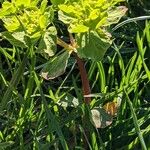
Euphorbia helioscopia
فرفیون · خۆژیلك · خناق الدجاج · جيجان · فرفیون رایج، شیر سگ رایج،
Description
Source: leafsnapEuphorbia helioscopia, commonly known as sun spurge, is a herbaceous annual plant that belongs to the Euphorbiaceae family. Native to Europe and Asia, it has spread and naturalized in many parts of the world. This plant can grow up to 30 cm in height and features a branching stem with small green leaves arranged alternately. Sun spurge produces small yellow-green flowers surrounded by showy bracts, giving it an attractive appearance. The flowers bloom from May to September and are followed by small capsules containing seeds. The plant thrives in well-drained soils and can grow in full sun or partial shade, although it can tolerate a wide range of soil types. It is drought-tolerant but also grows well in moist soils. For centuries, Euphorbia helioscopia has been used for its anti-inflammatory properties in medicinal applications. However, it should be handled with care, as its milky sap can cause skin irritation or allergic reactions. Overall, Euphorbia helioscopia is an attractive annual plant that adds color and interest to gardens while also offering medicinal benefits.
🌳 Sun spurge has drawn attention as a potential bioindicator of soil conditions, particularly for certain heavy metals. Its presence can suggest high nitrogen levels, and its growth patterns may reflect the overall health of the soil. Besides its common uses, researchers are examining sun spurge for its ecological functions and its potential use in phytoremediation strategies.
🎭 Cleanliness, safeguarding and insight
Care Guide
💧 Water Every 7 days
Sun spurge thrives in open fields, adapting well to varying moisture levels and brief dry spells. To sustain healthy growth, it requires weekly watering, ensuring the soil does not become oversaturated. Although it is an opportunistic plant that benefits from natural rainfall, it needs additional watering during prolonged dry periods. Unlike some plants, sun spurge does not have a dormant season to avoid stress.
How should I water my Sun spurge in the best way?
To water Sun spurge, you have various options for watering tools such as a garden hose with a spray nozzle or a watering can. Sun spurge is not too particular about the type of water it receives, whether it's rainwater, tap water, or filtered water. However, it's generally advisable to avoid watering this plant from above as it can harm the leaves and flowers and potentially lead to disease. A drip irrigation system is often the best watering method for Sun spurge as it provides even and direct water application to the soil. When watering a container-grown Sun spurge, you can use a cup, watering can, or tap water to apply water directly to the soil.
What should I do if I give my Sun spurge too much water or too little water?
The solution for underwatering Sun spurge is simple: water it more regularly when you notice it lacks moisture. Overwatering, on the other hand, can be much more serious if you don't catch it early. When Sun spurge is overwatered, it can become diseased and eventually die. To prevent this, choose a growing location with plenty of sunlight to dry the soil and good drainage to prevent water from pooling. If your potted Sun spurge is overwatered, consider repotting it in a new container with better drainage.
How often do I need to water my Sun spurge?
To keep your Sun spurge healthy, water it regularly throughout the growing season. In the spring, water it once a week. As the season gets hotter, you may need to water it two to three times a week. Remember not to exceed this rate to avoid harming the plant. It's important to keep the soil moist but not overly wet. When watering Sun spurge in a pot, you'll need to do it more frequently than when it's planted in the ground. The soil in pots tends to dry out faster, so aim to water container-grown Sun spurge a few times per week, compared to just once per week for plants in the ground.
How much water does my Sun spurge plant need?
Determining the right amount of water for your Sun spurge can be done in a few different ways. Some gardeners prefer to gauge the moisture levels of the soil by feeling it, suggesting that you water until the top six inches are moist. Another approach is using a recommended volume of water, typically about two gallons per week, adjusted based on temperature and soil dryness. It's important to be cautious with strict guidelines, as your plant may not need that amount of water. When growing Sun spurge in a container, you'll need to use a different strategy. Make sure to moisten all layers of dry soil by testing with your finger, or until you see a trickle of excess water draining from the pot's holes.
How do I know if I'm watering my Sun spurge enough?
Avoiding overwatering your Sun spurge can be a bit challenging due to conflicting needs and risks. On one hand, the plants have deep roots that need weekly watering. However, they are highly prone to root rot and browning when overwatered. Underwatering is less of a concern as Sun spurge can tolerate extended periods without watering, but if you wait too long, the plant will start to wilt and the leaves may become dry.
☀️ Light Full sun
Sun spurge does best when it gets plentiful sunlight throughout the day. In its native habitats it is subjected to strong sun, which promotes healthy growth. A shortage of light can hinder its development, while an excess generally does not damage it. Each growth stage, if applicable, may have distinct light requirements.
What are the sunlight requirements for Sun spurge?
Sun spurge thrives best when exposed to full sun, which means it requires above 6 hours of sunlight daily. It can also tolerate partial sun, receiving about 3-6 hours of sunlight. The amount of sunlight influences its health and growth, with its native habitats providing substantial sun exposure. It's essential to observe how sunlight moves through your garden to find the perfect balance for your plants. Inadequate sunlight may hinder the plant's development, although excess sunlight does not typically cause harm. Different growth phases of the plant may have unique solar requirements.
How can I use artificial lighting for Sun spurge?
Indoor Sun spurge plants require adequate lighting for optimal growth, especially when natural sunlight is insufficient, such as in winter or in less sunny spaces. Artificial lights can be a vital solution, promoting faster, healthier growth. LED lights are a popular choice for indoor plant lighting as they can be customized to provide specific wavelengths of light that plants need. Full sun plants need 30-50W per square foot of artificial light, partial sun plants require 20-30W per square foot, and full shade plants need 10-20W per square foot. The light source should be placed 12-36 inches above the plant to mimic natural sunlight and should be on for 8-12 hours per day to match natural daylight hours.
What are common symptoms of sunlight deficiency in Sun spurge?
Sun spurge may show several symptoms when it doesn't get enough light, including smaller new leaves, leggy or sparse growth, faster leaf drop, and slower growth or no new growth. Leaves can also develop lighter colors or irregular patterns, indicating a lack of chlorophyll. Excessive sunlight can lead to chlorosis (where leaves lose their green color), sunscald, leaf curling, wilting due to increased water loss, and leaf scorching characterized by brown, dry, and crispy leaf edges.
How can I address sunlight-related issues in Sun spurge?
To ensure Sun spurge receives adequate sunlight indoors, you could gradually move the plants to sunnier locations until they receive at least 6 hours of direct sunlight daily, ideally through a south-facing window. If the plant is large or not easily movable, consider using artificial light for at least 8 hours daily or invest in professional grow lights. Outdoors, gradually moving your plants to sunnier spots helps them adapt without getting sunburned. Minimizing obstructions, such as by pruning trees that block sunlight, or transplanting smaller plants to sunnier locations during their dormant period can also improve sunlight exposure. Note that parts of the plant affected by insufficient sunlight may not recover, but new growth should be healthy after adjusting light exposure.
🌡️ Temperature 20–37.8°C
Sun spurge is an adaptable species that flourishes in native habitats when temperatures range from 68 to 100 °F (20 to 38 ℃). In fluctuating climates, seasonal adjustments may be required to maintain optimal growth.
What are the ideal temperatures for growing Sun spurge?
Sun spurge thrives in temperatures between 68 to 100 °F (20 to 38 ℃). It is an adaptive species that loves heat, making it essential to adjust care seasonally to maintain optimal growth. Specifically, in fluctuating climates, maintaining a controlled environment is beneficial. During winter, it is recommended to keep the temperatures above the minimum suitable growth temperature to ensure the plant’s health. Any temperatures approaching the minimum tolerable growing temperature can be detrimental to the plant.
How should Sun spurge be cared for in cold temperatures?
Sun spurge prefers warm temperatures and struggles in the cold. When the temperature drops below the limit growth temperature, you may notice the leaves lightening in color, and post-frost, the leaves may turn brown or black, accompanied by wilting or drooping. To care for Sun spurge in colder temperatures, frost-damaged parts should be trimmed off, and the plant should be moved indoors to a warmer environment. Placing the plant near a south-facing window ensures it gets enough sunlight, but it should be kept at a distance from heaters to avoid air dryness.
What steps should be taken if Sun spurge experiences high temperatures?
During hot summer days, Sun spurge should be kept below the maximum suitable growing temperature to prevent leaf discoloration and susceptibility to sunburn. If the plant experiences temperatures above the tolerable growing temperature maximum, the affected sunburned and dried parts should be trimmed away. Moving the plant to a shaded area, especially during midday and afternoon sun, can prevent further damage. Additionally, watering the plant in the morning and evening helps keep the soil moist and supports the plant's well-being during high temperature periods.
💨 Humidity
🪴 Soil 6-7
🌱 Fertilizer
After Sun spurge has opened most of its blooms to full size, resume fertilizing. When the blooms are at their peak, apply fertilizer once every three to four weeks, as weather permits. Then, when Sun spurge begins producing fewer new blooms, stop fertilizing; there’s no need to fertilize when the plant can’t produce any more blooms.
🪴 Pot & Repot
✂️ Pruning
🌿 Propagating
🐛 Diseases & pets
☠️ Toxicity
Characteristics
- Plant Type
- Herb
- Life Cycle
- Annual, Biennial
- Genus
- Euphorbia
- Family
- Euphorbiaceae
- Hardiness Zone
- 9-11
- Mature Height
- 10 cm to 49 cm
- Mature Spread
- 49 cm
- Leaf Color
- Green, Yellow
- Leaf Type
- Deciduous
- Flower Color
- Yellow, Green
- Flower Size
- 0.20 cm
- Bloom Time
- Mid spring, Late spring, Early summer
- Planting Time
- Spring, Summer, Autumn
- Harvest Time
- Early summer, Mid summer
- Native Area
- Iraq