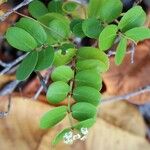
Euphorbia hypericifolia
گونه فرفیون وارداتی · علف مرغ · Chickenweed · Graceful Sandmat · Pillpod euphorbia
Description
Source: leafsnapEuphorbia hypericifolia, commonly known as the diamond frost plant, is a popular ornamental belonging to the Euphorbiaceae family. Native to Central and South America, this plant has gained favor among gardeners for its delicate white flowers that resemble tiny diamonds. The diamond frost plant is a small, bushy perennial that grows up to 12 inches tall and 18 inches wide. Its small green leaves, edged in white, contribute to its attractive appearance. The tiny white flowers, featuring yellow centers, bloom in clusters from spring through fall. This plant thrives in well-drained soil and prefers full sun or partial shade. While it can tolerate drought conditions, regular watering is essential during the hot summer months for optimal growth. Propagation is straightforward, either through stem cuttings or by dividing the root ball. Thanks to its delicate appearance and long blooming period, the diamond frost plant is often used as an accent or filler in garden beds, borders, hanging baskets, or containers. Its low maintenance requirements make it an excellent choice for novice gardeners seeking a beautiful addition without much effort. However, it's important to remember that all parts of this Euphorbia are toxic if ingested by humans or animals. Care should be taken when handling this beautiful ornamental plant.
🌳 Graceful spurge is more than an ornamental plant; it may serve as a natural insecticide. Its milky sap contains substances that deter certain insect species, making it a promising option for integrated pest management in sustainable agriculture. Using it as a biopesticide could decrease dependence on synthetic chemicals and help the environment.
🎭 Cleanliness, safeguarding and insight
Care Guide
💧 Water Every 7 days
Graceful spurge thrives in environments that mimic the tropics, characterized by high humidity and frequent rain. It prefers soil that stays consistently moist, so watering twice a week is ideal. When grown indoors, regular misting helps maintain the humidity levels its delicate foliage needs.
How should I water my Graceful spurge?
To properly water the Graceful spurge, it is best to use filtered water at room temperature. Tap water may contain harmful particles, so filtered water is preferred. It's important to use room temperature water or slightly warmer because the Graceful spurge is accustomed to warm environments and cold water can be a shock. Avoid overhead watering as it can lead to foliage problems. Instead, water the plant by applying the filtered room temperature water directly to the soil until it is completely soaked. This helps to moisten the roots and support their growth and nutrient uptake.
What should I do if I give my Graceful spurge too much or too little water?
Overwatering is a common issue and can harm your Graceful spurge, causing wilting, yellowing, and potential diseases like root rot, mold, and mildew. Underwatering is less common but can lead to brittle, brown leaves. It's important to notice signs of overwatering early and reduce watering immediately. Replace poorly draining soil with a well-draining potting mix. If your plant is receiving too little water, increase watering until signs of underwatering improve.
How often do I need to water my Graceful spurge?
If your Graceful spurge is in a pot, the best way to determine if it needs water is by checking the soil. Simply stick your finger into the soil and if you find that the top two to three inches are dry, it's time to water it. The same method can be used for Graceful spurge grown outdoors in the ground. If the first few inches of soil are dry, it needs water. Typically, during spring and early fall, you'll need to water this plant about once a week using this method. However, in extremely hot weather, you may need to increase your watering to twice a week or more. It's important to note that mature, well-established Graceful spurge plants are quite resilient and can tolerate drought well.
How much water does my Graceful spurge plant need?
To ensure your Graceful spurge gets enough water, don't hold back on watering it. When the top two to three inches of soil are dry, give the plant a thorough watering. Make sure to water enough to fully saturate the soil, causing excess water to drain out of the bottom of the pot. If you don't see excess water draining, you may not have watered enough, but be careful not to let water accumulate in the soil, as it can be harmful to the plant. On the other hand, if water isn't draining well, there may be an issue with the soil, so avoid poorly draining soils to keep your plant healthy. If the plant is outdoors, 1 inch of rain per week should be sufficient.
How do I water my Graceful spurge at different stages of growth?
The watering needs of the Graceful spurge vary depending on its growth stages. In the first few years or after transplanting, more water is required because the plant focuses its energy on developing new roots for future growth. These new roots need extra moisture to thrive. However, after a few seasons, the Graceful spurge requires less water. Another stage that may require increased watering is during the bloom period, as flower development utilizes a significant amount of moisture.
☀️ Light Full sun
Graceful spurge grows best with plenty of sun. Although it can tolerate somewhat lower light, it truly thrives when generously exposed to sunlight. Native to areas with abundant sun, it is a hardy species that may become stunted or bloom less vigorously if deprived of sufficient light.
What are the sunlight requirements for Graceful Spurge?
Graceful Spurge requires full sun, which means it thrives with more than 6 hours of sunlight daily. It can also tolerate partial sun, about 3-6 hours of sunlight. It's important to observe how sunlight moves through your garden to find spots that offer the right balance of light and shade for the plant, ensuring it grows happily and healthily.
How does Graceful Spurge respond to different lighting conditions?
Graceful Spurge thrives best under an ample amount of sun exposure, showing resilience originating from its natural habitat in substantial sunlight. While it can tolerate less light, the plant shows stunted growth and less vigorous blooming when deprived of sufficient illumination. Indoors, in winter or less sunny spaces, artificial lighting, like LED lights providing 20-50W/sq ft depending on the plant's sun exposure needs, can be used effectively to stimulate growth by mimicking natural sunlight conditions.
What are the symptoms of insufficient light in Graceful Spurge?
When Graceful Spurge is exposed to inadequate lighting, it may exhibit symptoms such as smaller new leaves, leggy or sparse growth, faster leaf drop, slower or halted new growth, lighter-colored or chlorotic leaves, sunscald, leaf curling, wilting, and leaf scorching. These symptoms indicate the plant's struggle to photosynthesize and maintain health due to insufficient sunlight.
What solutions can help Graceful Spurge thrive in indoor and outdoor environments?
For indoor care, gradually moving the plant to a sunnier location or using artificial light, like a lamp for at least 8 hours daily, can improve growth. Outdoors, finding the best sunlight spot and avoiding sudden light intensity changes are crucial. Managing environmental obstructions by pruning or relocating plants helps increase sunlight exposure. While parts of the plant damaged by low light may not recover, new growth will be healthy with better lighting conditions.
🌡️ Temperature 20–37.8°C
Graceful spurge prefers temperatures of 68 to 100 ℉ (20 to 38 ℃). It is native to humid lowlands and can adjust to different climates, although it does not tolerate harsh winters well. For optimal growth, it is best to keep temperatures at 75 to 85 ℉ (24 to 29 ℃) during the growing season and to keep the plant cool and dry during its dormant period.
What are the ideal growing conditions for Graceful spurge?
Graceful spurge, or Euphorbia hypericifolia, thrives in temperatures ranging from 68 to 100 °F (20 to 38 °C), favoring humid lowland environments. It adapts well to various climates but struggles in harsh winters. The optimal growing temperature is between 75 to 85 °F (24 to 29 °C) during its growing season. In its dormant season, the plant benefits from cooler and drier conditions. Since it is extremely heat-loving, exposure to cold can be detrimental. It's recommended to bring the plant indoors during autumn, placing it near a bright window but away from direct heat sources, to maintain a suitable growth environment above the minimum growth temperature during winter.
How does low temperature affect Graceful spurge and what are the solutions?
Graceful spurge prefers warmer temperatures and does not tolerate cold well. It is most vibrant and healthy when kept above the minimum suitable growth temperature. In winter, temperatures should be kept above the minimum tolerable growing temperature to avoid damage. Exposure to temperatures below the growth limit can lead to lighter leaf coloration. After frost damage, leaves might turn brown or black, accompanied by wilting and drooping. To mitigate frost damage, trim the frost-damaged parts and move the plant to a warm, indoor spot preferably near a south-facing window to ensure it receives ample sunlight. Avoid placing the plant near heating or air conditioning vents to prevent air dryness.
What should be done if Graceful spurge is affected by high temperatures?
During the summer, it's crucial to keep Graceful spurge below the maximum suitable growth temperature to prevent heat stress. Exceeding the maximum tolerable growing temperature can cause the leaves to lighten and increase susceptibility to sunburn. To address heat stress, trim the sunburned or dried-up parts of the plant. Relocate the plant to an area that offers shade during the intense midday and afternoon sun. Ensure the soil remains moist by watering the plant in the cooler morning and evening hours.
💨 Humidity
🪴 Soil 6-7
🌱 Fertilizer
Graceful spurge needs the most fertilizer during its active growth period, which falls mainly in spring, summer, and early fall. Fertilizing supplies essential nutrients that the soil may lack, supporting healthy root and stem growth and enhancing the attractive foliage that is a prominent characteristic of this plant.
🪴 Pot & Repot 2-3 years
When repotting Graceful spurge, select a pot 1-2 inches (2.5–5.1 cm) larger with good drainage. Use a well-draining potting mix. Repot in spring or fall, making sure the root ball sits slightly lower than the rim of the flower pot. Water thoroughly after repotting and place in a warm spot with indirect sunlight.
✂️ Pruning
Baby's-Breath Euphorbia does not require any deadheading. You may pinch back younger plants to stimulate branching. Feel free to trim your plant at any time to tidy up and keep its growth in check.
🌿 Propagating
🐛 Diseases & pets
☠️ Toxicity
Characteristics
- Plant Type
- Herb
- Life Cycle
- Perennial, Annual
- Genus
- Euphorbia
- Family
- Euphorbiaceae
- Hardiness Zone
- 9-11
- Mature Height
- 30 cm to 61 cm
- Mature Spread
- 49 cm to 61 cm
- Leaf Color
- Green
- Leaf Type
- Evergreen
- Flower Color
- White
- Flower Size
- 2.54 cm
- Bloom Time
- Late spring, Summer
- Planting Time
- Spring
- Harvest Time
- Summer, Early fall
- Native Area
- Chile, Belize, Honduras, Mexico, Guatemala, Peru, Dominican Republic, Panama, Jamaica, Uruguay, Colombia, Bahamas, Cuba, Paraguay, Argentina, Haiti, Bolivia, Venezuela, Brazil, Guyana, El Salvador, Nicaragua, Ecuador, Suriname, Costa Rica