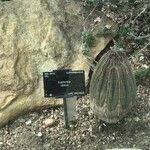
Euphorbia obesa
Baseball Plant · Klipnoors · Gingham-golfball · Baseball-cactus · Living-baseball
Description
Source: leafsnapEuphorbia obesa, commonly known as the "baseball plant" due to its spherical shape, is a small, globular succulent belonging to the Euphorbia family. Native to South Africa, this plant can grow up to 15 cm in height and 10 cm in diameter. Its color is greenish-grey, which becomes more pronounced as the plant ages. The stem of Euphorbia obesa is adorned with small, spine-like projections called tubercles, giving it a distinctive texture. These tubercles also serve as water storage organs during times of drought. During its growing season, which typically occurs from late winter to early spring, Euphorbia obesa produces small yellow flowers. These flowers are unisexual, meaning they are found on separate male and female plants. The sap of Euphorbia obesa contains toxic compounds that can cause skin irritation and even blindness if it comes into contact with the eyes or mucous membranes. Therefore, it is important to handle this plant with caution. In summary, Euphorbia obesa is a unique and interesting addition to any succulent collection. However, due to its toxic sap, it should be handled carefully.
Care Guide
💧 Water
☀️ Light Full sun
🌡️ Temperature 20–37.8°C
💨 Humidity
🪴 Soil 6-7
🌱 Fertilizer
🪴 Pot & Repot
✂️ Pruning
🌿 Propagating
🐛 Diseases & pets
☠️ Toxicity
Characteristics
- Plant Type
- Succulent
- Life Cycle
- Perennial
- Genus
- Euphorbia
- Family
- Euphorbiaceae
- Hardiness Zone
- 10-11
- Mature Height
- 20 cm
- Mature Spread
- 9 cm
- Leaf Color
- Green, Gray, Purple, Black
- Leaf Type
- Evergreen
- Flower Color
- Green, Yellow
- Flower Size
- 2.54 cm
- Bloom Time
- Early summer, Mid summer
- Planting Time
- Spring, Summer, Autumn
- Harvest Time
- Mid summer
- Native Area
- South Africa